North Dakota Predator Impact on Fawn Recruitment
It’s a truly disheartening moment to be out in the field, spotting deer, and realizing that the fawn crop just isn’t what it used to be. Many North Dakota hunters feel this deeply, witnessing firsthand the fluctuations in deer numbers and wondering what’s truly impacting the future of our herds. This guide dives into one of the most significant factors affecting those precious young deer: the impact of predators on fawn recruitment across our diverse landscapes.
Understanding Fawn Recruitment and its Importance
Deer populations, particularly our beloved whitetails and mule deer, are a cornerstone of North Dakota's hunting heritage and ecological balance. When we talk about healthy deer numbers, we’re not just talking about the big bucks seen during the rut, but about the consistent arrival of new, healthy fawns each spring. This process, known as fawn recruitment, is absolutely vital for sustaining deer populations year after year.
What is Fawn Recruitment?
Fawn recruitment is essentially the measure of how many fawns born in a given year survive to become part of the adult population that breeds the following year. It’s not just about the birthrate – though that's crucial too – but about the survival rate through those first, most vulnerable months of a fawn's life. Think about it: a doe might give birth to twins or even triplets, which sounds great on paper. But if only one of those fawns, or worse, none of them, makes it through their first summer and fall, then the "recruitment" into the herd is low. This number is often expressed as the ratio of fawns per doe or fawns per 100 does, giving wildlife managers a critical snapshot of herd health and future prospects. It’s the lifeline of the deer herd, replenishing numbers that are lost to hunting, disease, vehicle collisions, and of course, predation.
Why Fawn Recruitment Matters for Deer Populations
Without consistent, healthy fawn recruitment, deer populations simply can’t sustain themselves. It's like trying to fill a bucket with a hole in the bottom – you need a steady stream of water (fawns) coming in to counteract what's flowing out (mortality). If recruitment dips too low for too long, we start to see declining deer numbers, fewer tags available, and a real impact on hunting opportunities. This isn't just a hypothetical scenario; many hunters have seen units where deer numbers seem to dwindle, and often, low fawn recruitment is a key culprit. It impacts the overall health, age structure, and genetic diversity of the herd. When recruitment is strong, the population is robust, resilient, and better able to weather harsh winters or disease outbreaks. It ensures there are enough younger deer to mature into the older age classes, contributing to a stable and diverse herd for future seasons. Understanding these dynamics is crucial for both hunters and wildlife managers who are trying to balance everything from harvest quotas to habitat improvement projects. You can usually find North Dakota Deer Population Estimate and North Dakota Deer Harvest Records through the game and fish department to see these trends over time.
Key Predators Affecting North Dakota Deer Fawns
North Dakota's diverse landscape is home to a variety of predators, but when it comes to fawn survival, some pose a much more significant threat than others. It's a natural part of the ecosystem, but the balance can sometimes shift, leading to concerns for deer managers and hunters alike.
Coyotes: The Primary Threat
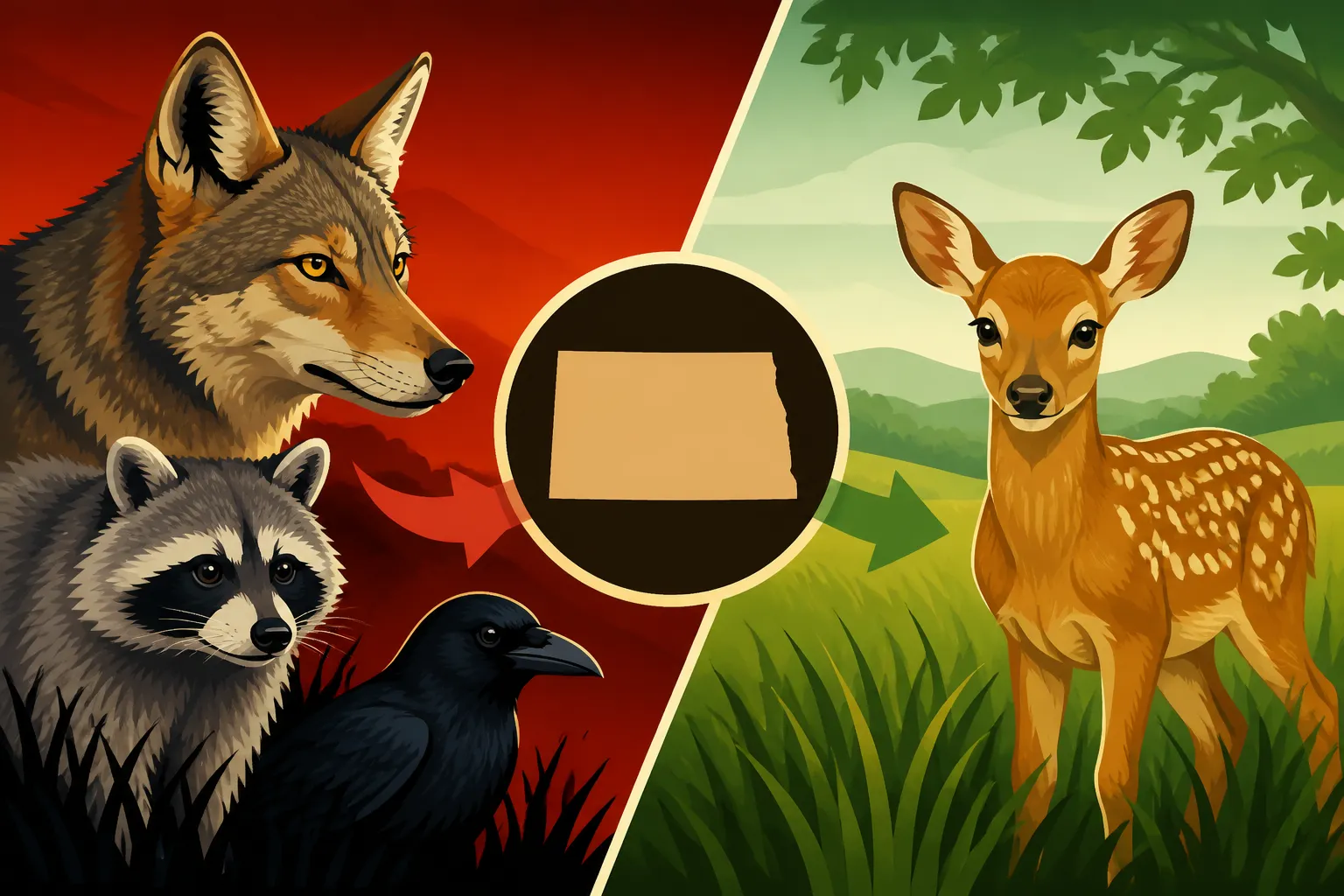
Hands down, coyotes are the most impactful predator on fawn recruitment in North Dakota. These incredibly adaptable canids thrive across almost every corner of our state, from the Badlands to the prairie potholes and agricultural lands. They are opportunistic hunters, and newborn fawns, especially during their first few weeks of life, represent a relatively easy and highly nutritious meal. Does often give birth in areas with good cover, but coyotes are adept at sniffing out these vulnerable youngsters. When a doe has twin fawns, it's not uncommon for one to be lost to a coyote. Even if the coyote doesn't directly kill the fawn, their constant presence can stress does, potentially leading to fawns being abandoned or mothers leading them to less ideal, but "safer," areas. Hunters often express frustration at the sheer number of coyotes they see, especially in units where deer numbers seem to be struggling. This isn't to say coyotes are "bad," but their population dynamics directly influence fawn survival in a major way. Hunters who focus on predator control can play a significant role in reducing this pressure, especially during crucial fawning periods. Learning Coyote Calling North Dakota Farm Country can be a great way to contribute to local fawn survival.
Other Predators and Their Role
While coyotes dominate the fawn predation landscape, other predators certainly play a part, though usually to a lesser degree in North Dakota.
- Bobcats: These elusive felines are present in the state, particularly in timbered areas and the Badlands. They are efficient predators and will certainly take fawns if the opportunity arises. However, their populations are generally lower and more localized than coyotes, so their overall impact on statewide fawn recruitment is less pronounced. They tend to be more solitary hunters, focusing on smaller prey like rabbits and rodents, but a fawn is a prime target if they encounter one.
- Mountain Lions: While rare, mountain lion sightings and confirmed presence do occur, particularly in the rugged terrain of the Badlands. In areas where they are established, mountain lions are apex predators capable of taking deer of all ages, including fawns. Their impact, however, is extremely localized due to their limited numbers in North Dakota.
- Black Bears: While they are primarily omnivores, black bears are opportunistic and will absolutely consume fawns if they stumble upon them. Their presence is largely restricted to the forested areas in the Turtle Mountains and Pembina Hills, and their numbers aren't high enough to exert significant pressure on statewide fawn recruitment.
- Avian Predators: Large raptors like golden eagles and bald eagles have been known to predate on very young, extremely vulnerable fawns. This is a much less common occurrence and usually limited to very small fawns in open, exposed areas, but it's a possibility.
- Domestic Dogs: It's an uncomfortable truth, but free-roaming domestic dogs, particularly those that are unsupervised or feral, can and do kill fawns. This issue is often localized near rural homes or communities.
It’s a complex web, and while we often point to coyotes, it's the cumulative effect of various predators that puts pressure on our deer, especially the young. Understanding the predator mix in your specific hunting unit can give you a better grasp of what's happening on the ground, and tools like GoHunt can help you overlay habitat maps with known predator ranges to develop a more informed perspective.
The Mechanisms of Predator Impact on Fawns
The way predators affect fawn recruitment isn't always a simple one-to-one kill ratio. There are direct, immediate impacts, but also more subtle, indirect effects that can collectively reduce the number of fawns that make it to adulthood. It’s a dynamic interplay that varies depending on the landscape, the specific predator populations, and even the weather patterns of a given year.
Direct Predation: Hunting the Vulnerable
This is the most straightforward and often most visible mechanism: predators directly hunting and killing fawns. Newborn fawns are incredibly vulnerable during their first few weeks of life. They are small, lack the speed and endurance of adult deer, and their primary defense mechanism is to lie still and rely on camouflage. Unfortunately, this "freeze" response, while effective against some threats, makes them easy targets for a searching predator like a coyote.
Coyotes, in particular, are exceptionally skilled at locating fawns through scent. They systematically patrol fawning areas, often those with dense cover where does choose to hide their young. Studies in other states, and observational evidence here in North Dakota, suggest that the majority of fawn mortality from predators occurs within the first two to three weeks after birth. During this critical window, fawns are still too weak to outrun a coyote, and a doe, while fiercely protective, is often outmatched against multiple coyotes or can only defend one fawn while another is taken.
The intensity of direct predation can also fluctuate. A high coyote population in an area with declining small game populations might lead to more intense fawn predation as coyotes seek alternative food sources. Conversely, a year with an abundance of rabbits and rodents might see slightly less pressure on fawns, though they remain a preferred food source due to their nutritional value and ease of capture. This direct loss of fawns is the most immediate way that predators reduce the overall recruitment numbers for the next generation of deer. Knowing North Dakota Fawn Survival Rates can help clarify this impact.
Indirect Effects: Stress and Habitat Displacement
Beyond the direct kill, predators also exert indirect pressures on fawn recruitment, and these are often harder to quantify but no less significant.
- Maternal Stress: The constant presence and threat of predators can induce significant stress in pregnant does and those with newborn fawns. A stressed doe might not be able to put as much energy into milk production, potentially leading to weaker, less healthy fawns that are more susceptible to disease or less able to escape a predator. Frequent predator encounters can also make a doe more vigilant and anxious, diverting energy that would otherwise go into nurturing her young.
- Suboptimal Habitat Selection: Does instinctively seek out dense cover to hide their fawns. However, if traditional fawning grounds are perceived as high-predator areas, a doe might be forced to choose less ideal, more exposed locations to give birth. These areas might offer less protection from the elements, poorer forage for the doe, or simply less effective camouflage for the fawn, increasing their overall risk. This displacement can effectively reduce the amount of "safe" fawning habitat available, concentrating fawns in fewer areas and potentially making them more vulnerable collectively.
- Reduced Foraging Time: Does with fawns need to forage efficiently to maintain their own health and produce enough milk. If they are constantly disrupted by predator presence, they might spend less time feeding and more time being alert or moving their fawns, leading to a poorer nutritional state for both mother and offspring. This can be especially critical during a hard prairie winter or late spring when Hunting After a Hard Prairie Winter means food sources might already be stressed.
These indirect effects, while not resulting in an immediate death, can weaken fawns, reduce their chances of long-term survival, and ultimately contribute to lower overall recruitment into the deer herd. It's a compounding problem that requires a holistic approach to deer and predator management.
Management Strategies to Mitigate Predator Impact
Addressing predator impact on fawn recruitment isn't about eradicating predators, which is neither feasible nor desirable from an ecological standpoint. Instead, it's about finding a balance that supports healthy deer populations while respecting the role of predators in the ecosystem. Effective strategies often involve a combination of habitat work and, in some cases, targeted predator management.
Habitat Enhancement for Fawn Survival
One of the most powerful tools we have for helping fawns survive is improving the habitat they rely on during their most vulnerable weeks. A robust fawning cover gives fawns a fighting chance.
- Dense Fawning Cover: Fawns need thick, impenetrable cover to hide from predators. This could be tall, native grasses, dense shrubbery, or thick stands of young trees. Landowners and wildlife agencies can focus on creating and maintaining these types of areas. For instance, leaving some crop stubble fields unplowed or managing grasslands for taller growth during the spring and early summer can provide critical hiding spots. On public lands, this might involve careful prescribed burning or selective timber cutting to promote diverse undergrowth. Hunting a North Dakota Prairie Pothole Slough Edge can be an excellent example of prime fawning cover that also attracts other wildlife.
- Food and Water Proximity: While not directly predator-related, ensuring does have access to high-quality forage and water near good fawning cover reduces the need for them to travel long distances, minimizing exposure for their young. Healthy, well-fed does produce more robust fawns.
- Escape Cover: Beyond just hiding, fawns and does need areas where they can escape if a predator does find them. This could be dense stands of trees, thickets, or even rugged terrain in the Badlands. Creating corridors of escape cover connecting larger fawning areas can be highly beneficial.
Hunters can also advocate for and participate in habitat improvement projects, whether on private land or by supporting organizations that manage public areas like Wildlife Management Areas or PLOTS tracts. Using resources like GoHunt can help identify key areas where fawning cover might be lacking or could be improved.
Predator Management Considerations
While habitat is key, there are situations where localized, targeted predator management can be a necessary component of fawn recruitment efforts.
- Targeted Coyote Removal: In areas identified with critically low fawn recruitment and high coyote populations, controlled removal efforts can be implemented. This is not about wholesale eradication but strategically reducing coyote numbers in specific fawning grounds during the critical birthing period. This can include trapping or calling efforts, often conducted by experienced trappers or hunters. It's a short-term solution to give fawns a head start, as coyote populations are highly resilient. Predator Calling North Dakota's Badlands Draws can be an effective technique in certain terrains.
- Educating Landowners: Encouraging rural landowners to manage free-roaming domestic dogs is important, as these can be a significant, yet often overlooked, source of fawn mortality.
- Monitoring and Research: Wildlife agencies continuously monitor fawn recruitment rates and predator populations. This data, sometimes supported by hunters utilizing apps to report sightings or via official surveys, helps inform management decisions. Tools like GoHunt can provide hunters with valuable data overlays, showing habitat types, deer densities, and even areas with higher predator activity based on user input or surveys. This allows for data-driven decisions on where and when predator management might be most beneficial.
- Hunter Participation: For many hunters, predator hunting, particularly for coyotes, is a year-round pursuit. While the impact of individual hunters on broad predator populations can be debated, focused efforts in key deer fawning areas by dedicated predator hunters can contribute to localized pressure reduction, potentially helping fawns in those specific zones.
Ultimately, balancing predator populations with deer objectives is an ongoing challenge. It requires an understanding of ecological principles, active management, and the cooperation of landowners and the hunting community to ensure robust deer herds for future generations.
| Factor | Impact on Fawn Recruitment | Management Strategy |
|---|---|---|
| Coyote Population | Primary source of direct fawn mortality. | Targeted removal in critical fawning areas; hunter harvest. |
| Fawning Cover | Lack of dense cover increases vulnerability to predation. | Habitat enhancement (tall grasses, shrubs, timber regeneration). |
| Maternal Stress | Constant predator presence reduces doe health/milk production. | Reduce localized predator density; provide secure fawning areas. |
| Habitat Quality | Poor food/water leads to weaker fawns, more movement. | Improve forage and water sources near fawning cover. |
| Other Predators | Localized direct mortality (bobcats, mountain lions, dogs). | Address specific threats (e.g., control feral dogs). |
| Hunter Education | Misunderstanding of predator role or management. | Data-driven public information, encourage ethical predator hunting. |
Disclaimer
This article is for general informational purposes only and does not constitute professional advice. Laws, prices and regulations vary by location and change over time. Consult a qualified professional for guidance on your specific situation.