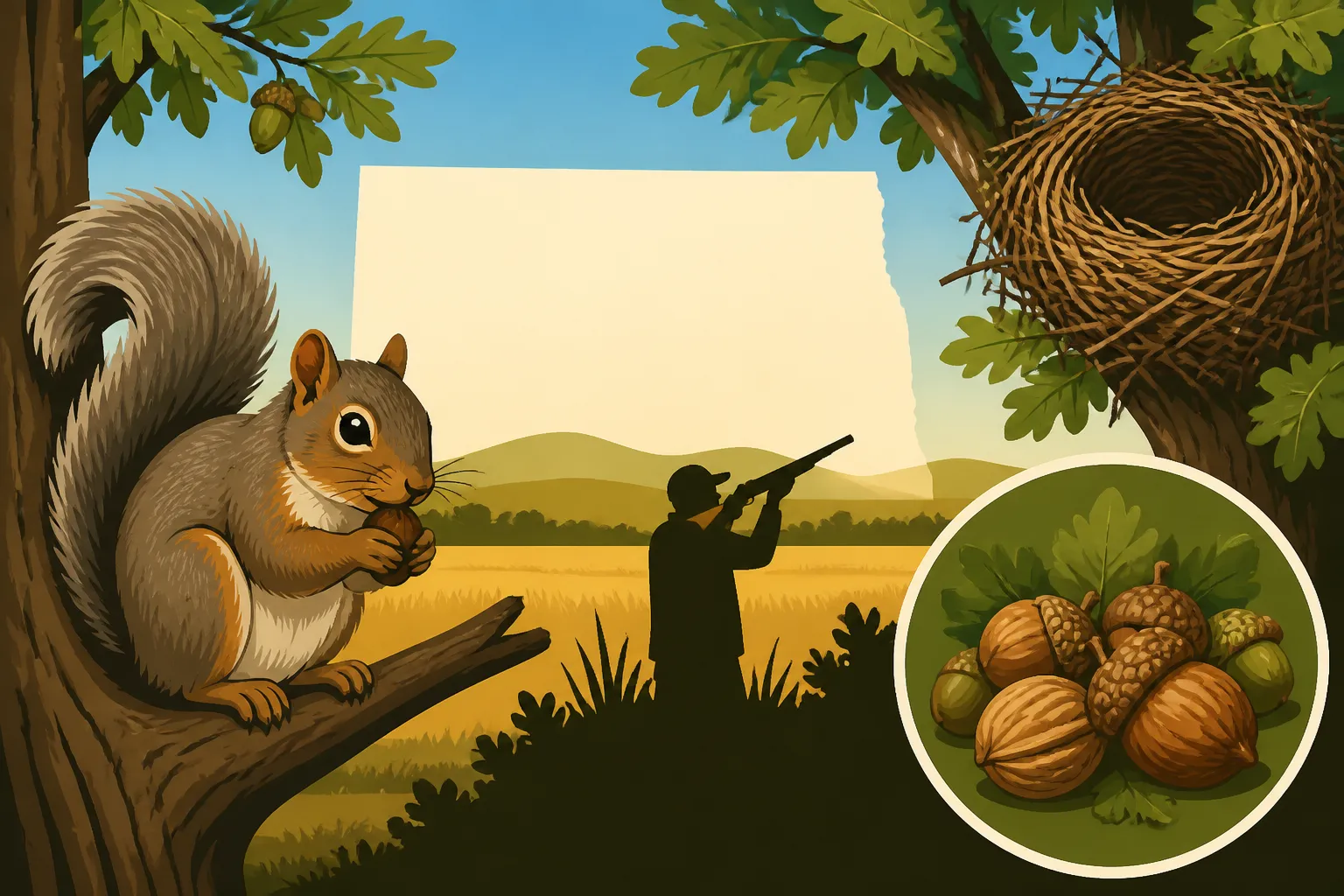
North Dakota Squirrel Nest Counts and Mast Crops
It can be incredibly frustrating to hit the woods or shelterbelts in North Dakota, expecting to find squirrels only to discover the timber is quiet and barren. You might wonder why some years are teeming with bushy-tails, while others leave you scratching your head. This guide will help you understand the crucial connection between squirrel nest counts and the availability of mast crops, giving you the insights you need to predict squirrel populations and plan more successful hunts in North Dakota.
Understanding Squirrel Nest Counts in North Dakota
When we talk about "squirrel nest counts" in North Dakota, we're really looking at a couple of key indicators: the visible nests in tree branches, often called dreys, and sometimes, although harder to survey, the tree cavities that squirrels use for denning. These aren't just random piles of leaves; they're vital homes where squirrels raise their young and shelter from the elements, and their numbers can tell us a lot about the health and density of a local squirrel population.
What Dreys and Cavities Tell Us
Imagine walking through a mature oak stand in late winter or early spring. If you look up and see numerous basketball-sized clumps of leaves and twigs lodged high in the branches, you're observing dreys. These visible nests are a direct sign of squirrel activity. A high number of dreys in an area often indicates a healthy, reproducing squirrel population. While squirrels may build multiple dreys throughout the year, especially for different litters or as escape routes, a consistent presence means they're finding what they need to thrive.
Tree cavities, on the other hand, are the squirrel equivalent of a fortified bunker. These natural hollows in tree trunks or limbs offer superior protection from predators and harsh weather, particularly the brutal North Dakota winters. When squirrels use cavities, they're often more secure, leading to higher overwinter survival rates and better conditions for raising young. Counting cavity users is trickier, as they're not as overtly visible as dreys, often requiring more specialized surveys or direct observation over time, but their presence is an even stronger indicator of long-term population stability.
How Agencies and Volunteers Track Squirrel Activity
While deer and pheasant surveys often get the most attention, wildlife agencies and even dedicated volunteers in North Dakota do keep an eye on squirrel populations, often through methods that indirectly track nest activity. These efforts are less about a precise, statewide squirrel census and more about understanding trends in local populations and habitat health. Surveys might involve walking transects through specific woodlots or river bottoms, tallying visible dreys during leaf-off conditions when they're easiest to spot. This type of qualitative data helps biologists understand where squirrel populations are doing well, and where they might be struggling.
Furthermore, citizen science initiatives or local hunting groups might informally monitor squirrel numbers. Hunters, in particular, are often the first to notice changes in squirrel activity in their traditional hunting grounds. If you're out scouting for other game like deer and continuously spot active dreys or see more squirrels scampering about, you're essentially conducting your own nest count. This ground-level observation is invaluable, as it provides real-time data on localized populations, which can fluctuate dramatically even within a few miles.
The Nuances and Limitations of Nest Counts
It’s important to remember that squirrel nest counts aren't an exact science, and there are some critical factors to consider. For instance, nest visibility changes drastically with the seasons. A drey that's obvious in November after the leaves fall might be completely obscured by foliage in July. This means surveys are typically most accurate when conducted in late fall or winter. North Dakota Public Land Hunting Hours are often tied to legal shooting light, but scouting hours are entirely up to you, and those bare branches can reveal a lot.
Different squirrel species also have different nesting habits. North Dakota is home to both fox squirrels and gray squirrels, though fox squirrels are far more common across most of the state's diverse habitats. Fox squirrels tend to be more drey-dependent, especially in areas with fewer mature cavity trees, while gray squirrels might utilize cavities more frequently where available. The age of the timber also plays a huge role; older, more mature forests naturally offer more potential tree cavities, which can support larger and more stable squirrel populations compared to younger, less established woodlots. Understanding these nuances helps us interpret what we're seeing in the field more accurately.
The Critical Role of Mast Crops for North Dakota Squirrels
If squirrel nests are the homes, then mast crops are the grocery store, the fuel, and the very foundation of squirrel survival and reproduction in North Dakota. "Mast" refers to the fruit of forest trees and shrubs, which can be broadly categorized into hard mast and soft mast. Understanding these food sources is absolutely essential for anyone hoping to find squirrels consistently.
Hard Mast: The Powerhouse Fuel
Hard mast consists of nuts and seeds from trees like oaks, walnuts, hickories (though less common in ND), and even some conifers. In North Dakota, the primary player in the hard mast category is undoubtedly the oak, specifically bur oaks. These hardy trees are scattered across the state, especially in river bottomlands like the Hunting Missouri River Bluff Country and Hunting Souris River Valley Bottomland, shelterbelts, and mature woodlots. The acorns they produce are packed with carbohydrates and fats, providing a high-energy food source that squirrels absolutely depend on, especially for building up fat reserves to survive the long, cold North Dakota winter.
When a fall arrives with an abundant bur oak acorn crop, it's like a siren song for squirrels. They immediately go into a frenzied caching mode, burying nuts for later retrieval. This behavior is crucial for their survival, allowing them to tap into stored food when snow covers the ground and other food sources are scarce. The success of a squirrel population, particularly in terms of overwinter survival and spring reproduction, is often directly tied to the abundance of hard mast the previous fall.
Soft Mast: Early Season Bounty
While hard mast gets all the glory for winter survival, soft mast provides critical nutrition during other times of the year, particularly late summer and early fall. Soft mast includes fruits and berries from trees and shrubs such as wild plums, chokecherries, buffaloberries, Juneberries, dogwoods, and even seeds from various herbaceous plants. These sources offer vitamins, minerals, and sugars that are vital for squirrels during the summer breeding season and as they prepare for fall.
You'll often find squirrels feasting on soft mast in late summer, giving them a head start on packing on weight before the hard mast truly drops. This early season nutrition contributes to the health and vitality of both adult squirrels and their late-summer litters. In fact, if the soft mast crop is particularly good, it can sometimes help bridge the gap in years when hard mast might be sparse, though it rarely fully compensates for a complete failure of the hard mast crop for winter survival. Scouting for these areas can be just as productive as searching for oak stands early in the season.
The Boom and Bust Cycle of Mast Production
Trees don't produce the same amount of mast every year. Many species, especially oaks, exhibit a "boom and bust" cycle, where there will be years of bumper crops followed by years of sparse production. This is often an evolutionary strategy to overwhelm seed predators in good years and starve them out in bad years. For hunters and wildlife enthusiasts, understanding this cycle is paramount. A "boom" mast year means an abundance of food, leading to healthier, more numerous squirrels. Conversely, a "bust" year can result in lower squirrel populations, reduced reproductive success, and increased squirrel movement as they frantically search for food.
In North Dakota, environmental factors like late frosts during flowering, drought during fruit development, or heavy insect infestations can all impact the mast crop. A late spring cold snap that kills oak blossoms can doom the acorn crop months before a single nut forms. This unpredictability makes scouting and local observation even more crucial, as statewide mast reports might not capture the localized variations that truly impact squirrel populations in your specific hunting area.
Connecting Mast Crops and Squirrel Nesting Success
The relationship between mast crops and squirrel nesting success is a tightly woven ecological dance. One directly influences the other, creating the ebb and flow of squirrel populations that hunters observe from year to year. It's not just about survival; it's about the ability to thrive and reproduce.
Fueling the Breeding Machine
Think of abundant mast crops as the ultimate energy booster for squirrels. When food is plentiful, females are able to come into breeding condition earlier, are healthier, and can support larger litters. A female squirrel with a belly full of nutrient-rich acorns or seeds is far more likely to successfully carry a litter to term and produce healthy, robust young than one struggling to find enough to eat. In good mast years, it's not uncommon to see multiple litters from a single female throughout the spring and summer. This means more young squirrels born into the population, which in turn leads to a higher demand for nesting sites, thus potentially increasing visible nest counts.
Conversely, a poor mast crop can severely limit reproductive output. Females might delay breeding, produce smaller litters, or even fail to breed at all. The stress of food scarcity can also lead to higher mortality rates for young squirrels. Less food means less energy to build and maintain dreys, and fewer successful denning periods. This direct link makes mast production the primary driver of squirrel population dynamics.
Winter Survival: The Ultimate Test
North Dakota winters are famously brutal, and for a small creature like a squirrel, surviving the prolonged cold and deep snow is a monumental challenge. Mast crops are the lifeline that makes this possible. The fat reserves squirrels build from gorging on acorns and other nuts in the fall are absolutely critical for enduring months of sub-zero temperatures when food is buried under snow or simply unavailable. A squirrel that goes into winter without adequate fat reserves has a significantly lower chance of making it to spring.
Therefore, a robust mast crop in the fall directly translates to a higher number of breeding adults surviving into the next spring. More survivors mean more potential breeders, which then results in more squirrel nests and a higher population density in the subsequent year. If the mast crop fails, winter can become a culling event, severely reducing the breeding stock and setting the stage for a lean year for squirrels, and consequently, for hunters. This is why paying attention to the fall mast is so telling for the next year's squirrel hunting prospects.
Mast as a Habitat Health Indicator
Beyond just food, mast production is a strong indicator of overall forest and woodlot health. Trees that are producing abundant mast are generally healthy, well-established, and growing in good soil conditions. This suggests a habitat that can support not just squirrels, but a whole host of other wildlife. A diverse mix of mast-producing trees and shrubs creates a resilient ecosystem. If you find a patch of timber in North Dakota that consistently produces good mast, you've likely found a gem of a habitat that will attract and hold game year after year. Finding Sign Along a Shelterbelt for deer or pheasants can also reveal excellent squirrel habitat, as these linear strips of trees often contain a mix of mast producers.
The cyclical nature of mast also means that squirrel populations naturally fluctuate. It's rare to have consistently high or low squirrel numbers for many years in a row, precisely because of the boom and bust cycle of their primary food source. Understanding this natural rhythm helps hunters set realistic expectations and adapt their strategies rather than simply hoping for the best.
How Hunters Can Use This Information to Their Advantage
For the diligent North Dakota hunter, understanding squirrel nest counts and mast crops isn't just academic; it's a powerful tool for more successful hunts. By paying attention to these ecological indicators, you can significantly increase your odds of finding and harvesting squirrels, and even use them as a proxy for the health of other game species.
Scouting for Mast: Identifying Productive Areas
Your scouting efforts should absolutely include an assessment of mast production. This is often best done in late summer and early fall, even before hunting season kicks off. Walk through potential squirrel habitats, such as river bottoms, mature shelterbelts, and timbered draws, actively looking for mast-producing trees. Pay special attention to bur oaks, which are kings of hard mast in much of North Dakota. Look for acorns on the ground, or even for squirrels actively feeding in the canopy. Freshly cut nut shells or droppings around the base of trees are tell-tale signs of recent squirrel activity.
Don't just focus on the trees, look at the ground. Areas with a dense concentration of fallen acorns, especially those showing signs of squirrel cuttings (the little crescent marks where they gnaw), are prime locations. If you’re using scouting tools like a mapping app, consider marking these areas. Scouting PLOTS Land With the ND Hunt App can help you identify public access areas with promising tree cover, and then your boots on the ground can tell you about the mast conditions within those areas. Remember, a stand of trees might look great on a map, but if the mast crop failed that year, it might be a ghost town.
Timing Your Hunt: Aligning with Food Availability
The type and availability of mast should directly influence the timing and location of your squirrel hunts. Early in the season, particularly late August and September, squirrels will often be focused on soft mast. Look for chokecherry thickets, wild plum patches, or areas with abundant buffaloberry. These spots can be incredibly productive as squirrels are actively foraging for these nutrient-rich foods.
As the season progresses into October and November, and especially once the leaves begin to fall, squirrels will shift their attention almost entirely to hard mast. This is the time to concentrate your efforts on oak stands. If you find a good acorn crop, you'll likely find squirrels. As winter approaches, squirrels will be spending more time collecting and caching nuts for colder days. This means you might find them particularly active on sunny days, digging up their stashes or adding to them. This knowledge helps you understand where to hunt throughout the season, rather than just randomly wandering the woods.
| Feature | Good Mast Year | Poor Mast Year |
|---|---|---|
| Squirrel Population | Higher density, more young, healthier adults | Lower density, fewer young, stressed adults |
| Nesting Activity | More dreys, higher reproductive success | Fewer new dreys, lower reproductive success |
| Squirrel Movement | Localized to abundant food sources | Wide-ranging search for scarce food |
| Hunter's Strategy | Focus on mast-rich areas, consistent activity | Adapt to fewer squirrels, hunt remaining food nodes |
| Winter Survival | Higher adult survival into next spring | Lower adult survival, impacts next year's breeding |
Reading the Landscape and Utilizing Resources
Beyond your own observations, stay informed about general mast conditions in your area of North Dakota. Local reports, forums, or conversations with other hunters can provide valuable insights. While there aren't always specific "squirrel mast reports," paying attention to general forest health updates can be telling. Websites and apps like GoHunt can provide useful mapping layers to identify specific tree species or forest cover, helping you pinpoint potential mast-producing areas before you even leave home. You can then verify these areas with boots on the ground.
Consider the impact of predation, too. While not directly about mast, higher squirrel populations due to good mast years can also mean more prey for predators. North Dakota Predator Impact on Fawn Recruitment discussions often highlight how abundant prey can influence predator behavior, and a bumper crop of squirrels could mean more coyotes and bobcats focusing on these smaller, easily accessible food sources in certain areas. This might slightly alter squirrel behavior, making them more cautious.
Planning for Long-Term Success: Habitat Management
Finally, understanding mast crops and their importance can even influence your long-term habitat management perspective, especially if you have access to private land. Encouraging the growth of diverse mast-producing trees, particularly oaks, can create more resilient squirrel populations. This might involve selective cutting to favor oak saplings or planting new mast trees. For those hunting public lands, knowing that What Counts as Posted Land in North Dakota can influence where you can look for prime mast-producing timber will always be useful. Every little bit of foresight into the natural cycles of the landscape contributes to a richer and more rewarding hunting experience in North Dakota.
Disclaimer
This article is for general informational purposes only and does not constitute professional advice. Laws, prices and regulations vary by location and change over time. Consult a qualified professional for guidance on your specific situation.