Mule Deer Buck-to-Doe Ratio in the Badlands
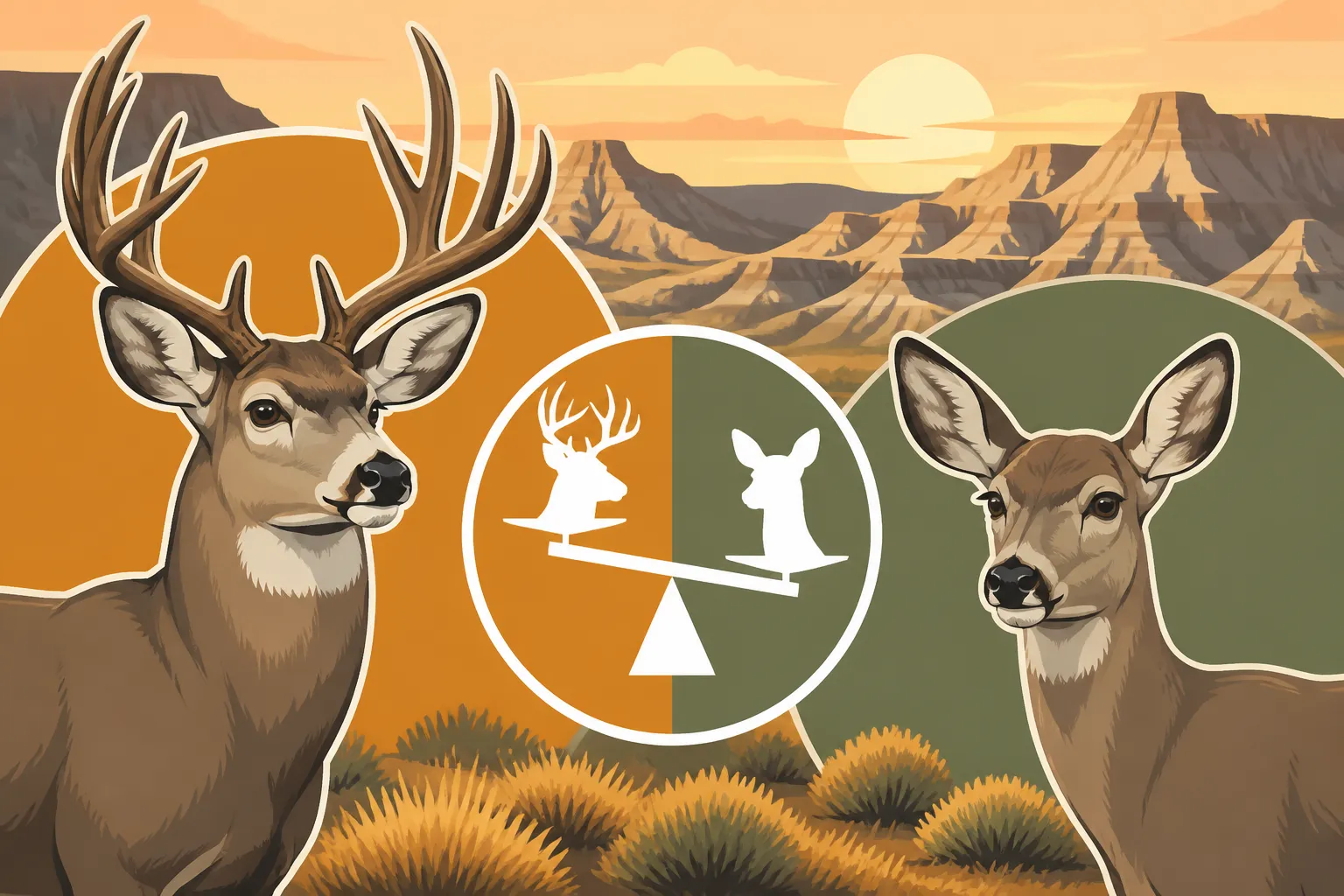
For any hunter passionate about pursuing mule deer in North Dakota's rugged Badlands, one of the most persistent frustrations can be feeling like you're seeing fewer mature bucks year after year. It leaves you wondering if it's just bad luck, if your scouting needs work, or if something deeper is at play within the herd. This guide will dive deep into understanding the mule deer buck-to-doe ratio in the Badlands, explaining why it's so important to your hunting success and what factors truly influence it.
Why the Buck-to-Doe Ratio Matters to Hunters
When we talk about the buck-to-doe ratio, we're not just throwing around some abstract wildlife management term. For us, the boots-on-the-ground hunters, this ratio is a fundamental indicator of the health and potential of the mule deer herd we pursue. It directly impacts everything from the quality of bucks you're likely to encounter to the intensity of the rut, which, let's be honest, is often what we're all dreaming about.
Understanding Population Dynamics
Imagine a scenario where there are far too many does for the number of available bucks. This isn't just a matter of seeing fewer antlers; it's a sign of a herd that might be struggling with overall health. A highly skewed ratio, say 1 buck to 10 or more does, can indicate overpopulation in certain areas, leading to increased competition for forage, especially during harsh winters. This competition can result in lower body weights, reduced antler growth, and even decreased fawn survival rates, as does enter the fawning season in poorer condition. A more balanced ratio, ideally closer to 1 buck for every 3-5 does, suggests a healthier, more robust population where resources are better distributed, and deer have a higher chance of reaching their full potential. This balance is critical for the long-term sustainability of the herd, ensuring strong genetics continue through successful breeding.
Furthermore, a healthy buck-to-doe ratio plays a crucial role in managing the herd's age structure. When there are enough bucks, competition for breeding rights ensures that a wider range of bucks, including younger ones, get a chance to participate. However, in heavily skewed populations, a few dominant bucks can become stressed from covering too many does, potentially leading to a decline in their health and vitality. Understanding these dynamics helps us appreciate that harvesting an antlerless deer can sometimes be just as, if not more, beneficial to the herd's health than pursuing a trophy buck, especially in areas with a high doe density. It's about maintaining that delicate balance to ensure future hunting opportunities for quality animals.
Impact on Rut Activity
This is where the rubber truly meets the road for many of us. The rut is the time of year when mule deer are most active, most visible, and often, most vulnerable. A balanced buck-to-doe ratio directly correlates with a more intense, predictable, and exciting rut. When there are enough bucks to go around, competition for breeding rights is high. This competition leads to increased buck movement, more aggressive behavior, and a greater frequency of sparring, rubbing, and scraping. Bucks will be actively seeking does, responding to calls, and often covering larger areas, making them more visible during daylight hours.
Conversely, in areas with a highly imbalanced ratio (too many does per buck), the rut can feel almost anti-climactic. A single buck might have access to a large number of does without much competition, leading to less frantic movement. The rut might be drawn out, as bucks don't have to work as hard to find receptive does, or it could feel "weak" because the intense activity you'd expect just isn't there. This means fewer opportunities for hunters to use tactics like rattling and decoying, or to capitalize on the increased daytime activity. If you've ever spent days in the Badlands during November and felt like the deer just weren't moving, despite the calendar saying it should be prime rut, a skewed buck-to-doe ratio could very well be a contributing factor. For tips on navigating this period, check out our guide on Hunting the Rut in Early-to-Mid November.
Factors Influencing the Badlands Mule Deer Ratio
The mule deer buck-to-doe ratio in North Dakota's Badlands isn't static; it's a dynamic figure influenced by a complex interplay of human activity and natural forces. It's not just a numbers game but a reflection of how the herd responds to its environment year after year. Understanding these factors can give you a better grasp of what to expect when you're out chasing those elusive Badlands mule deer.
Hunting Pressure and Antlerless Tags
One of the most direct influences on the buck-to-doe ratio comes from hunting regulations and the tags allocated by wildlife agencies. In many areas, hunting pressure tends to favor the harvest of antlered bucks. Hunters are naturally drawn to bigger antlers, and selective harvesting of mature bucks can, over time, skew the ratio if not balanced with other management strategies. If too many bucks are harvested, especially younger ones before they've had a chance to breed multiple times, it can lead to a lower buck-to-doe ratio in subsequent years.
To counteract this, wildlife managers often adjust antlerless tag availability. Issuing more antlerless tags in units with high doe densities helps reduce the overall population size, bringing the ratio back into a healthier balance. This can be a tough pill to swallow for some hunters who are solely focused on bucks, but it's a critical tool for herd health. When you see changes in tag allocations, especially for antlerless deer, it's often a direct response to current buck-to-doe ratios and population estimates. These decisions are made to ensure that the herd remains productive and that healthy populations of Mule Deer in North Dakota's Badlands continue to thrive. It’s a delicate dance between hunter opportunity and biological sustainability, aiming for a healthy, vibrant herd that offers quality hunting experiences.
Winter Severity and Habitat Quality
Beyond human intervention, Mother Nature plays a massive role in shaping the mule deer population dynamics, including the buck-to-doe ratio. North Dakota winters, particularly in the Badlands, can be brutal. Deep snow and prolonged periods of extreme cold can be incredibly taxing on deer, and bucks, especially those that have expended significant energy during the rut, are often more susceptible to winter mortality. They go into winter already run down, making them less resilient to harsh conditions. A severe winter can disproportionately impact the buck segment of the population, especially older bucks, leading to a noticeable drop in the buck-to-doe ratio the following spring.
Hand-in-hand with winter severity is the quality of the available habitat. The Badlands offer unique challenges and opportunities, but even there, consistent access to high-quality forage and adequate cover is paramount. Poor habitat quality, whether due to drought, overgrazing, or lack of crucial browse, means deer enter winter in poorer condition, making them more vulnerable. If the habitat can't support a robust population, it creates stress that impacts reproduction and survival. Understanding Where Badlands Bucks Bed and their feeding patterns can give you insights into how well a particular area supports the mule deer through tough times, and by extension, how it influences the buck-to-doe ratio. Areas with superior habitat are often more resilient to environmental pressures, maintaining healthier ratios even after a tough season.
Predator Dynamics
It's easy to focus solely on human impact and environmental conditions, but we can't forget about the role of predators in the Badlands ecosystem. While cougars are present, they are not as widespread as in some western states, and their impact varies. Coyotes, on the other hand, are a consistent presence and can significantly impact fawn survival rates. A robust coyote population can lead to higher fawn mortality, which in turn affects the future recruitment of both bucks and does into the adult population.
If fawn survival is low for several consecutive years, it naturally reduces the number of young bucks that eventually enter the breeding population, indirectly affecting the buck-to-doe ratio down the line. It's a long game, where events today influence the herd composition years from now. While predators are a natural and necessary part of a healthy ecosystem, their population dynamics, combined with other environmental stressors, can exacerbate issues in deer herd management. It's another piece of the complex puzzle that wildlife managers consider when evaluating herd health and making recommendations on tag allocations, influencing the North Dakota Deer Population Estimate and, by extension, the buck-to-doe ratio.
How to Interpret and Use Ratio Information for Your Hunt
Knowing about buck-to-doe ratios is one thing, but actually putting that knowledge to use in the field is another. For us hunters, this isn't just about statistics; it's about making informed decisions that can improve our chances of success and contribute to ethical hunting practices. Understanding how to interpret available data and combine it with your own observations is key to unlocking a more effective hunting strategy in the Badlands.
Researching Current Trends
Before you even set foot in the field, a little homework can go a long way. Wildlife agencies regularly conduct surveys and compile data that sheds light on population trends, including buck-to-doe ratios for different units. While specific real-time ratios might not always be published for every single unit, looking at past harvest reports, population estimates, and season outlooks can provide invaluable insight. These reports often highlight areas where ratios might be more balanced or where doe populations might be higher, suggesting where you might find a more active rut or better trophy potential.
Many hunters also leverage advanced mapping and data platforms to supplement this information. Tools like those offered by GoHunt provide detailed overlays and data points that can help visualize where historical buck harvest has been strong or where specific habitat types might support a healthier ratio. Using such resources, you can often narrow down your search areas, focusing on units that have demonstrated better ratios in recent years. This upfront research, combined with aerial photos for Badlands deer, can save you countless hours of unproductive scouting by helping you pinpoint areas that align with your hunting goals. Remember, the goal isn't just to find any deer, but to find the right deer for your objectives, and ratio data is a big part of that puzzle.
Scouting and Observation
No amount of data can replace boots-on-the-ground scouting. While official reports and digital tools like GoHunt provide a fantastic starting point, the Badlands are vast and diverse, and localized conditions can vary greatly. What's true for one coulee might not be true for the next. As you scout, actively look for signs that indicate a healthy buck-to-doe ratio. Are you seeing signs of multiple bucks in an area – different-sized rubs, varying track sizes, multiple scrape lines? Or are you primarily seeing groups of does with very few, or very young, bucks trailing them?
Pay close attention to buck sign density and distribution. An area rich with fresh, varied buck sign, especially leading up to the rut, suggests good buck presence. If you're consistently seeing mature bucks, even from a distance, it's a good indicator. Conversely, if all you ever spot are doe groups and yearlings, it might be an area with a skewed ratio. Your personal observations during scouting trips are a crucial layer to add to any reported data. This ground-truthing allows you to adapt your strategy to the real-world conditions you find, ensuring you're not hunting a ghost town when bucks are active elsewhere. This is especially true when trying to determine Badlands Deer Density in specific areas you plan to hunt.
Adjusting Hunting Strategy
Once you've gathered your data and performed your scouting, it's time to adjust your hunting strategy. If you've identified an area with a healthy, balanced buck-to-doe ratio, you can feel more confident in deploying aggressive rut-hunting tactics. This might mean more rattling, grunting, or decoying, knowing that competitive bucks are likely to respond. You'll want to focus on pinch points, travel corridors between bedding and feeding areas, and open country where bucks are actively searching for does. Learning how to effectively Rattling Volume on the Open Prairie or use grunt calls in different terrains can become particularly effective when the ratio is in your favor.
However, if your research and scouting suggest a highly skewed ratio with fewer bucks, your strategy needs to shift. Instead of relying heavily on rut-induced aggression, you might focus more on traditional still-hunting tactics, perhaps targeting areas known for good cover or late-season food sources where deer are simply trying to survive. You might prioritize glassing vast areas to locate any mature bucks that are present, understanding that they might be less responsive to calls due to less competition. Consider adapting your approach to Hunting a Badlands Draw for Mule Deer or focusing on less pressured sections of the Badlands. It's about being flexible and responsive to what the deer herd is actually telling you through their population dynamics, rather than sticking to a one-size-fits-all approach.
Here's a quick overview of how different buck-to-doe ratios might impact your hunting strategy:
| Buck-to-Doe Ratio (Bucks:Does) | Implications for Herd Health | Impact on Rut Activity | Recommended Hunting Strategy |
|---|---|---|---|
| 1:1 – 1:3 | Very healthy, balanced | Intense, prolonged, high competition | Aggressive calling, rattling, decoying, focus on travel routes |
| 1:4 – 1:6 | Healthy, good balance | Strong, active, good competition | Moderate calling, scouting for fresh sign, ambushing transition areas |
| 1:7 – 1:9 | Moderate, slightly skewed | Less intense, shorter activity periods | Focus on food sources and heavy cover, patient glassing, limited calling |
| 1:10+ | Skewed, potential for stress | Weak, drawn out, less buck movement | Extensive glassing, still-hunting dense cover, focus on survival patterns |
Ultimately, understanding the mule deer buck-to-doe ratio isn't about guaranteeing a trophy; it's about gaining a deeper appreciation for the complex ecosystem you're a part of. It allows you to become a more informed, adaptive, and responsible hunter, making the pursuit of North Dakota's Long Archery Season or the gun season even more rewarding, regardless of the outcome.
Disclaimer
This article is for general informational purposes only and does not constitute professional advice. Laws, prices and regulations vary by location and change over time. Consult a qualified professional for guidance on your specific situation.