Badlands Versus Prairie Pothole Deer
You've been scouting online, pouring over maps, and hearing whispers from different corners of North Dakota, and it's easy to start feeling like "a deer is a deer." But let me tell you, friend, that couldn't be further from the truth when it comes to hunting deer in North Dakota. The frustrating reality is that the tactics that lead to success in the rugged Badlands will likely leave you empty-handed in the sprawling Prairie Pothole region. This guide is here to unravel those critical differences, helping you understand the unique challenges and opportunities each landscape presents so you can adapt your approach and find success, no matter where you punch your deer tag.
Understanding the Landscape Differences
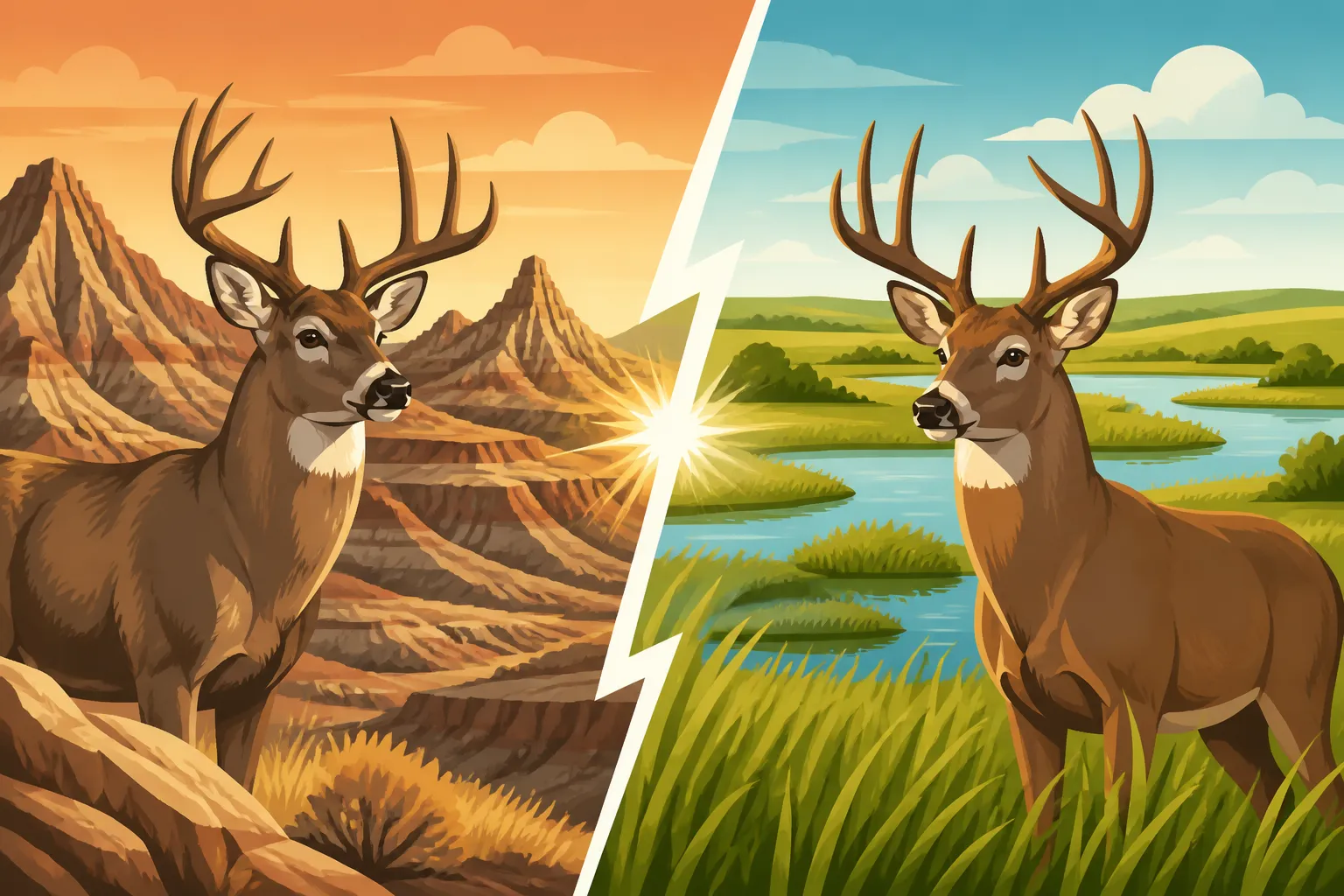
North Dakota, while often perceived as uniformly flat, boasts incredibly diverse landscapes that profoundly influence deer behavior and, by extension, how we hunt them. The two most distinct, and arguably most important, regions for deer hunters are the Badlands in the west and the Prairie Pothole region stretching across much of the central and eastern parts of the state.
The Rugged Badlands Topography
When you picture the Badlands, you're likely thinking of a moonscape of sharply eroded buttes, deep coulees, and winding draws that seem to stretch endlessly. This isn't just scenic beauty; it's a harsh, unforgiving environment sculpted by the elements, primarily the Little Missouri River and its tributaries. The land rises and falls dramatically, creating a maze of broken country that offers incredible cover and thermal protection for deer, particularly during the harsh North Dakota winters. These geological features aren't just pretty; they are the highways, bedding areas, and hideouts for the deer that call them home. The varied elevations and distinct microclimates mean a buck might be sunning itself on a south-facing slope in the morning, then dropping into a deep, north-facing coulee to escape the midday sun or hide from hunters.
This dramatic topography fundamentally shapes how deer move and live. Whitetails often stick to the more timbered river bottoms and the deep, brushy draws, utilizing the dense cover for security. Mule deer, on the other hand, are masters of the open but broken terrain, often preferring the exposed buttes and the vast, wide-open spaces that allow them to spot danger from a distance. The sheer amount of ground a deer can cover, disappearing into a fold of the land in seconds, is astounding. For hunters, this means constant vigilance and an understanding of how wind and thermals interact with the land. Trying to stalk across a wide-open flat on top of a butte is a fool's errand; you need to know how to use the terrain to your advantage, slipping through draws and behind ridges to maintain cover and get within range.
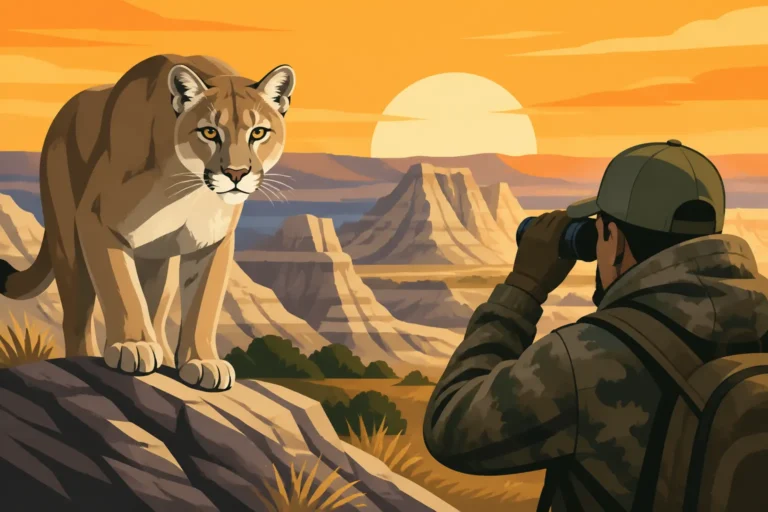
From a hunter's perspective, the Badlands demand physical fitness and mental fortitude. You'll be climbing, descending, and traversing uneven ground for miles. Your optics become your best friend, as glassing for extended periods is the most effective way to locate deer in such vast country. Imagine sitting on a high vantage point as the sun rises, sweeping your binos across miles of broken country, hoping to catch the flick of an ear or the gleam of an antler in a distant draw. It's exhilarating and exhausting all at once. The rewards, however, can be immense, offering a truly wild and challenging hunting experience unlike any other in the state. If you want to learn more about the challenges of hunting this region, check out Hunting North Dakota's Badlands Mule Deer Country.
The Expansive Prairie Pothole Environment
Shift your focus now to the central and eastern stretches of North Dakota, and you enter the iconic Prairie Pothole Region. Here, the landscape takes on a different character entirely. Instead of dramatic elevation changes, you'll find gently rolling hills, interspersed with countless wetlands, lakes, and, most notably, vast expanses of agricultural land. Think endless fields of corn, soybeans, wheat, and sunflowers, broken up by long, linear shelterbelts, the occasional farmstead, and those famous "potholes"—small, often ephemeral wetlands that define the region. The Missouri River corridor, while having some timbered river bottom characteristics, eventually flows into this more subtle topography.
This landscape profoundly influences deer in ways that are starkly different from the Badlands. Food sources are often abundant, thanks to the agricultural bounty, but natural bedding cover can be incredibly scarce. Whitetails, the dominant deer species here, have adapted to this. They thrive on the edge of fields, utilizing the thick cover of cattail sloughs, dense CRP (Conservation Reserve Program) grass, small woodlots, and the protective rows of shelterbelts for bedding and security. During certain times of the year, particularly late season, standing crops like corn or sunflowers become critical thermal and visual cover, essentially acting as temporary forests for deer. You'll often find deer moving between these pockets of cover and the prime feeding areas, sometimes covering significant distances under the cloak of darkness.
For the hunter, the Prairie Pothole region presents its own set of unique challenges. Long-range glassing is still important, but the lack of dramatic elevation means you're often looking across flat or gently rolling fields rather than down into deep canyons. Wind becomes an even more critical factor here, as there's little to break its force, making scent control paramount and influencing how deer move. Stalking can be incredibly difficult due to the open nature of the land and the limited natural cover. You might spend hours watching a deer bedded in a small patch of cattails, waiting for the perfect moment or a change in wind to make your move. It's a game of patience, stealth, and a deep understanding of how deer use fragmented cover in a vast, open world.
Distinct Deer Behavior and Adaptations
The stark differences in landscape between the Badlands and the Prairie Pothole region naturally lead to significant variations in deer behavior and their adaptations. Understanding these nuances is crucial for developing an effective hunting strategy.
Badlands Mule Deer and Whitetail Tactics
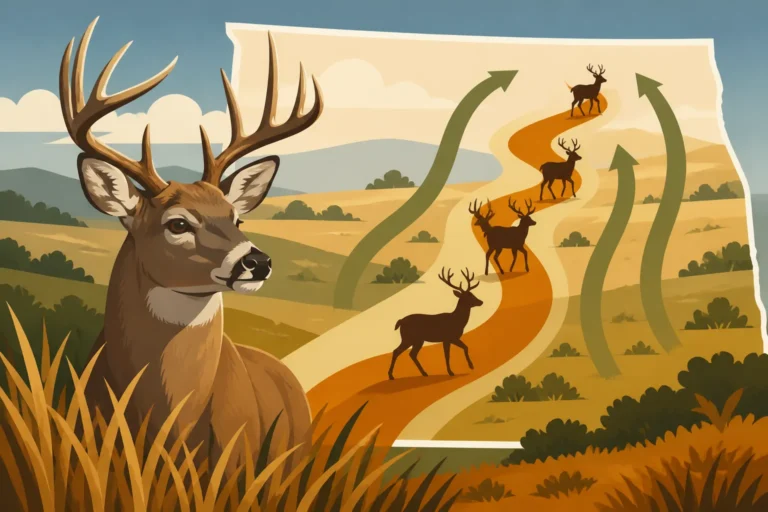
In the rugged terrain of the Badlands, while whitetails certainly exist, especially concentrated along the timbered bottomlands of the Little Missouri River and its feeder creeks, it's the mule deer that truly define the hunting experience for many. Mule deer are built for this country, with their large ears constantly scanning and their distinctive bounding gait allowing them to cover broken ground with surprising speed. They often prefer higher, more exposed ground, relying on their keen eyesight and the vastness of the landscape to detect threats. When spooked, they don't necessarily run far, but rather bound to the next ridge or into the nearest deep coulee, pausing to look back, seemingly melting into the landscape in an instant.
Bedding habits for Badlands deer are largely dictated by the terrain and prevailing weather. Mule deer will often bed high on buttes or on the sunny side of a coulee slope to soak up warmth, especially on cold mornings, always positioned to watch their backtrail and the prevailing wind. They'll use sparse cedars or rock formations for minimal cover, relying more on camouflage and elevation. Whitetails in the Badlands, especially those clinging to the river bottoms, will seek out dense pockets of brush, thickets of cottonwoods, or the deepest parts of wooded draws. They prioritize visual security and often bed down where they can observe approach routes while remaining hidden. Understanding their bedding preferences is key to a successful spot-and-stalk hunt, as you need to anticipate where they'll be resting during daylight hours.
Movement patterns in the Badlands are heavily influenced by the convoluted terrain. Deer will use washes, secondary coulees, and the "backsides" of buttes to travel undetected between bedding and feeding areas. During the rut, bucks will cruise these natural travel corridors, checking for does, covering miles in a single day. Hunters often find that deer here are more nocturnal, especially under pressure, moving primarily at dawn and dusk. However, the sheer size of the Badlands means that undisturbed deer, particularly mule deer, might be up and feeding or moving throughout the day. It's common to see a mule deer buck up and feeding mid-morning on a secluded plateau, something less likely in heavily pressured areas. You might find a big whitetail buck moving through the thick Missouri River Bottomland, using the dense cover as his security blanket.
Prairie Pothole Whitetail Strategies
In the Prairie Pothole region, whitetails are unequivocally the stars of the show. These deer are masters of adapting to a fragmented landscape with intense agricultural influence. They are survivors, often growing quite large due to abundant food sources, but also becoming incredibly cagey and nocturnal in response to consistent hunting pressure. Their adaptations include an uncanny ability to utilize the smallest patches of cover to their full advantage and to move with exceptional stealth in seemingly open country.
Bedding in the Prairie Pothole region looks very different from the Badlands. With no deep coulees or towering buttes, whitetails rely on dense vegetation. This could mean a thick shelterbelt of mature trees and tangled undergrowth, a sprawling block of waist-high CRP grass, or even a dense cattail slough where water provides an extra layer of protection and concealment. As the season progresses and crops are harvested, standing corn or sunflower fields become prime bedding sanctuaries. A single deer or even a small group can disappear into a few acres of standing corn, seemingly vanishing from the earth. Their strategy is to minimize movement during daylight, often holding tight until the absolute last light before slipping out to feed.
Travel corridors in this open country are often linear and predictable. Deer will naturally gravitate towards fencelines, drainage ditches, and the edges of fields that offer even a sliver of cover or break up their silhouette. They are keenly aware of prevailing winds and will use them to their advantage, often moving with the wind at their back or quartering into it, allowing them to scent-check ahead while still using the wind to carry their scent away from their backtrail. Understanding these travel patterns, especially where they intersect with bedding and feeding areas, is crucial. For instance, a small creek bottom lined with willows might be a major thoroughfare between a bedding slough and a distant cornfield. Knowing how they move and why allows hunters to set up effective ambush points.
Hunting Methodologies Tailored to Region
Given the vast differences in landscape and deer behavior, it stands to reason that your hunting methods will need a significant overhaul depending on whether you're chasing deer in the Badlands or the Prairie Pothole region. What works wonders in one area might be entirely futile in the other.
Effective Badlands Hunting Approaches
In the Badlands, the name of the game is almost exclusively spot-and-stalk. This is where your high-quality optics truly earn their keep. Forget sitting in a tree stand all day; the deer could be anywhere across miles of country. You'll spend countless hours perched on a high point, systematically dissecting every coulee, draw, and ridge with your binoculars and spotting scope, searching for the tell-tale signs of a deer. Patience is paramount, as is the ability to pick out a deer that looks like just another rock or clump of sagebrush from a mile away. Once you spot a deer you want to pursue, the real work begins.
The stalk itself is an art form. You need to use every fold, every juniper bush, every bit of cover to your advantage. Understanding wind and thermals is critical in this broken country; thermals often rise in the morning and fall in the evening, meaning the wind can completely change direction with the changing temperatures and sun angle. A successful stalk might involve a mile-long detour to get into a favorable wind position, crawling on your hands and knees for the last hundred yards, or waiting for a cloud to pass before making a final approach. This is where tools like GoHunt can really shine, helping you analyze topo maps and wind direction, even in the field, to plan your approach. The physical demands are high, and you'll likely shed a few pounds by the end of your hunt.
Finally, getting within range means being prepared for a longer shot than you might typically take in timbered country. Mule deer, especially, are notoriously wary and don't often present chip shots. Practicing your shooting at extended ranges, even out to 400 or 500 yards, is not uncommon for Badlands hunters. The reward for this arduous effort – a buck taken after a hard-earned stalk in the vast, wild Badlands – is an experience that stays with you forever. If you are preparing for such a challenging trip, consider Packing for an Eight-Day North Dakota Elk Hunt for insights into physical preparation for similar terrain.
Prairie Pothole Hunting Tactics
Hunting the Prairie Pothole region demands a completely different tactical toolkit. While spot-and-stalk can sometimes work on large tracts of CRP or in specific situations, it's often less effective due to the fragmented cover and the whitetails' tendency to hole up tight. Here, tactics often revolve around strategic ambush points, thoughtful still-hunting, and, quite commonly, organized deer drives.
Setting up ground blinds on field edges, particularly along routes deer use to move between bedding cover and feeding fields, is a popular and effective method. You might brush in a blind along a cornfield, sunflower field, or a shelterbelt edge, waiting for deer to emerge at dawn or dusk. Understanding Entry Routes Through Standing Sunflowers can be crucial for these setups. Still-hunting small woodlots, cattail sloughs, or thick shelterbelts can also be productive, especially on windy days when deer feel more secure and the noise of your movement is muffled. This involves moving slowly, taking a few steps, and then pausing for minutes to scan, listen, and glass every patch of cover.
Deer drives, especially with a small group of three or four hunters, are another highly effective tactic in this landscape. Identifying a block of cover – a shelterbelt, a small cattail slough, or a standing cornfield – and strategically positioning standers while one or two pushers slowly move through can effectively roust deer. Timing and communication are critical for safety and success. Beyond these, calling tactics can be surprisingly effective. Rattling antlers on the open prairie, especially during the rut, can draw curious bucks from a considerable distance. Grunt calls can also bring in bucks that are cruising fencelines or field edges. Remember that Rattling Volume on the Open Prairie needs to be adapted to the vastness.
Public Land Considerations and Access
Access to quality hunting ground is always a primary concern for hunters, and North Dakota's Badlands and Prairie Pothole regions offer distinct public land opportunities and challenges. Knowing how to navigate these is key to a successful hunt.
Navigating Badlands Public Access
The Badlands are home to vast tracts of public land, most notably the Little Missouri National Grassland, managed by the U.S. Forest Service. This represents a significant chunk of huntable ground, offering a truly expansive, backcountry experience. Imagine miles and miles of rolling hills, deep coulees, and buttes where you can literally walk for days without crossing a road. Additionally, there are scattered blocks of State School Land and some Wildlife Management Areas (WMAs).
However, the sheer vastness of this public land also brings challenges. Remoteness means you need to be self-sufficient, carrying ample water, navigation tools, and emergency gear. Cell service can be spotty or nonexistent in many areas, making physical maps and a good GPS device essential. Understanding property boundaries is critical, as private inholdings exist within the National Grassland, and you must respect posted signs. Tools like the GoHunt app can be invaluable for pinpointing property lines and navigating without cell service. If you're relying on digital maps, make sure to consider Using the PLOTS App Without Cell Service before you head out.
Hunter density can vary wildly. While some areas near main access points might see pressure, the true backcountry of the Badlands often offers solitude. The challenge is often physical; many hunters aren't willing or able to hike deep into these remote areas, which means those who put in the effort can find untouched spots and older, less pressured deer. This is where patience and persistence pay off, often allowing you to find a buck that hasn't seen a hunter all season.
Unlocking Prairie Pothole Public Access
In the Prairie Pothole region, public land takes a different form. Here, the landscape is a mosaic of private agricultural land, interspersed with numerous smaller parcels of public access. The North Dakota Game and Fish Department's PLOTS (Private Land Open To Sportsmen) program is the cornerstone of public access, leasing private land for public hunting. Additionally, federal Waterfowl Production Areas (WPAs) managed by the U.S. Fish and Wildlife Service, and various State Wildlife Management Areas (WMAs), provide critical habitat and hunting opportunities.
The challenge with Prairie Pothole public land is its fragmented nature. Unlike the expansive blocks of the Badlands, PLOTS tracts and WPAs are often smaller, scattered, and sometimes directly adjacent to private land. This means you need to be constantly aware of property lines and be diligent in Scouting PLOTS Land Before Season to understand the layout and potential deer movement. The North Dakota Game and Fish Department publishes an annual PLOTS guide and offers a fantastic mobile app that provides real-time boundary information, which is invaluable. GoHunt also provides similar mapping layers that integrate land ownership data, making it easier to identify huntable ground.
Hunter density on these smaller, often road-accessible tracts can be significantly higher, especially during opening weekend or peak rut. This means deer on PLOTS land can become incredibly wary very quickly. The key to success often lies in finding those "hidden" parcels, or areas within larger tracts that other hunters overlook. Sometimes, it's literally walking an extra half-mile past where most people stop that leads you to undisturbed deer. Consider tactics like Finding PLOTS Ground Others Walk Past to increase your chances of success. It requires a keen eye for overlooked cover and a willingness to put in a little extra effort.
Trophy Potential and Herd Dynamics
Every hunter dreams of a trophy, and North Dakota offers opportunities for impressive deer in both its Badlands and Prairie Pothole regions, albeit with different species and distinct dynamics influencing their potential. Understanding these differences can help manage expectations and tailor your pursuit.
Badlands Trophy Opportunities
The Badlands hold a reputation for producing some truly magnificent deer, particularly mule deer. The harsh environment often leads to a lower overall deer density compared to the fertile agricultural areas, but those deer that survive tend to be older and larger-bodied, with impressive antler growth. The broken, rugged terrain naturally provides sanctuaries where bucks can mature with less human interaction, making it a prime destination for hunters seeking a challenging hunt for a mature animal. The genetics are strong, and the challenging environment sculpts resilient, robust deer.
Several factors contribute to this impressive age structure and trophy potential. The difficult access and physical demands of hunting the Badlands mean that many hunters don't venture deep into the remote areas, leaving pockets of older bucks relatively undisturbed. Furthermore, the limited road access in much of the Little Missouri National Grassland reduces poaching opportunities and allows bucks to live longer. While North Dakota's deer population estimate varies, the Badlands units often have a good buck-to-doe ratio and a solid representation of mature bucks, making them appealing for those chasing a truly big deer. For more information on why this region produces big deer, look into Why Badlands Units Produce Big Bucks.
The grind for a Badlands trophy is real. It's a hunt where you earn every inch, every sighting, and every opportunity. You might go days without seeing a deer that meets your criteria, but when you finally connect with a mature Badlands buck, it's a profound accomplishment. These aren't easy hunts; they test your physical limits, your patience, and your hunting skills, but the reward of a truly wild, free-ranging trophy mule deer or a big Badlands whitetail is a memory that lasts a lifetime.
Prairie Pothole Trophy Prospects
While the Badlands might steal the spotlight for mule deer, the Prairie Pothole region quietly, but consistently, produces some absolutely giant whitetails. These deer benefit from an incredibly rich and abundant food supply provided by North Dakota's agricultural landscape. Fields of corn, soybeans, and alfalfa fuel rapid growth and impressive antler development, giving bucks the nutritional building blocks to become truly massive. The genetics in these areas are excellent, and with enough age, a Prairie Pothole whitetail can rival any in the country.
However, the challenges to achieving this trophy potential are different. With high food availability often comes higher deer densities, but also significant hunting pressure due to more accessible land. Deer in the Prairie Pothole region learn quickly. Mature bucks often become almost entirely nocturnal, moving only under the cover of darkness or during the absolute nastiest weather, making them incredibly difficult to hunt during legal shooting hours. The limited natural cover also means that these deer are acutely aware of human presence and respond by becoming incredibly elusive.
Despite these hurdles, smart, dedicated hunting in the Prairie Pothole region can yield exceptional results. Hunters who understand deer behavior, leverage the available cover (even small patches), and are willing to adapt their tactics to the prevailing conditions often find success. This might involve long hours in a ground blind, strategic scouting to pinpoint precise travel routes, or capitalizing on late-season opportunities when deer are forced to move more to find food. A trophy whitetail from this region is a testament to a hunter's ability to outwit a highly pressured, intelligent animal in an open, often challenging environment.
Specific Challenges and Rewards
Every hunting adventure comes with its own set of trials and triumphs. North Dakota's Badlands and Prairie Pothole regions each present distinct challenges that, when overcome, lead to incredibly rewarding experiences.
Overcoming Badlands Difficulties
Hunting the Badlands is a physically demanding endeavor. The constant up-and-down hiking across uneven, often slippery terrain can quickly wear you down, especially if you're not accustomed to it. Carrying a heavy pack, with water, optics, and potentially game meat, adds another layer of exertion. Extreme weather is another significant factor; temperatures can swing wildly, and a calm morning can quickly turn into a fierce, wind-driven blizzard or a scorching hot afternoon. Getting lost in the maze of coulees is a real possibility, making reliable navigation tools and a good sense of direction absolutely essential.
Beyond the physical, there are logistical challenges. Finding reliable water sources can be difficult, and you'll often need to pack in all your water or filter from potentially questionable sources. When you do connect with a deer, the task of Recovering a Deer From a Coulee can be monumental. Imagine a successful hunt deep in a remote draw, miles from the nearest road, and then contemplating the monumental task of field dressing and quartering your animal, then packing it out over challenging terrain. It's not for the faint of heart, but it builds character.
The immense satisfaction of a Badlands harvest is unlike any other. It's the culmination of physical exertion, meticulous glassing, a patient stalk, and a deep connection to a truly wild place. When you finally put your hands on a buck taken from this rugged landscape, there's a profound sense of accomplishment, knowing you've truly earned it. It’s an experience that harkens back to a more primal form of hunting, where the land itself is as much a part of the challenge as the deer. If you are a bowhunter, you might want to look into Bowhunting North Dakota's Long Archery Season for additional insights into hunting this difficult but rewarding region.
Tackling Prairie Pothole Obstacles
The Prairie Pothole region, while less physically strenuous in terms of elevation, presents its own unique set of obstacles. Perhaps the biggest challenge is hunter density. With more accessible land, especially PLOTS, you'll often encounter other hunters, which can quickly pressure deer into becoming nocturnal or moving to private land. This requires creative thinking and a willingness to adapt your plans on the fly. Navigating the patchwork of public and private land also requires constant vigilance to avoid trespass.
Wind is a persistent factor in the open prairie, making scent control paramount. A shift in wind can ruin a perfectly planned ambush. The cold, especially during late season, can be brutal, demanding proper gear and a strategy to stay warm and alert for long hours. Staying mobile and adapting to subtle changes in deer behavior is also key. Whitetails here leave subtle clues, and reading north Dakota mud for fresh deer movement or interpreting sparse tracks in a field can make all the difference.
The reward of outsmarting a cunning prairie whitetail is incredibly satisfying. These deer are intelligent and have survived against considerable odds, making them formidable opponents. When you finally piece together the puzzle – understanding their preferred bedding cover, their travel routes, and anticipating their movements – and you connect with a mature buck, it's a testament to your patience, scouting, and strategic thinking. It’s a game of wits and persistence, where the subtle nuances of the land and the deer's behavior become your greatest teachers.
Comparative Look at Badlands vs. Prairie Pothole Deer Hunting
To help visualize the distinct approaches required, here’s a quick overview of how hunting differs between these two iconic North Dakota regions:
| Feature | Badlands Hunting | Prairie Pothole Hunting |
|---|---|---|
| Primary Deer Species | Mule Deer (dominant), Whitetail (river bottoms) | Whitetail (dominant) |
| Terrain | Rugged, steep coulees, buttes, sparse timber | Rolling hills, agricultural fields, wetlands, shelterbelts |
| Typical Hunting Method | Spot-and-stalk, extensive glassing | Ground blinds, still-hunting, deer drives, calling |
| Physical Demands | High (strenuous hiking, packing out game) | Moderate (walking fields, less elevation change) |
| Key Challenge | Vastness, remoteness, navigation, weather, game retrieval | Hunter pressure, fragmented cover, nocturnal deer |
| Trophy Potential | Excellent for mature Mule Deer, good for river Whitetail | Excellent for mature Whitetail |
| Primary Cover Type | Deep coulees, sparse junipers, river bottom timber | Shelterbelts, CRP, cattail sloughs, standing crops |
| Gear Focus | Quality optics, sturdy boots, reliable GPS | Warm layers, good ground blind, scent control |
Disclaimer
Please remember that hunting regulations and land access rules can change. Always consult the most current North Dakota Game and Fish Department regulations and land maps before planning any hunting trip. This guide is for informational purposes only and does not substitute for official legal guidance.