North Dakota Baiting Restrictions on National Grasslands
It's incredibly frustrating when you're trying to do everything right as a hunter, only to find the rules and regulations are a maze, especially when it comes to something as nuanced as baiting. You want to give yourself the best chance, but you also want to respect the land and the law. This guide is here to untangle the complexities of baiting restrictions, specifically focusing on the critical differences when hunting on North Dakota's beautiful, yet strictly regulated, National Grasslands, helping you navigate these rules with confidence and integrity.
Understanding North Dakota's Baiting Landscape
North Dakota offers incredible hunting opportunities, but understanding the nuances of baiting laws is absolutely critical to avoid legal trouble and ensure you're hunting ethically. It's not always as simple as "yes" or "no," especially when you factor in different types of land ownership.
General Baiting Rules in North Dakota
Across much of North Dakota, baiting for deer and other big game is a hot topic, and the rules are constantly evolving, largely driven by disease management concerns. Generally speaking, baiting is defined as placing, exposing, depositing, distributing, or scattering food or other attractants that may lure game animals for the purpose of hunting. This isn't just about a pile of corn; it can include mineral blocks, salt licks, molasses, or even certain food scraps. The intent is key: if it's placed to draw game animals specifically for you to hunt them, it's considered baiting.
For private land, North Dakota has historically had specific regulations concerning baiting, often allowing it with certain conditions or restrictions in particular areas. These rules are usually outlined thoroughly by the North Dakota Game and Fish Department and can change year to year based on disease prevalence, particularly Chronic Wasting Disease (CWD). It's crucial to consult the latest hunting proclamation for the most up-to-date information for your specific hunting unit and property. However, the game changes entirely when you step onto federal lands.
The Specifics of National Grasslands
North Dakota is home to two significant National Grasslands: the Little Missouri National Grassland, primarily in the western part of the state, and the Sheyenne National Grassland in the southeast. These vast expanses of public land, managed by the U.S. Forest Service, operate under a different set of rules than private or even state-managed lands. When you're considering Hunting North Dakota's Little Missouri National Grassland or venturing into Sheyenne National Grassland Hunting, remember that these are federal properties, and their regulations regarding baiting are much stricter.
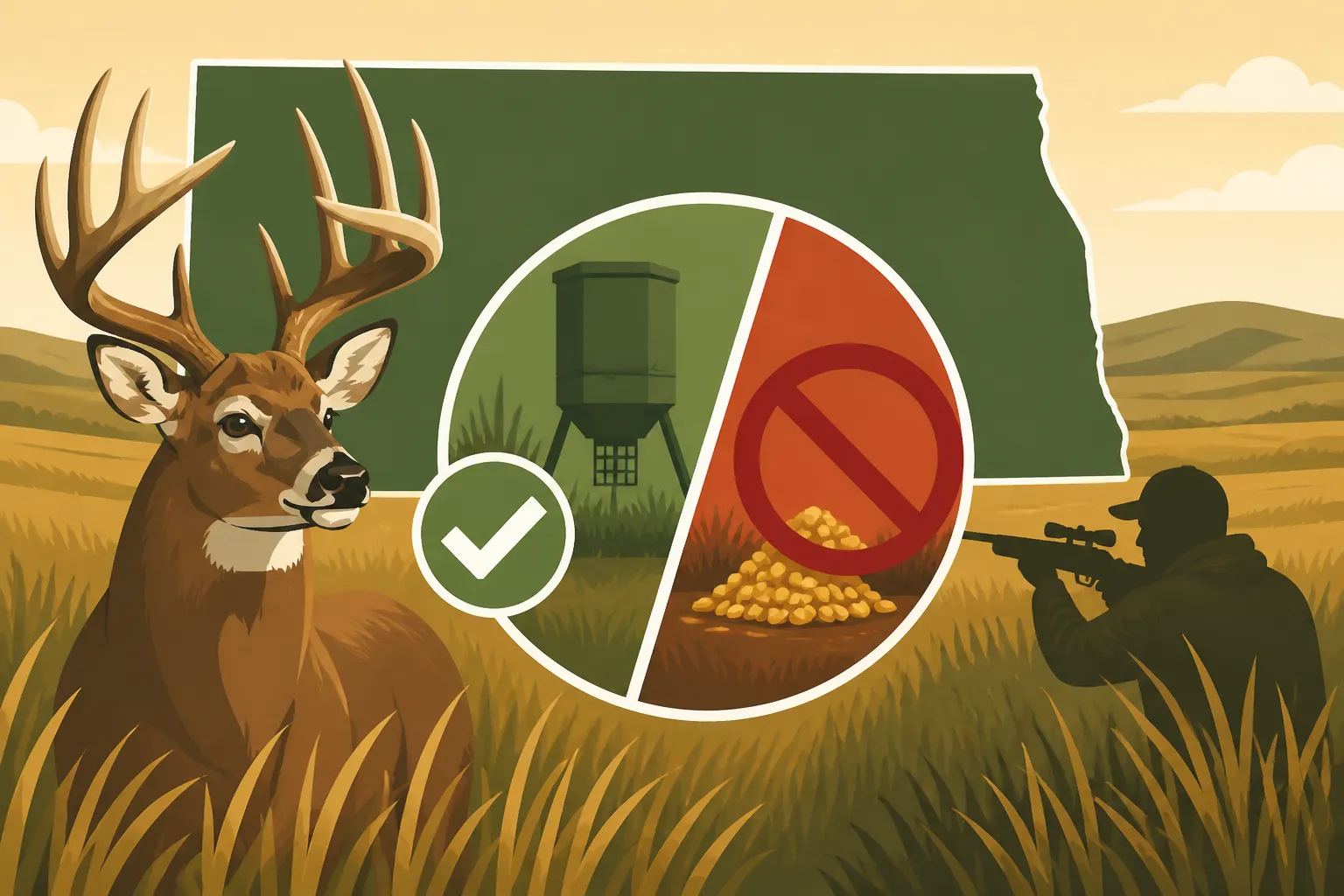
On all National Grasslands in North Dakota, baiting for big game is strictly prohibited. This isn't a suggestion; it's a hard and fast rule. This blanket ban is primarily in place to uphold national wildlife management objectives, which prioritize fair chase principles and, most importantly, disease prevention, particularly with increasing concerns about CWD. So, while you might hear about baiting being allowed in certain situations on private land in North Dakota, understand that this leniency does not extend to these federal treasures. It's a fundamental difference that every hunter needs to internalize before setting foot on these public grounds.
Why Baiting is Banned on National Grasslands
The prohibition of baiting on National Grasslands isn't an arbitrary rule designed to make hunting harder. It stems from well-researched wildlife management principles and a deep commitment to maintaining healthy animal populations and ethical hunting standards across our public lands.
Disease Management and CWD Concerns
One of the most significant drivers behind baiting bans, especially on National Grasslands, is disease management. When animals, particularly deer, gather in close proximity at a bait site, the risk of disease transmission skyrockets. Imagine a group of deer, all sharing the same food source, slobbering on corn kernels or licking a mineral block. If one of those deer carries a highly contagious disease, like Chronic Wasting Disease (CWD), it's incredibly easy for that disease to spread to every other animal at that site.
CWD is a fatal neurological disease affecting deer, elk, and moose. It's a major concern for wildlife managers across North America, and North Dakota is no exception, with the state actively monitoring and managing North Dakota's Expanding CWD Hunting Units. The disease is spread through prions, which can be shed in saliva, urine, and feces, and can persist in the environment for years. A communal bait pile effectively becomes a hot spot for CWD transmission, undermining all efforts to control its spread. By banning baiting, wildlife agencies aim to keep deer populations more dispersed, reducing nose-to-nose contact and minimizing the chances of CWD spreading rapidly through the herd. It’s a proactive measure to protect the long-term health and sustainability of our wild deer populations.
Fair Chase and Ethical Hunting Practices
Beyond disease prevention, the ban on baiting on National Grasslands is deeply rooted in the concept of "fair chase." Fair chase is a cornerstone of ethical hunting, emphasizing a balance between the hunter and the hunted. It means using methods that do not give the hunter an unfair advantage over the animal, ensuring that the animal has a reasonable chance to evade capture.
Many hunters and conservation organizations believe that baiting tips this balance too heavily in the hunter's favor. It removes much of the challenge and skill involved in scouting, tracking, and understanding animal behavior in their natural habitat. On National Grasslands, which are often vast and wild, the expectation is that hunters will immerse themselves in the environment, learning the terrain, the natural food sources, and the movement patterns of the game. Using a mapping tool like GoHunt can be invaluable here, helping you understand topography, vegetation types, and potential game corridors without resorting to artificial attractants.
The spirit of fair chase encourages hunters to develop a deeper connection to the landscape and the animals they pursue. It promotes a more traditional and respectful approach to hunting, where success is earned through patience, knowledge, and effort, rather than simply drawing an animal to a predetermined location. This commitment to ethical hunting helps maintain the integrity of the sport and ensures that public lands remain places where hunters can truly test their skills against nature.
What Constitutes "Bait" on National Grasslands
Understanding what exactly counts as "bait" is crucial, as misinterpretation can lead to serious consequences. On federal lands like North Dakota's National Grasslands, the definition is broad and strictly enforced, leaving little room for ambiguity.
Defining Bait and Attractants
When the regulations talk about bait, they're referring to any substance placed by a person that could lure or attract game animals. This includes, but isn't limited to:
- Edible Items: Think corn, oats, wheat, molasses, apples, potatoes, or any other foodstuff that animals might consume. A common misconception is that a small amount won't matter, but any quantity, no matter how small, if placed with the intent to attract game for hunting, qualifies as bait.
- Mineral Blocks/Salt Licks: While some argue these are for health, if they are placed to attract animals during hunting season, they are considered bait. Deer, elk, and other herbivores are naturally drawn to minerals, making these highly effective attractants.
- Scent Attractants (with limitations): This is where it gets a bit tricky. While generally, synthetic scent attractants (like doe-in-estrus urine or curiosity scents) that aren't consumed are often allowed on public lands if they don't contain any natural urine or bodily fluids from cervids (due to CWD concerns), any edible attractant, even liquid molasses or a highly aromatic feed, would fall under the baiting ban. The key is whether the item can be consumed or is directly providing sustenance. Always check the very latest regulations for any specific unit, as rules on scents can vary.
Essentially, if you put something out that a deer or other game animal would want to eat, lick, or ingest, and your intent is to use that to make them easier to hunt, you are baiting. It doesn't matter if it's commercially packaged or something from your kitchen; the principle remains the same. The goal is to ensure animals are sought in their natural patterns, based on available forage and water, not artificial enticements.
"Normal Agricultural Practices" Exemption
This exemption is commonly misunderstood, especially when thinking about federal lands like National Grasslands. On private land, North Dakota regulations often include a carve-out for "normal agricultural practices." This means that standing crops, silage piles, grain stored as part of farming operations, or mineral licks placed for livestock (not wildlife) are generally not considered bait, even if deer visit them. The primary purpose of the item determines whether it's bait. If a farmer has a cornfield, and deer come to eat it, that's not baiting for hunting purposes.
However, this exemption does not apply to National Grasslands in the context of hunting baiting. National Grasslands are managed primarily for grazing (cattle, sheep) and wildlife habitat, not row-crop agriculture in the same way private farmland is. While there might be grazing allotments where cattle utilize certain areas, hunters cannot claim that a pile of corn they put out is part of "normal agricultural practice" on federal land. The U.S. Forest Service explicitly prohibits placing bait on these lands. Even if there are hay bales for livestock, bringing in additional feed or minerals specifically for wild game hunting is a violation. The presence of natural food sources (like native grasses, forbs, and shrubs) is what deer should be utilizing, and hunters should be focusing on those natural patterns rather than trying to mimic a farm field. It’s vital to understand this distinction: what might be permissible on a private farm field is absolutely not okay on federal public hunting land.
Consequences of Violating Baiting Restrictions
Breaking baiting rules, especially on federal lands, isn't just a minor infraction. The consequences can be severe, impacting your wallet, your ability to hunt, and even the broader hunting community's reputation. It’s a risk simply not worth taking.
Legal Penalties and Fines
First and foremost, violating baiting restrictions on North Dakota's National Grasslands comes with significant legal penalties. Since these are federal lands, you could be facing charges under federal law, in addition to state hunting violations. A conviction can lead to substantial fines, often ranging from hundreds to thousands of dollars. These aren't just small tickets; they can be financially crippling.
Beyond monetary penalties, you risk losing your hunting privileges. Depending on the severity of the offense and any prior violations, your hunting license could be suspended or revoked for a period of time, possibly even permanently. This suspension could extend beyond North Dakota to other states that are part of interstate wildlife violator compacts. Imagine not being able to hunt your favorite season for years, all because of a bait pile.
Furthermore, any equipment used in the commission of the crime, such as firearms, bows, or even vehicles, could be seized. This means you could lose valuable hunting gear that you've invested in over the years. Law enforcement takes these violations seriously, understanding the profound negative impact baiting has on wildlife management and fair chase principles. It's a deterrent meant to protect our shared wildlife resources and uphold the integrity of hunting.
Ethical Repercussions and Reputation
Beyond the direct legal consequences, there are significant ethical repercussions for those caught baiting, which extend to the entire hunting community. Every hunter carries a responsibility to uphold ethical standards, and when someone violates these standards, it casts a shadow over all of us.
For the individual, being caught baiting can lead to a damaged personal reputation within the hunting community. Hunters who follow the rules often feel a strong sense of pride and respect for the game and the land. Violating baiting laws is often seen as a betrayal of these principles, leading to scorn and distrust from fellow outdoors enthusiasts. It undermines the camaraderie that is so integral to hunting culture.
On a broader scale, instances of baiting violations feed into negative public perceptions of hunting. In an age where hunting is constantly under scrutiny, it's vital that hunters demonstrate the highest levels of ethics and responsibility. When stories of illegal baiting hit the news, it provides ammunition for anti-hunting groups, making it harder for wildlife agencies to gain public support for conservation efforts that are primarily funded by hunters. It paints a picture of hunting as unfair or unethical, which couldn't be further from the truth for the vast majority of law-abiding sportsmen and women. By respecting baiting restrictions, especially on our precious National Grasslands, hunters actively contribute to a positive image of hunting and ensure its future for generations to come.
Effective Hunting Strategies Without Bait on National Grasslands
Hunting without bait on North Dakota's National Grasslands is not just a legal requirement; it's an opportunity to truly hone your skills and connect with the wild. It pushes you to become a better, more observant hunter, relying on knowledge and woodsmanship rather than artificial attractants.
Scouting and Habitat Knowledge
The foundation of successful bait-free hunting is extensive scouting and a deep understanding of animal habitat. This means putting in the boots-on-the-ground work long before the season even opens. When you're tackling vast areas like the Little Missouri National Grassland, covering ground effectively is key.
Start by utilizing modern mapping tools like GoHunt, onX Hunt, or the Scouting PLOTS Land With the ND Hunt App even for federal lands. These apps allow you to study topography, identify potential bedding areas, water sources, and natural travel corridors from the comfort of your home. Look for draws, ridges, and pinch points that funnel deer movement. Pay close attention to vegetation changes – areas with denser cover for bedding, or specific native food sources like chokecherry bushes, buffalo berries, or various forbs that deer prefer at different times of the year.
Once you have a general idea, get out there and walk the ground. Look for fresh deer sign: tracks, droppings, rubs on trees, and scrapes. Rubs indicate where bucks are marking territory, while scrapes are communication hubs. Understanding Reading Aerial Photos for Badlands Deer can help you interpret these signs in relation to the landscape. If you're hunting mule deer in the more rugged Badlands terrain, glassing vast expanses can reveal patterns of movement and bedding locations that you might miss on foot. The more you know about what deer are naturally doing and eating, the better you can predict where they’ll be.
Understanding Animal Movement and Behavior
Deer are creatures of habit, driven by a few fundamental needs: food, water, and security. On National Grasslands, where there are no bait piles to dictate their movement, understanding these natural drivers becomes paramount.
Focus on identifying natural food sources specific to the season you're hunting. In early fall, deer might be focused on forbs and certain grasses. As winter approaches, they'll shift to browse (twigs, buds) and any remaining mast crops, if present. Water sources, whether natural springs, stock ponds for cattle, or intermittent streams in coulees, are always magnets for thirsty animals. Bedding areas are typically located in thick cover, often on south-facing slopes in colder weather to catch the sun, or on shaded north-facing slopes when it's warm. Knowing Where Badlands Bucks Bed can be a game-changer.
Learning how Wind and Thermals in Badlands Terrain influence deer movement is also critical. Deer often use wind to detect predators, moving into or across the wind. In hilly terrain, thermals (rising and falling air currents) will dictate how scent travels, particularly at dawn and dusk. By understanding these environmental factors, you can plan your approach to stay downwind and out of sight. Techniques like still-hunting, where you move slowly and deliberately, stopping frequently to observe, or spot-and-stalk, where you locate an animal from a distance and carefully plan an approach, become incredibly effective. This active engagement with the environment is truly what makes hunting on these lands so rewarding. Consider exploring Hunting North Dakota's Badlands Mule Deer Country for more specific insights into these tactics.
Utilizing Natural Terrain Features
The varied topography of North Dakota's National Grasslands offers incredible natural advantages for the hunter who knows how to read it. These landscape features can act as funnels, natural barriers, and ambush points without any human intervention.
Look for funnels and pinch points, which are narrow strips of cover or terrain that naturally concentrate deer movement. This could be a narrow wooded draw connecting two larger blocks of timber, a strip of dense brush between two open fields, or a saddle between two hills. Deer prefer to move through cover and take the path of least resistance, making these areas prime locations to intercept them. For example, Hunting a Badlands Draw for Mule Deer can be highly productive, as these depressions often serve as travel routes and bedding areas. Similarly, the unique characteristics of Hunting Little Missouri's Backcountry Draws offer natural corridors for game.
Ridge lines and coulees are also invaluable. Deer often travel just below a ridge line, using the crest for cover against detection while still having a view of the terrain below. Conversely, deep coulees provide excellent bedding and escape cover. Understanding how deer navigate these features, especially during different times of day or in response to hunting pressure, allows you to set up intelligently. A strategic setup along a natural travel corridor can offer you a shot opportunity without needing any artificial attractants, demonstrating the true art of hunting the landscape.
Resources and Staying Informed
Navigating hunting regulations and finding public land access can feel overwhelming, but thankfully, there are excellent resources available to help North Dakota hunters stay informed and compliant. Utilizing these tools is a mark of a responsible and successful hunter.
North Dakota Game and Fish Department
Your absolute go-to resource for anything hunting-related in North Dakota is the North Dakota Game and Fish Department (NDGFD). Their website is a treasure trove of information, providing the most up-to-date hunting proclamations, licensing details, season dates, and specific unit regulations.
I can't stress this enough: always consult the current year's hunting proclamation. It's available online and typically at license vendors. This document is your legal guide, and it will contain the most precise language regarding baiting restrictions for all land types, including National Grasslands. You can also find information on CWD management, North Dakota's Fourteen-Unit CWD Zone, and mandatory testing requirements, all of which are directly linked to why baiting restrictions are in place. Don't rely on hearsay or outdated information; go straight to the source. The NDGFD also provides contact information, so if you have a specific question that isn't clearly answered, don't hesitate to call their district offices. They are there to help hunters understand and follow the rules.
Utilizing Digital Tools for Public Land Access
In today's hunting world, digital mapping applications have become indispensable, especially when you're exploring vast public areas like the National Grasslands where physical property markers can be sparse.
Platforms like GoHunt, onX Hunt, and the North Dakota Game and Fish Department's own mapping tools (like their PLOTS app) are incredibly powerful. They allow you to:
- Identify Public vs. Private Land: This is crucial. These apps use color-coded overlays to clearly show land ownership, ensuring you always know if you're on National Grassland, state-owned PLOTS land, or private property where permission would be required. Knowing these boundaries is fundamental to avoiding trespass and adhering to the correct baiting rules.
- Scout from Anywhere: You can digitally scout terrain, vegetation types, and access points. Layering satellite imagery with topographic maps helps you visualize draws, ridges, and potential bedding areas without ever leaving your home.
- Track Your Movement: While in the field, these apps use your phone's GPS to show your exact location relative to property lines, roads, and specific terrain features. This is especially helpful in dense cover or unfamiliar territory.
- Download Offline Maps: Often, cell service is spotty or nonexistent in remote areas of the Badlands or other National Grasslands. Many apps, including the NDGFD PLOTS app, allow you to download maps for offline use, ensuring you always have access to critical information. Understanding Using the PLOTS App Without Cell Service is a must for any public land hunter.
- Locate Specific Features: These tools can help you mark game sign, water sources, or potential stand locations, creating a digital blueprint for your hunt.
Using these digital tools not only makes you a more efficient hunter but also a more responsible one. They provide the knowledge you need to respect property boundaries and adhere to regulations, including baiting restrictions. By integrating these resources into your hunting preparation, you'll be well-equipped to experience all the North Dakota National Grasslands have to offer, legally and ethically.
Comparing Baiting Regulations
To help clarify the differences we've discussed, here's a quick overview of how baiting rules typically contrast between private land and North Dakota's National Grasslands. Please always consult the current year's North Dakota Game and Fish Department hunting proclamation for the most up-to-date and specific regulations for any given unit.
| Feature | Private Land (General North Dakota) | National Grasslands (North Dakota) |
|---|---|---|
| Baiting for Big Game | Often permitted in some units, with specific restrictions/guidelines | Strictly Prohibited |
| Definition of Bait | Food, minerals, or other attractants placed to lure game for hunting | Any substance placed to lure or attract game for hunting (broad definition) |
| Mineral Blocks/Salt Licks | May be permitted in some areas, check unit-specific rules | Strictly Prohibited |
| Scent Attractants (Non-Edible) | Generally permitted if not containing cervid bodily fluids | Generally permitted if not containing cervid bodily fluids (check specifics) |
| "Agricultural Practices" Exemption | May apply to standing crops, livestock feed for farming purposes | Does NOT apply for hunting purposes |
| Primary Regulatory Body | North Dakota Game and Fish Department | U.S. Forest Service (federal), in conjunction with ND Game and Fish |
| Enforcement | State game wardens | State game wardens, federal law enforcement (e.g., Forest Service LEOs) |
| Penalties | Fines, license suspension, equipment seizure | Federal and State fines, license revocation, equipment seizure |
| CWD Risk | Increased with congregation at bait sites | Rule aims to mitigate CWD spread by preventing congregation |
Disclaimer
The information provided in this guide is intended for educational and informational purposes only and does not constitute legal advice. Hunting regulations in North Dakota, especially concerning baiting, can change frequently and may vary by specific unit and land ownership. It is the individual hunter's responsibility to consult the most current North Dakota Game and Fish Department hunting proclamation, as well as any applicable federal regulations for National Grasslands or other federal lands, before engaging in any hunting activities. Failure to do so may result in legal penalties.