Hunting James River Basin Farmland
Hunting the vast agricultural landscapes of North Dakota's James River Basin can feel daunting. You're surrounded by endless fields, and it's easy to wonder where a deer, a flock of geese, or even a pheasant might hide in such an open environment. It’s not like hunting timber country or the broken badlands where cover is obvious. This guide will help you decipher the patterns of wildlife in this unique farmland setting, offering practical strategies to increase your success and make sense of the open prairie.
Decoding the James River Basin's Farmland Ecosystem for Game
The James River Basin, cutting through central and eastern North Dakota, is a patchwork of fertile farmland interspersed with sloughs, shelterbelts, and the winding river itself. It’s a rich environment, but it demands a different approach than other hunting landscapes. Understanding how deer, waterfowl, and upland birds utilize this specific terrain is your first step to filling your tag.
Identifying Key Habitat Features in the Fields
When you look out over what seems like an endless sea of corn or soybean fields, it can be hard to believe anything could survive, let alone thrive, in such an open setting. But deer and other game are masters of adapting. They use every subtle nuance of the land to their advantage.
One of the most critical features to identify are the shelterbelts and tree lines. These aren't just pretty rows of trees; they are absolute highways and bedding sanctuaries for deer. Even a narrow line of Russian olives or a small grove of poplars can hold multiple deer, especially when temperatures drop or winds howl across the prairie. Think of them as miniature forests in a land devoid of extensive timber. The taller, denser the shelterbelt, the more appealing it is for bedding and security. Deer will often travel these lines to move between feeding areas in crop fields and more secure cover.
Another often-overlooked feature is the presence of drainage ditches and small coulees. While not as dramatic as the Badlands draws, these subtle depressions provide valuable cover, especially when they fill with brush, tall grasses, or cattails. They offer routes of travel that keep deer out of sight and protected from the elements. Even a small dip in the land can act as a natural blind for a bedded whitetail, giving them an advantage over hunters walking the field edges.
Finally, standing crops themselves are prime habitat, particularly later in the season. A mature cornfield offers incredible thermal cover and food. Deer will bed deep within these fields, emerging only to feed. Hunting a Standing Corn Field for Deer requires a different set of tactics, often involving working with the wind and being incredibly stealthy. Even stubble fields after harvest aren't devoid of game; they provide waste grain for deer, geese, and pheasants, and the residual cover offers a degree of concealment.
Understanding Deer Movement Patterns in Agricultural Settings
Deer in the James River Basin live by a slightly different rhythm than their timber-dwelling cousins. Their movements are highly dictated by agriculture.
During the early archery season, before crops are harvested, deer are often predictable. They’ll bed deep in standing corn or CRP fields during the day and move out to feed in soybean or alfalfa fields at dusk and dawn. These movements often follow the edges of fields, using fencerows or subtle changes in elevation for cover. As harvest progresses, their patterns shift dramatically. They lose their primary bedding cover, forcing them to concentrate in remaining shelterbelts, larger sloughs, or small patches of timber along the James River itself. This concentration can be a boon for hunters, but it also means deer are more sensitive to pressure.
The rut, generally peaking in early to mid-November in North Dakota, is a pivotal time. While bucks will still use cover, they become more daring, cruising field edges and shelterbelts in search of does. This is when you might catch a mature buck crossing a wide-open stubble field during daylight hours, a sight that’s rare outside of this period. Understanding Hunting the Rut in Early-to-Mid November is key for maximizing your chances. After the rut, as winter sets in, deer revert to seeking reliable food sources and the densest thermal cover available, often congregating in larger river bottom areas or unharvested crop fields.
Common Challenges and Solutions on Farmland
Hunting vast, open farmland comes with its own set of frustrations. The sheer scale can make you feel like a tiny speck, and deer seem to vanish into thin air.
One major challenge is the limited cover and visibility. You don't have dense forests to hide your approach. This means you need to become incredibly proficient at using the subtle contours of the land. Instead of walking directly to your stand, use a draw, a fenceline, or even a standing crop edge to conceal your entry and exit. High-quality optics are your best friend here, allowing you to glass distant fields and pick out deer that would otherwise be invisible. GoHunt maps and aerial imagery can be invaluable for pinpointing these subtle features before you even step foot in the field.
Another significant issue is hunting pressure. Farmland is often highly accessible, and deer can become wary quickly, especially on public land or easily accessible private tracts. This pushes them into nocturnal patterns or into the thickest, nastiest cover that other hunters might avoid. To counter this, consider hunting during the middle of the day when others are resting, or focus on areas that require a longer walk or more effort to access. Sometimes, just walking an extra half-mile from the road can put you into deer that haven't been disturbed. You might find success by simply Finding PLOTS Ground Others Walk Past.
Effective Tactics for Deer Hunting in the James River Basin
Successfully hunting deer in the James River Basin means being adaptable and making the most of the land's features. It's about smart scouting, strategic setup, and knowing when to be aggressive versus patient.
Scouting Strategies Beyond the Obvious
Your scouting efforts in the James River Basin need to be efficient and focused. Driving around and looking from the road is a start, but it's not enough.
Start with aerial imagery and topo maps. Tools like GoHunt are fantastic for this. You can zoom in and identify every shelterbelt, every small slough, every subtle drainage. Look for pinch points where two pieces of cover funnel together, or isolated patches of thick cover within a large field. These are spots deer will naturally gravitate towards. Pay attention to how different crop types are laid out; a standing cornfield next to a harvested bean field creates an obvious food-to-cover transition.
Once you have potential spots identified from above, it's time for boots-on-the-ground scouting, but be smart about it. Don't just blunder through prime bedding areas before the season. Focus on field edges, creek bottoms, and areas that provide entry/exit routes. Look for fresh tracks, especially where deer cross dirt roads or enter fields. Rubs and scrapes along fencerows or shelterbelts indicate active buck sign. Pay attention to late-season food sources for North Dakota whitetails like standing corn, winter wheat, or even hay bales, as deer will key in on these as temperatures drop.
Crucially, if you're hunting private land, check in with landowners. They are often the best source of information, knowing where deer frequently cross, bed, or feed. Building a good relationship with a landowner can open up incredible opportunities.
Stand and Blind Placement Considerations
Given the open nature of the James River Basin, your stand or blind placement is paramount. You need to maximize visibility while minimizing your own.
Elevated stands are often a great choice, especially along the edges of shelterbelts or larger timber blocks. Being higher up gives you a better vantage point to spot deer moving across open fields and helps keep your scent above their noses, which is critical in windy North Dakota. Look for spots where a shelterbelt meets a corner of a crop field or where two lines of trees converge. These are natural funnels. Consider Hanging a Stand on a Shelterbelt Edge to intercept deer traveling from bedding to feeding.
Ground blinds can be incredibly effective, particularly if you can brush them in well along a field edge or in a cattail slough. A properly camouflaged ground blind allows for more movement and can be set up in spots where a treestand isn't feasible. Focus on areas that offer natural concealment, like a cluster of tall weeds, a large round hay bale, or a thick fencerow. Just make sure to get it out there well in advance so deer can get used to its presence. You might also consider Brushing In a Blind on a Field Edge to enhance its effectiveness.
Always consider the wind and thermals. In flat country, wind is your biggest enemy and ally. You want the wind in your face or quartering away from where you expect deer to approach. Use your GoHunt app or a simple wind checker before every hunt.
Effective Hunting Methods for Farmland
Different situations call for different tactics in the James River Basin.
Still-hunting can be surprisingly effective in dense shelterbelts or small pockets of timber along creek bottoms. Move slowly, deliberately, pausing often to scan ahead. Deer might be bedded only a few yards away. You can also still-hunt along larger slough edges, checking fingers of cattails and brush that might hold hidden deer. For more insights, look into Still-Hunting North Dakota's Missouri River Bottomland, as many of the principles apply to similar cover in the James River Basin.
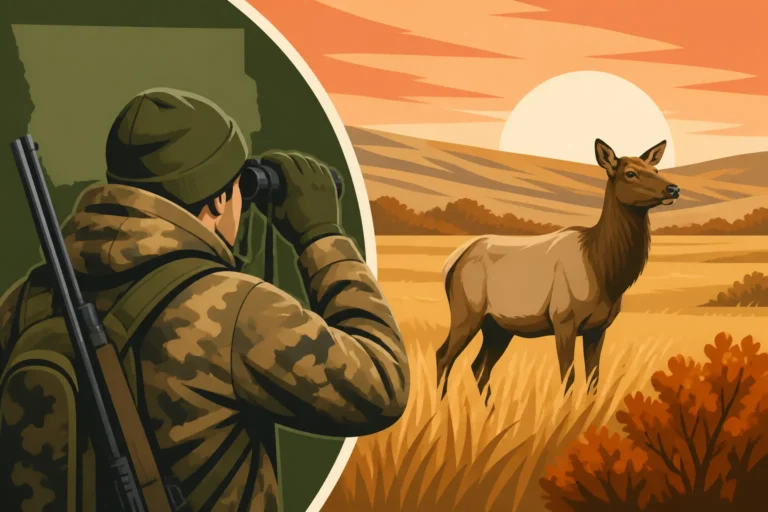
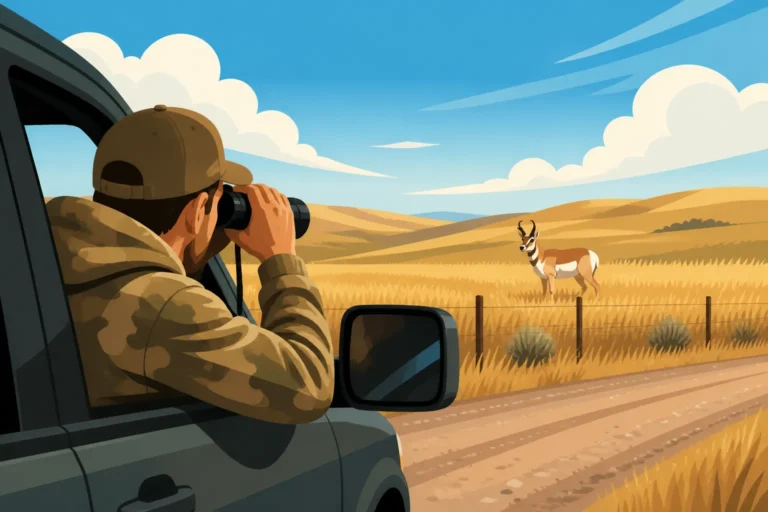
Glassing large fields at first and last light is an absolute must. Find a vantage point, whether it’s a slight rise in the land or the top of your vehicle (if legal and safe), and systematically scan fields with good binoculars or a spotting scope. Pay close attention to the edges where deer might emerge from cover. This is how many big bucks are located in open country. Once you spot a deer, you can then plan a stalk, if conditions allow, or set up for a future hunt.
Finally, don't underestimate the power of rattling and grunt calls, especially during the rut. In open country, sound travels far. A well-executed rattling sequence can pull in a curious buck from a surprising distance. Combine rattling with some tending grunts or snort-wheezes for added realism. While Rattling Volume on the Open Prairie is important to consider, don't be afraid to be aggressive; these deer cover ground quickly.
Beyond Deer: Waterfowl and Upland Game in the Basin
The James River Basin isn't just for deer. Its unique blend of agriculture and wetlands makes it a hotspot for waterfowl and upland birds, offering fantastic opportunities for a mixed-bag hunt.
Duck and Goose Hunting in Agricultural Settings
The James River Basin sits squarely in the Prairie Pothole Region, making it a critical area for migrating ducks and geese. The combination of abundant water and agricultural food sources is a magnet for birds.
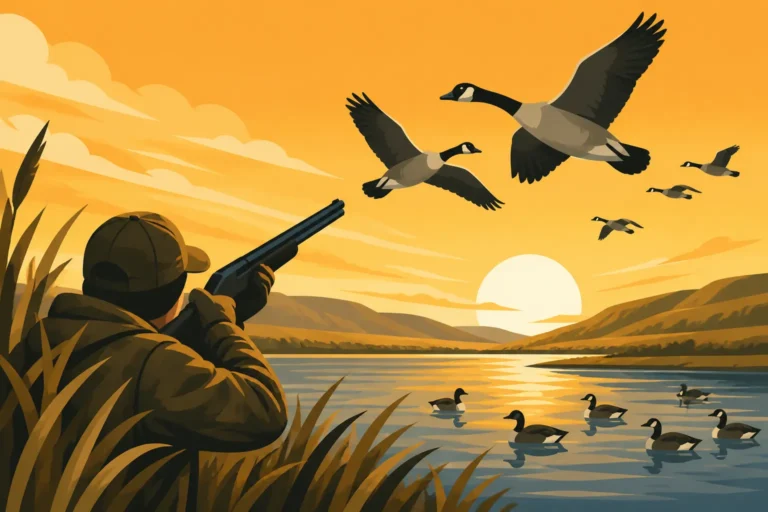
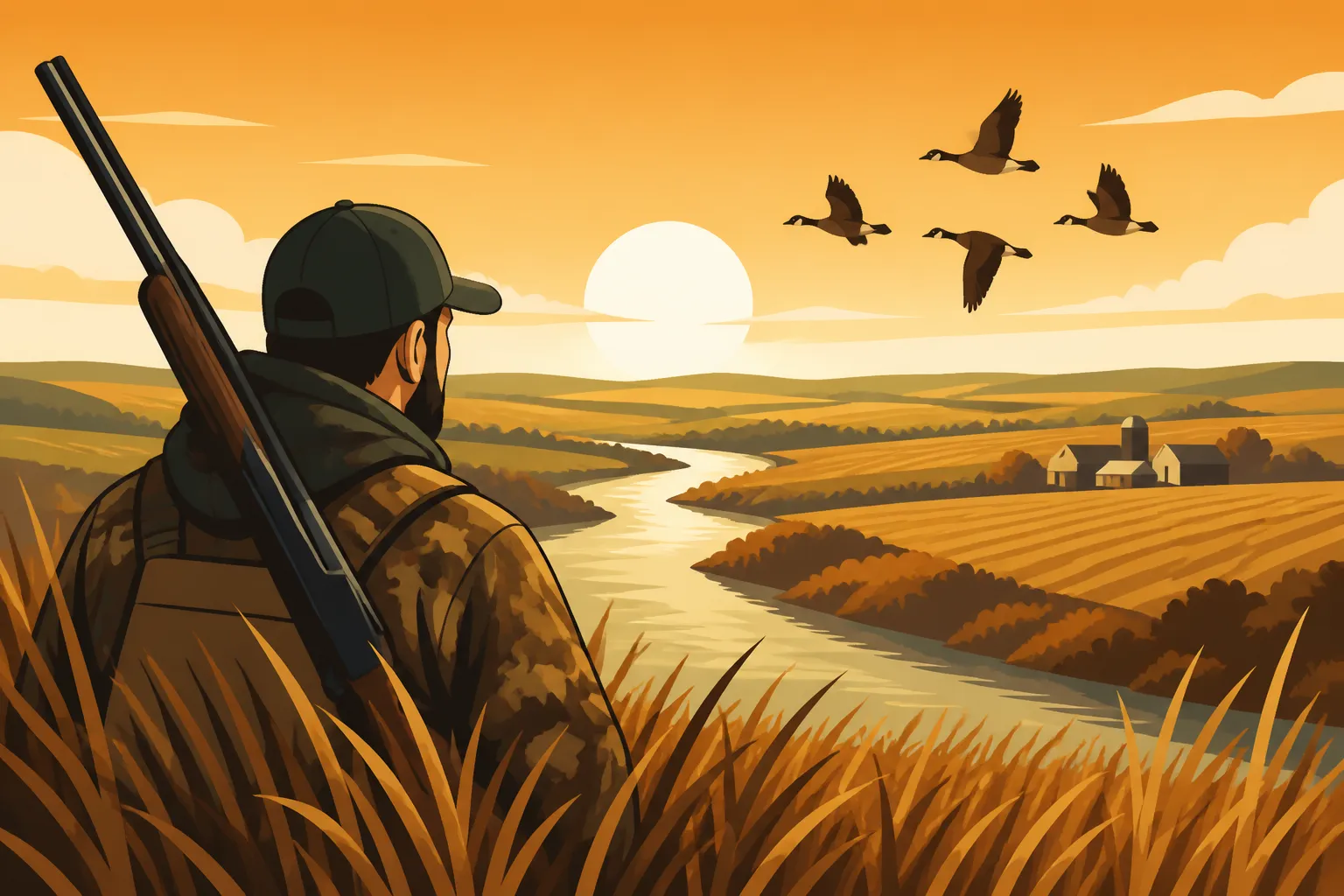
Decoying fields for geese and puddle ducks is a classic and highly effective method. Geese, especially, will hammer harvested corn, pea, or wheat fields for waste grain. Scouting is key here: identify which fields birds are using to feed, get permission, and set up a spread of decoys before sunrise. Full-body decoys are often preferred for their realism, especially for wary Canada geese. For ducks, focus on smaller pockets of water or low spots in fields that might hold rainwater. Decoy Spreads for Prairie Pothole Mallards offers great advice on this.
Understanding crop choices that attract birds is vital for field hunting. Geese absolutely love corn and peas. Ducks will utilize these, but also look for small grain fields like wheat or barley, especially after a rain. Sometimes, simply finding a puddle in a freshly cut field can be a goldmine.
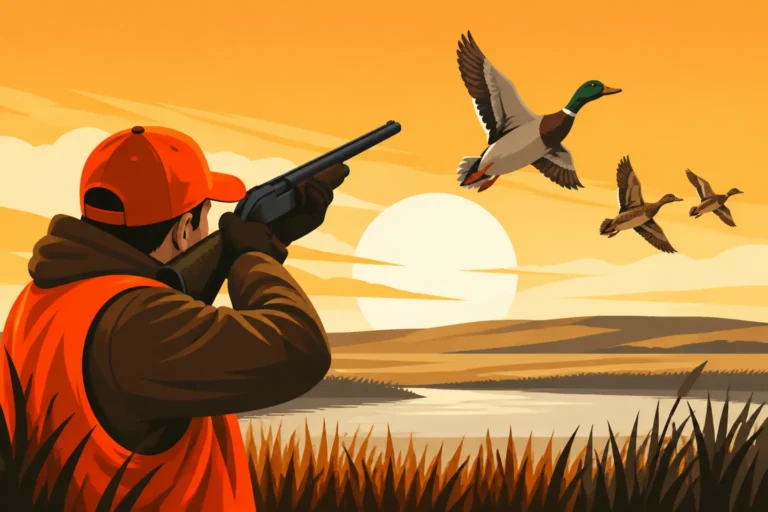
For those who prefer a more active approach, jump-shooting sloughs and small ponds adjacent to fields can be incredibly fun. Walk quietly along the edges of cattail-filled sloughs or small prairie potholes. Ducks will often burst out when approached, offering challenging shots. This method works best on smaller, less pressured bodies of water. Remember to check local regulations for specific methods like Jump-Shooting a North Dakota Prairie Pothole.
Pheasant and Partridge in Farm Habitat
North Dakota is renowned for its pheasant hunting, and the James River Basin delivers. The mix of farmland, CRP, and river bottom cover creates ideal habitat.
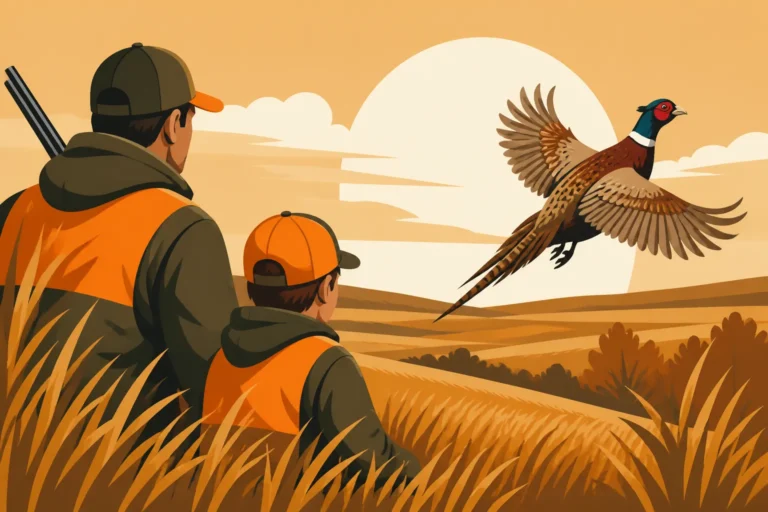
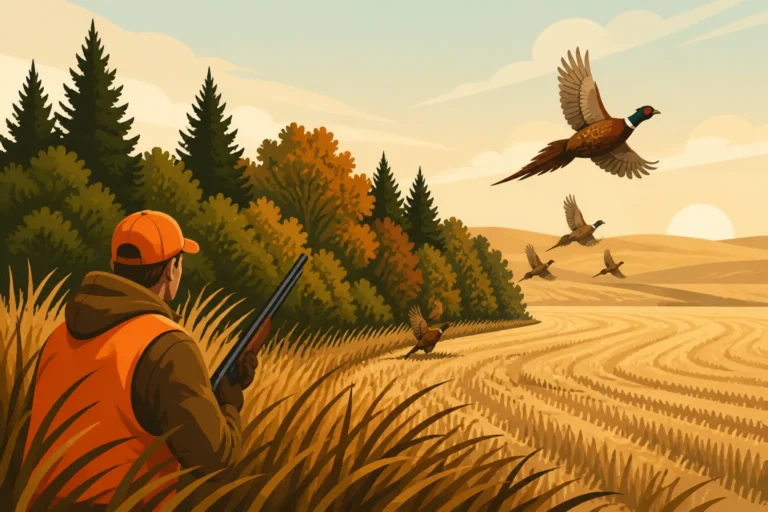
Walking CRP edges and fencelines for pheasants is a consistently productive tactic. Pheasants love to hold tight in dense cover, especially in heavy grass or cattails, but they'll often run along the edges of fields before flushing. Work these edges slowly, always being ready for a bird to erupt. Having a good bird dog is a huge advantage here, helping to root out birds holding tight. Walking North Dakota PLOTS Land for Pheasant is a great strategy for accessible areas.
Hungarian partridge are often found in similar habitats, though they tend to favor stubble fields and smaller, more open patches of cover. They typically hold in coveys and flush simultaneously, making for exciting, fast-paced shooting. Look for them in areas with good weed growth adjacent to grain fields.
The importance of dog work in dense cover cannot be overstated for upland birds. A good pointing dog or flushing dog will dramatically increase your success rate and, more importantly, your bird recovery rate. Pheasants are notorious for running and hiding, and a dog can find birds that you would otherwise never locate.
Navigating Access and Regulations in the James River Basin
Successfully hunting the James River Basin also means understanding how to gain access and staying within North Dakota's hunting laws. This isn't just about legality; it's about respecting the land and other hunters.
Public Land Versus Private Land Access
North Dakota is largely private land, but there are still fantastic public hunting opportunities, especially if you know where to look.
The PLOTS (Private Land Open To Sportsmen) program is a cornerstone of North Dakota hunting. These are private lands where landowners have opened their property to public hunting access in exchange for habitat or financial incentives. Many PLOTS tracts are found throughout the James River Basin, often consisting of grassland, wetlands, or shelterbelts adjacent to agricultural fields. Using the Scouting PLOTS Land With the ND Hunt App is essential to locate these areas and understand their specific rules. Always respect PLOTS signage and the rules posted for each tract.
However, a significant portion of hunting in the James River Basin will involve private land. This is where Getting Private Land Permission in North Dakota becomes crucial. It requires courtesy, respect, and often, persistence. Knock on doors, introduce yourself, and ask politely. Offer to help with chores, pick up trash, or share some of your harvest. Many landowners are willing to grant access to respectful hunters.
It’s also critical to understand North Dakota Trespass and Permission Law. Generally, you need permission to hunt private land, and "posted" signs explicitly denote areas where access is restricted. Always err on the side of caution; if you’re unsure, don't enter. Carrying the appropriate maps, like those found on GoHunt, that clearly delineate property lines and public access areas can prevent accidental trespass.
Key Regulations Specific to Farmland Hunting
Beyond general hunting laws, a few regulations are particularly relevant to hunting in the agricultural areas of the James River Basin.
Blaze orange requirements are critical during the gun seasons, especially with the potential for multiple hunters in the field. North Dakota mandates visible blaze orange above the waist and on the head. This isn't just a rule; it's a safety measure that can save lives in open country where visibility is paramount. Knowing How Much Blaze Orange North Dakota Requires is part of being a responsible hunter.
Legal shooting distances from roads, occupied dwellings, and livestock are also vital. You cannot discharge a firearm within a certain distance of these areas, and common sense dictates giving even more space. Always be aware of your surroundings, your background, and potential safety zones.
Finally, ensuring you meet North Dakota Hunter Education Requirements is essential, especially for younger hunters or those new to the state. This education covers crucial safety, ethics, and regulations that apply across all hunting environments, including farmland.
James River Basin Hunting Opportunities At A Glance
| Species | Primary Habitat | Effective Tactics | Best Time to Hunt | Key Challenges |
|---|---|---|---|---|
| White-tailed Deer | Shelterbelts, river bottoms, standing corn, CRP | Still-hunting, glassing, stand hunting, rattling | October – December (especially rut) | Limited cover, high pressure, landowner access |
| Canada Geese | Harvested corn/bean fields, large sloughs | Field decoying, jump-shooting | September – November | Scouting active fields, weather dependency |
| Ducks (Mallards, Pintails) | Prairie potholes, small sloughs, flooded fields | Decoying over water, jump-shooting | September – October | Identifying active sloughs, decoy placement |
| Ring-necked Pheasant | CRP, shelterbelts, cattail sloughs, fencerows | Walking behind dogs, blocking | October – December | Dense cover, bird recovery, hunter pressure |
| Hungarian Partridge | Stubble fields, weed patches, field edges | Walking with dogs (covey flushing) | October – December | Small birds, quick flush, unpredictable location |
Disclaimer
Please note that hunting regulations, seasons, and access can change. Always consult the most current North Dakota Game and Fish Department proclamations and regulations before planning any hunt. This guide is for informational purposes only and should not replace official sources.