What a Wilderness Study Area Designation Restricts
Hunting in North Dakota is a truly incredible experience, offering vast open landscapes and abundant wildlife. But for many hunters, especially those new to certain areas, running into a "Wilderness Study Area" or WSA sign can be a head-scratcher. It often looks like perfect, untouched public land, yet there are whispers and rumors about what you can't do there, leaving you wondering if you should even bother. This guide will clarify exactly what a Wilderness Study Area designation means for hunters in North Dakota, so you can navigate these unique landscapes confidently and legally.
Understanding Wilderness Study Areas in North Dakota
When you're out exploring the more remote corners of North Dakota, particularly within the stunning Badlands, you might stumble upon signs or mapping overlays designating certain tracts of land as "Wilderness Study Areas." These aren't just ordinary public lands; they carry a special classification that influences how they can be used, and as a hunter, understanding these nuances is absolutely critical. It’s easy to look at a map, see a huge block of public land, and assume it’s all fair game in the same way, but WSAs operate under a different set of rules designed to preserve their pristine nature.
The Purpose Behind WSAs
At its heart, a Wilderness Study Area is a piece of federal land that the government, primarily through agencies like the Bureau of Land Management (BLM) or the U.S. Forest Service (USFS) in our case in North Dakota, has identified as having wilderness characteristics. This means the land largely appears "untrammeled by man," retains its primeval character, and offers outstanding opportunities for solitude or a primitive and unconfined type of recreation. These areas are, in essence, being held in a kind of natural limbo, managed to preserve these characteristics until Congress can officially decide whether to designate them as full-fledged Wilderness Areas.
This "study" status means they're managed with a very light human footprint in mind. For a hunter, this often means that while the land is open to public access, the methods of access and the types of activities allowed are more restrictive than on other public lands. It can be a little frustrating because you see these wild, beautiful landscapes, perfect habitat for deer or elk, but the typical ways you might approach hunting elsewhere are off-limits. The intent is truly to keep these places as wild as possible, allowing nature to dominate without significant human intervention or development.
Key Characteristics of a WSA
The management philosophy for WSAs stems directly from the definition of wilderness itself, which dictates several key characteristics that must be maintained. Firstly, WSAs are inherently roadless areas. This is perhaps the most impactful characteristic for hunters. While there might be perimeter roads that define their boundaries, you won't find internal roads, two-tracks, or even often clearly defined trails cutting through the heart of these areas. This ensures a sense of remoteness and wildness.
Secondly, WSAs are managed to provide opportunities for solitude. This means the land is often expansive and relatively undisturbed, allowing visitors to feel truly alone in nature. For hunters, this translates into a unique chance for a more primitive hunting experience, far from the crowds and the sounds of vehicles. However, it also means you're unlikely to encounter many other people, which has implications for safety and assistance in an emergency.
Finally, the concept of naturalness is paramount. The land should largely appear as it would without human intervention. This influences everything from vegetation management (or lack thereof) to prohibitions on new structures or developments. These characteristics, while preserving a priceless natural resource, directly dictate the type of gear you carry, your scouting methods, and your game retrieval plans, making hunting in a WSA a truly different endeavor from hunting a typical Wildlife Management Area or PLOTS tract.
Specific Restrictions Affecting Hunters in WSAs
The restrictions within a Wilderness Study Area are designed to uphold the "wilderness character" while these lands await a potential permanent designation. For hunters, these aren't just abstract rules; they translate into very real, practical limitations on how you can scout, hunt, and retrieve game. It's not about making hunting impossible, but about ensuring that your presence leaves the smallest possible impact.
Vehicle and Mechanized Transport Limitations
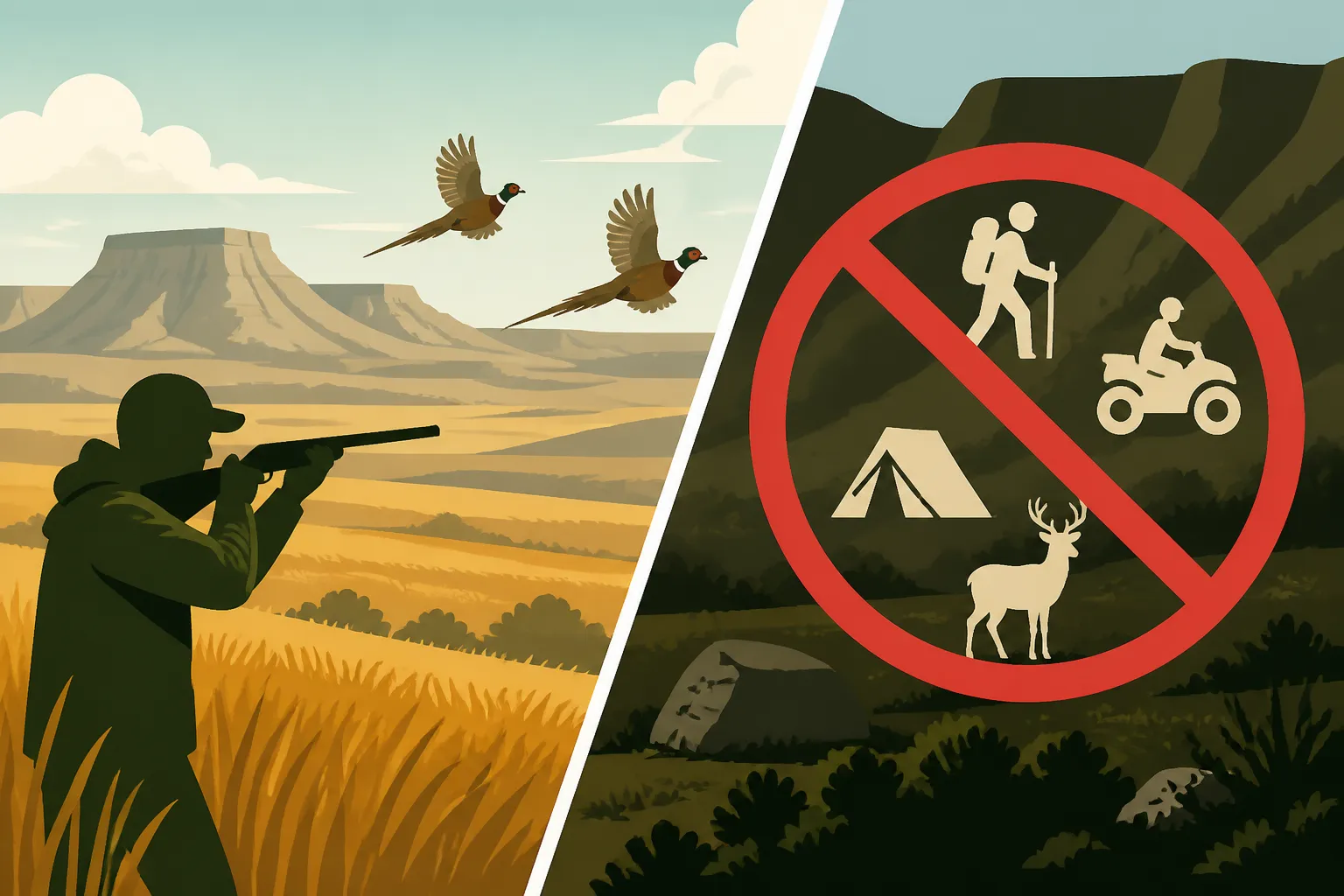
This is, without a doubt, the single biggest restriction that impacts hunters in North Dakota's Wilderness Study Areas: no motorized vehicles are allowed. That means your truck, ATV, UTV, or even an electric bike is absolutely prohibited from entering these areas. This isn't just about driving off-road; it means you cannot use them at all within the WSA boundaries, even on what might appear to be old two-tracks or faint trails. The entire area is foot traffic only, or in some specific cases, horseback.
This prohibition extends beyond just vehicles. Generally, any form of mechanized transport is restricted. This includes mountain bikes and, critically for hunters, many types of wheeled game carts. While rules can vary slightly by specific WSA and managing agency, the safest assumption is that if it has wheels and isn't a wheelchair, it's probably not allowed for game retrieval. This means that if you are fortunate enough to harvest an animal, particularly a large deer or an elk, you are looking at quartering it in the field and packing it out on your back, potentially over several trips. This demanding task requires serious physical preparation and specialized gear, such as a sturdy pack frame. You really need to think through your extraction plan before you ever pull the trigger. Planning your hunt well in advance is crucial, and using mapping tools like onX Hunt is invaluable for identifying these areas and their no-vehicle boundaries, so you don't inadvertently find yourself in a bind.
Camps, Structures, and Permanent Installations
Another significant set of restrictions in WSAs revolves around minimizing any long-term human impact on the landscape. This means that hunters, unlike in some other public land designations, generally cannot establish permanent camps or erect structures. You won't find any designated campsites, fire rings, or facilities within a WSA. This maintains the wild and undeveloped character of the area.
For hunting, this translates to very specific rules about blinds and stands. You are typically not allowed to construct permanent tree stands or ground blinds that alter the natural landscape. This means no cutting branches, driving nails into trees, or leaving structures behind. Temporary, portable ground blinds or tree stands that are removed daily are generally permissible, but you must adhere to strict "leave no trace" principles. Think lightweight, packable setups that leave no trace of your presence when you depart. The idea is that the next person to enter the WSA should experience it as if no one has ever been there, truly upholding the spirit of wilderness.
Other Activity Limitations
Beyond vehicles and structures, other activities are curtailed to protect the WSA's natural state. Generally, there's a strict prohibition on new road construction, timber harvesting, or mineral exploration. While pre-existing rights might sometimes exist, the overarching goal is to prevent any development that would compromise the area's wilderness characteristics. This means the landscape you scout today will likely be the same wild landscape you hunt next year, free from new developments that can alter animal patterns.
Furthermore, fire restrictions are often more stringent in WSAs, sometimes prohibiting campfires altogether, especially during dry periods. Water sources might be limited or nonexistent, and you can't rely on developed springs or wells. These limitations, while not directly impacting the act of hunting itself, contribute to the rugged, self-reliant nature of a WSA hunt. Every aspect of your trip, from water planning to emergency preparedness, must be more thoroughly considered. For more insights into these challenging terrains, consider looking into Hunting North Dakota's Badlands.
Navigating and Hunting Legally in North Dakota WSAs
Hunting in a Wilderness Study Area offers a uniquely raw and challenging experience, but it's one that rewards the prepared and respectful hunter. The key to a successful and legal hunt in these areas lies in thorough planning and a deep understanding of their unique regulations. It's all about adapting your approach to fit the environment, rather than trying to force the environment to fit your typical hunting style.
Pre-Season Planning and Mapping
The absolute first step for any hunter considering a WSA is comprehensive pre-season planning and mapping. You need to know exactly where the WSA boundaries are, down to the foot. Do not rely on assumptions or general knowledge. These boundaries are invisible lines on the ground, but they carry significant legal weight. Utilizing modern mapping applications like onX Hunt or even GoHunt is indispensable here. These platforms often have layers that clearly delineate federal land designations, including WSAs.
Before you ever leave home, pull up your chosen WSA and study its perimeters. Identify all legal access points for foot traffic. Since cell service is notoriously spotty, or completely absent, in many parts of the North Dakota Badlands, it is absolutely critical that you download offline maps to your device. This ensures you always know where you are in relation to the WSA boundaries, even when you’re miles from the nearest signal tower. Cross-referencing these digital maps with official US Forest Service maps or North Dakota Game and Fish resources provides an extra layer of certainty. This meticulous scouting, even from your couch, will prevent unintentional trespass or violations once you are in the field.
Adapting Your Hunting Strategy
Once you understand the boundaries and restrictions, you'll need to adapt your hunting strategy to the WSA environment. Forget about vehicle-based scouting or quick drives to different areas. In a WSA, it's all about embracing foot power. This means planning for longer walks, understanding the terrain's physical demands, and being realistic about the distances you can cover in a day, especially with gear. Your physical conditioning will be tested, so start preparing well in advance of your hunt.
Game retrieval becomes one of the primary strategic considerations. For larger game, you'll almost certainly need to quarter the animal in the field. This means bringing the necessary tools: a sharp knife, game bags, and perhaps even a small saw. A robust pack frame is not just a luxury; it's practically a necessity for efficiently hauling out meat and antlers. Given the physical effort involved, you might need to make multiple trips, so plan your approach and exit routes carefully, considering both daylight and energy levels. When considering these areas, strategies for Hunting a Badlands Draw for Mule Deer become even more critical when combined with WSA restrictions.
Your gear choices should also lean towards lightweight, durable, and essential items. Every ounce counts when you're packing everything in and out on your back. Water filters or purification tablets are crucial, as reliable water sources are rare. Binoculars and a spotting scope become even more important for efficient scouting, allowing you to cover vast areas with your eyes before committing to a long walk. This kind of deep-woods hunting is a true test of a hunter's skills and endurance, offering a sense of accomplishment unmatched by easier access areas.
Respecting the Wilderness Ethic
Hunting in a WSA is not just about following the rules; it's about embodying a wilderness ethic. This means truly adhering to "Leave No Trace" principles in every aspect of your hunt. Everything you pack in, you must pack out. This includes all trash, food scraps, and importantly, spent shell casings. Leaving any garbage behind, no matter how small, detracts from the wilderness experience for others and is a direct violation of the WSA's intent.
Minimal impact camping, if allowed (and temporary), means choosing durable surfaces, dispersing your campsite to avoid creating obvious impacts, and managing fires responsibly if they are permitted. The goal is to leave the area looking exactly as you found it – or even better. By showing this level of respect, hunters demonstrate that they are responsible stewards of these special places, helping to ensure that these unique opportunities remain available for future generations. It’s a privilege to hunt in such pristine environments, and our actions reflect on all hunters.
Opportunities and Challenges for the WSA Hunter
Hunting in a Wilderness Study Area is a mixed bag of unparalleled rewards and significant demands. It's not for every hunter, but for those who seek a deeper, more challenging connection with the wild, WSAs offer something truly special. Understanding both the highs and the hurdles will help you decide if a WSA hunt aligns with your personal hunting goals and capabilities.
The Reward of True Wilderness
Despite all the restrictions and physical demands, the biggest draw of a Wilderness Study Area is the promise of true wilderness. These are places where you can genuinely disconnect from the modern world and immerse yourself in nature. For hunters, this often translates into an unparalleled hunting experience. You'll be working harder than ever, but the rewards can be immense.
Because of the limited access and minimal human disturbance, WSAs often hold older, wiser animals that are less accustomed to human pressure. You might encounter a buck or bull that has rarely, if ever, seen a vehicle, leading to a more natural and challenging hunt. The solitude found within a WSA is a reward in itself. Imagine stalking through rugged Badlands coulees, knowing you are miles from the nearest road, with only the wind and wildlife for company. This sense of peace and isolation, combined with the challenge of the hunt, creates a deeply satisfying and often profoundly spiritual experience. For those dreaming of trophy animals, these remote areas sometimes yield fantastic opportunities, whether you're after Mule Deer in North Dakota's Badlands or the elusive Elk in North Dakota's Little Missouri Badlands.
Challenges and Considerations
However, the allure of the wilderness comes with significant challenges and considerations. The physical demands are much higher than hunting areas with easier access. Long walks, steep climbs, and the heavy work of game retrieval require excellent physical conditioning. This isn't a place for the unprepared; a strenuous hunt can quickly become a dangerous situation if you're not up to the task.
The time commitment is also greater. Scouting takes longer without vehicle access, and the actual hunt itself will involve more time on foot. Retrieving an animal can become an all-day (or multi-day) affair. This isn't a place for a quick afternoon hunt. Furthermore, increased risk is inherent in remote areas. Being far from roads means help is a long way off. Self-reliance is paramount. You need to be competent in first aid, navigation, and survival skills. The unpredictable weather of North Dakota's Badlands can turn quickly, making a difficult situation even more hazardous. Always carry extra water, food, and emergency supplies.
The Future of WSAs and Hunter Access
It's important to remember that Wilderness Study Areas are, as their name suggests, still under "study." This means their status is not necessarily permanent. Congress ultimately decides whether to designate them as full Wilderness Areas, alter their boundaries, or release them from WSA status. This dynamic nature means that the rules and access could potentially change in the future.
For hunters, this means staying informed. Regularly checking the websites of the US Forest Service and the North Dakota Game and Fish Department is vital to keep up with any proposed changes or decisions impacting these areas. By being a responsible, ethical hunter in WSAs now, we help demonstrate that hunting is a compatible activity that values the integrity of these wild landscapes. Protecting these areas, like parts of Hunting North Dakota's Little Missouri National Grassland, ensures future opportunities for generations to come. Your actions today contribute to the narrative for tomorrow's access.
| Feature / Activity | General North Dakota Public Land | Wilderness Study Area (WSA) |
|---|---|---|
| Motorized Vehicles | Generally allowed on designated trails/roads | Strictly prohibited |
| ATVs/UTVs | Generally allowed on designated trails/roads | Strictly prohibited |
| Game Carts (Wheeled) | Generally allowed | Generally prohibited |
| Foot Access | Allowed | Primary and often only access |
| Horseback Access | Allowed, check specific rules | Generally allowed |
| Permanent Tree Stands | Allowed, check specific rules | Prohibited |
| Temporary Ground Blinds | Allowed | Allowed (must be removed daily) |
| Camping | Permitted in designated areas/dispersed | Primitive/dispersed (no facilities), often restricted |
| Firewood Gathering | Allowed, check specific rules | Generally prohibited |
| Leave No Trace | Highly encouraged | Absolutely mandatory |
| Game Retrieval | Vehicle or cart often an option | Human power only (pack out) |
Disclaimer
This article is for general informational purposes only and does not constitute professional advice. Laws, prices and regulations vary by location and change over time. Consult a qualified professional for guidance on your specific situation.