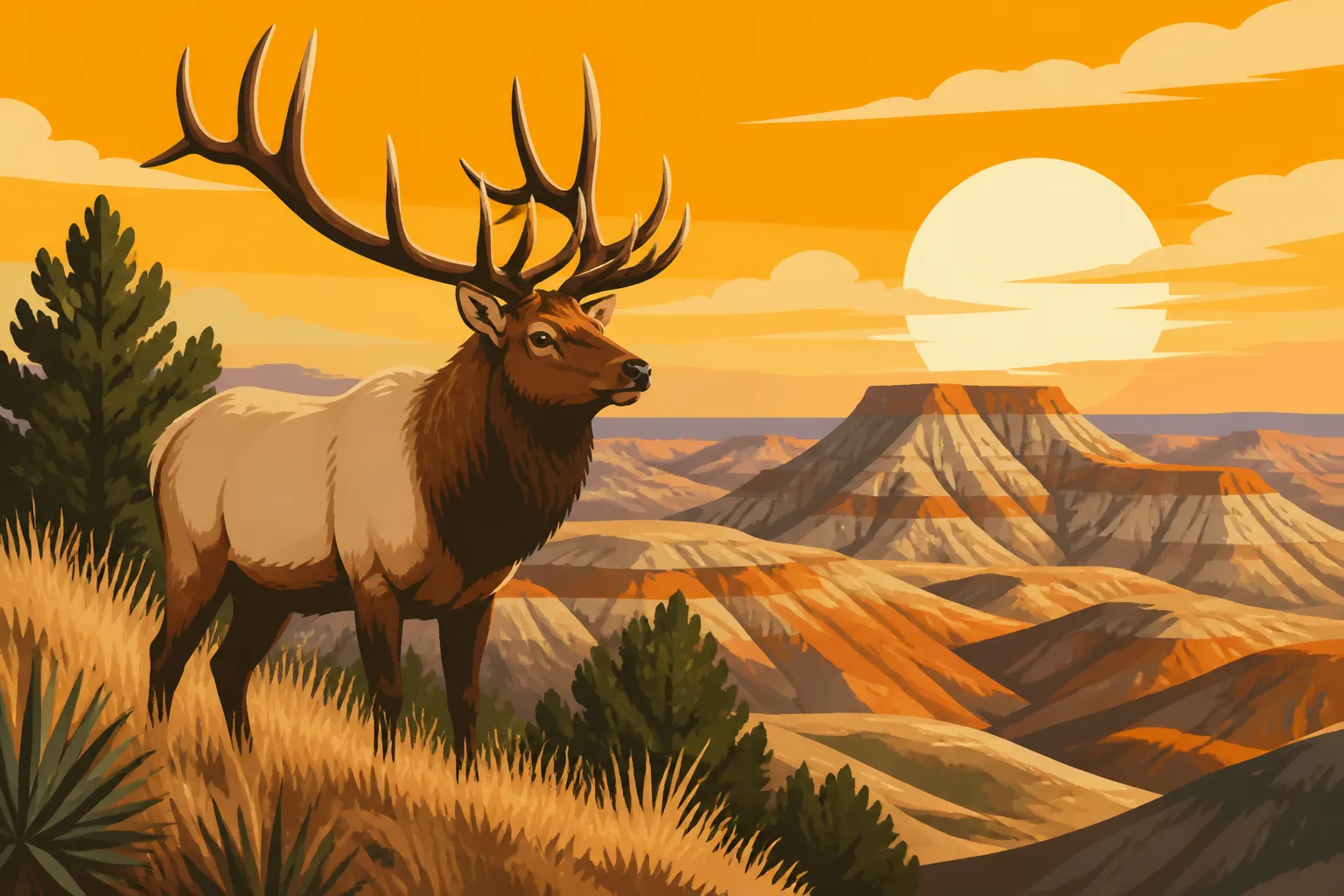
Elk in North Dakota’s Little Missouri Badlands
Drawing an elk tag in North Dakota is, for many, the pinnacle of a hunting career in the state, often referred to as a "once-in-a-lifetime" opportunity for a very good reason. The sheer vastness and rugged beauty of the Little Missouri Badlands, coupled with the elusive nature of its resident elk, makes this pursuit both incredibly challenging and deeply rewarding. This guide is dedicated to equipping you with the knowledge, strategies, and realistic expectations needed to approach an elk hunt in North Dakota's Badlands, from the moment you consider applying to the final pack-out.
The Elusive Presence of North Dakota Elk
The idea of elk roaming North Dakota might surprise some, but these majestic animals have a compelling history in the state, particularly within the dramatic landscape of the Little Missouri Badlands. Their presence is a testament to dedicated conservation efforts and the resilience of these animals in a demanding environment.
The History and Return of Badlands Elk
Long before European settlement, elk were abundant across North Dakota, part of the vast herds that roamed the prairies and river bottoms. However, by the late 1800s, due to unregulated hunting and habitat loss, they were largely extirpated from the state. For decades, the majestic bugle of an elk was silent in North Dakota. The story of their return is one of strategic reintroduction and natural re-establishment. Small populations began to trickle back into the state from neighboring areas like Montana and South Dakota in the mid-20th century.
However, the more significant reintroduction efforts by the North Dakota Game and Fish Department (NDGFD) began in the 1970s and 80s, primarily focusing on establishing herds in the rugged, remote terrain of the Little Missouri Badlands. Animals were transplanted from other states, carefully selected to ensure genetic diversity and health. These efforts were largely successful, and these reintroduced animals, along with those that migrated naturally, formed the foundation of the herds we see today. It's truly a comeback story, showcasing what's possible with thoughtful wildlife management. You can learn more about How Elk Returned to the Badlands.
Current Population Estimates and Distribution
Today, North Dakota's elk population is healthy, albeit tightly managed due to the limited suitable habitat and the "once-in-a-lifetime" tag philosophy. The North Dakota Game and Fish Department conducts annual surveys, usually via aerial counts in late winter, to get a handle on herd numbers. While exact figures fluctuate year to year, the current population estimate generally hovers around 2,000 to 2,500 animals statewide. The majority of these elk, especially the huntable populations, reside in the Little Missouri Badlands, particularly within the designated hunt units along the Little Missouri River and its tributaries.
Within the Badlands, elk are not evenly distributed. They tend to concentrate in areas offering a crucial mix of habitat: dense cedar breaks for thermal and hiding cover, open native prairie for grazing, and reliable water sources. The river bottomlands themselves, with their cottonwood trees and thicker brush, also provide essential shelter, especially during harsh winters. Areas like the breaks around the Little Missouri River, and the rugged terrain of units such as 4A, 4B, and 4C, are known hotspots. Understanding this distribution is key, as a vast portion of the Badlands, while beautiful, may not hold elk consistently. The NDGFD manages the herd carefully, issuing a limited number of tags each year. For example, in recent years, the state has issued roughly North Dakota's 1,062-License Elk Season statewide.
Understanding Elk Behavior in Badlands Terrain
Hunting elk in the Badlands demands a deep understanding of how these animals use the unique landscape. Elk are creatures of habit, but their patterns are heavily influenced by food, water, cover, and pressure. In the rugged Badlands, thermals and wind currents play a monumental role. Elk often bed high on north-facing slopes in dense cedar pockets or thick draws during the day, taking advantage of cooler air and security cover. They'll drop down to graze in open meadows or along creek bottoms during the cooler parts of the morning and evening, moving between these areas along well-worn trails in deep coulees or across subtle saddles.
A bull's behavior, especially during the rut, will differ significantly from a cow/calf group. Bulls might be more vocal, moving more widely in search of cows, making them potentially more visible but also more wary. Cow herds, on the other hand, are typically more reclusive, staying tucked away in thicker cover. Understanding the wind and thermals in Badlands terrain is paramount. Morning thermals typically rise, pulling scent uphill, while evening thermals fall, carrying scent downhill. A hunter who disregards these natural air currents will quickly be busted by the keen noses of elk, turning a promising stalk into a frustrating lesson.
Drawing That Coveted North Dakota Elk Tag
The dream of chasing a Badlands bull begins with the highly competitive lottery for North Dakota's elk tags. This isn't your typical over-the-counter license; it's a true test of patience and perseverance.
The Once-in-a-Lifetime Opportunity
North Dakota's elk tags are famously "once-in-a-lifetime" for residents. This isn't just a catchy phrase; it's a fundamental part of the state's wildlife management strategy for elk, moose, and bighorn sheep. It means that if you are fortunate enough to draw and harvest an elk in North Dakota, you are generally not eligible to draw another elk tag in the state again. This system ensures that as many residents as possible get a chance to experience this unique hunting opportunity, while carefully managing the limited resource. It also contributes to the mystique and high value placed on each tag.
The application process for these coveted tags is usually online through the North Dakota Game and Fish Department's portal. Deadlines are typically in early spring, often in March, so it's critical to mark your calendar well in advance. While North Dakota does have a preference point system for some species, specifically deer, the elk draw is often a true lottery, though bonus points may be factored in for unsuccessful applicants over time to slightly increase odds. The odds of drawing an elk tag are notoriously low, varying by unit and tag type, but generally range from less than 1% to a few percent. Most applicants will spend many years, if not decades, applying before their number finally comes up. This demands significant dedication and a realistic perspective on the likelihood of success. Be sure to check the North Dakota Elk Application Deadline each year to ensure you don't miss out.
License Categories and Unit Specifics
When applying for an North Dakota elk tag, you'll encounter different license categories and a breakdown of specific hunting units. The primary categories are typically "any-elk" (meaning you can harvest a bull or a cow) and "antlerless-only" (restricted to cows or calves). The antlerless tags often have slightly better odds and can be a fantastic opportunity for meat hunters or those looking to simply experience an elk hunt. Each category has its own draw pool and success rates.
The Little Missouri Badlands is divided into several hunting units, such as 4A, 4B, 4C, 4D, and 4E. Each unit has unique characteristics regarding terrain, habitat, access, and elk density. For instance, Unit 4A, encompassing parts of the Little Missouri National Grassland and Theodore Roosevelt National Park's South Unit (though hunting is restricted within the park itself), is known for its rugged terrain and can hold a good number of elk. Other units might have more private land components or different habitat mixes. Before you even apply, it's crucial to thoroughly research each unit. Look at historical success rates, elk harvest data, and population trends for each unit. Online resources, including the NDGFD website and mapping platforms, can provide invaluable insight. Some hunters will apply for the unit with the absolute best odds, while others might prioritize a specific unit known for larger bulls or easier access, accepting the lower draw chances that come with it. Understanding the terrain and access within a unit is vital, as a tag in a unit you can't effectively hunt won't do you much good. Remember, Why Elk, Moose and Pronghorn Stay Resident-Only is a key policy in North Dakota.
Essential Scouting and Pre-Hunt Preparation
Once the incredible news arrives that you've drawn that coveted North Dakota elk tag, the real work begins. Successful elk hunting in the Badlands is less about luck and more about meticulous preparation and smart scouting.
Digital Scouting the Badlands from Afar
In today's hunting world, digital scouting is an absolute game-changer, especially for vast and rugged terrain like the Little Missouri Badlands. Start by immersing yourself in tools like Google Earth, onX Hunt, and other advanced mapping applications. These platforms allow you to virtually traverse every coulee, ridgeline, and cedar break from the comfort of your home. You can identify potential bedding areas (often dense, north-facing pockets of timber or deep, secluded draws), feeding grounds (open native prairie or agricultural fields on the fringes), and crucial travel corridors between the two. Look for pinch points, saddles, water sources, and areas with limited human disturbance.
Layering different maps is key. Combine topographic maps to understand elevation changes and steepness with satellite imagery for vegetation and cover analysis. You can mark potential access points, parking spots, and routes to minimize walking through unproductive areas or busting elk. Identifying public land boundaries, such as those within the Hunting North Dakota's Little Missouri National Grassland or PLOTS areas, is also paramount to avoid trespassing. Services like GoHunt offer detailed draw odds, unit profiles, and advanced mapping features that can be invaluable for pinpointing high-potential areas and understanding harvest data for your specific unit. This initial digital reconnaissance can save you countless miles and hours in the field by narrowing down your focus areas.
Boots-on-the-Ground Reconnaissance
While digital scouting is powerful, nothing replaces actual boots-on-the-ground reconnaissance. If possible, make at least one trip (or several if time allows) to your hunting unit before the season opens. The best time to scout is typically late summer or early fall, before the hunting pressure begins. During these trips, you're not just looking at the landscape; you're looking for fresh elk sign: tracks, droppings, rubs on trees, and wallows. Wallows, especially, are excellent indicators of where elk are frequenting, as bulls use them to cool off and spread their scent during the rut.
Physical scouting helps you truly understand the scale of the terrain and the true difficulty of navigating deep coulees and steep inclines, which often look less intimidating on a screen. Pay attention to prevailing winds and how thermals behave in specific draws. Identify water sources, as elk will always be within a reasonable distance of water. Walk potential entry and exit routes, noting challenging spots and planning how you'd pack out an elk. The goal is to learn the land, understand elk movement, and gain confidence in your chosen areas without disturbing the animals right before the season. Be mindful of not leaving excessive scent or making too much noise; a stealthy approach to scouting is crucial.
Understanding Access and Public vs. Private Land
North Dakota's Badlands are a mosaic of public and private lands, and understanding where you can legally hunt is fundamental. A significant portion of the elk habitat falls within the Little Missouri National Grassland, which is public land managed by the U.S. Forest Service. This offers vast opportunities, but it also comes with specific rules and regulations. For instance, you'll need to understand North Dakota's Little Missouri Grassland Camping Rules if you plan an extended stay.
However, many productive areas are also private land. This is where patience, respect, and good communication become invaluable. Always identify land ownership using mapping apps and, if you wish to hunt private land, make the effort to "knock on doors" and ask for permission well in advance of the season. Many landowners in North Dakota are gracious, but permission is rarely given on a whim. Building a relationship can take time. Additionally, North Dakota has its PLOTS (Private Land Open To Sportsmen) program, which provides public access to privately owned land. While PLOTS generally focuses on upland birds and deer, some tracts in elk units might offer viable access. Always check the current PLOTS guide and app to ensure you're on legal ground. Never assume access, and always carry proof of permission if hunting private land. Respect for the land and landowners is key to ensuring continued access for all hunters.
Hunting Strategies for Badlands Elk
Hunting elk in the Badlands is a uniquely physical and mental challenge. The strategies employed must adapt to the unforgiving terrain and the animals' acute senses.
Spot-and-Stalk Tactics in Open Country
The vast, broken landscape of the Badlands lends itself perfectly to spot-and-stalk hunting, making high-quality optics your most valuable tool. Forget still-hunting through thick timber for hours; instead, focus on systematically glassing miles of terrain. A good pair of 10x or 12x binoculars, often mounted on a tripod for stability, is indispensable. Many serious elk hunters will even carry a spotting scope (20-60x) for identifying bedded animals at extreme distances and judging their antlers. Find a high vantage point at first light or last light, set up your optics, and patiently pick apart every coulee, draw, and timber patch. Look for small movements, odd colors, or horizontal lines in a vertical world.
Once an elk is spotted, the real chess match begins. The challenge is closing the distance in often open or sparsely vegetated terrain without being seen, heard, or winded. This involves using every dip, rise, and natural contour to your advantage. A stalk can take hours, requiring immense patience and slow, deliberate movement. Always pay meticulous attention to the wind direction, as elk have an incredible sense of smell. You might need to make wide detours to get the wind in your favor. This is where the term Spot-and-Stalk Elk in the Little Missouri Badlands truly comes into play; it's a game of inches and calculated risks. Often, the final approach will require crawling or moving when the elk's head is down, grazing. The goal is to get within comfortable shooting range, ideally 300-400 yards or less for rifle hunters, and set up for a clean, ethical shot.
Calling Strategies During the Rut (and Beyond)
While North Dakota's elk season dates vary, they often overlap with at least part of the elk rut, typically in late September and early October. This is when calling can be highly effective, adding an exhilarating dimension to the hunt. During the rut, bull elk become more vocal, bugling to challenge rivals and attract cows. Hunters can capitalize on this by using various calls. Bugles can be used to locate bulls, challenge a dominant bull, or even draw in a satellite bull looking for an opportunity. Cow calls and mews, on the other hand, are often more effective at enticing a curious bull to come closer, especially if he's already with cows and wary of another bull.
In the Badlands, the effectiveness of calls can depend heavily on the terrain. In open draws, a bugle carries far but can also give away your position. In thicker timber or deep coulees, calls might need to be more subtle and frequent. It's often best to start with soft cow calls to gauge interest, and if you get a response, then consider a more aggressive bugle. Don't be afraid to experiment with different sequences and volumes. However, outside of the peak rut, calling becomes less effective. Post-rut, elk are typically less vocal and more focused on feeding and recovering. During these times, a more subtle approach with light cow calls or quiet mews, mimicking contented feeding, might pique a distant elk's curiosity.
Still-Hunting Timbered Draws and River Bottoms
While spot-and-stalk is often the primary method, there are areas within the Badlands, particularly the denser timbered draws and the cottonwood bottoms along the Little Missouri River, where still-hunting becomes a viable and often necessary strategy. Still-hunting involves moving very slowly and deliberately, taking a few steps, then pausing for several minutes to scan, listen, and glass your surroundings. This is a game of patience and observation, looking for subtle movements, a flick of an ear, or a patch of hide through the trees.
When still-hunting, it's absolutely crucial to pay attention to Wind and Thermals in Badlands Terrain. In steep country, thermals will typically rise in the morning and fall in the evening. Hunting with the wind in your face or across your body is non-negotiable. Move into the wind, or at least cross-wind, especially when approaching potential bedding areas. Focus on fresh sign like tracks and droppings to confirm recent elk activity. Moving slowly allows you to pick apart cover, anticipate where an elk might be bedded or feeding, and react quickly if you jump an animal. This tactic is particularly effective midday when elk are often bedded down, or in areas where visual spotting is limited by dense vegetation.
Equipment and Gear Essentials for Badlands Terrain
Hunting elk in the rugged Little Missouri Badlands isn't just physically demanding; it requires specialized gear that can withstand the elements and help you succeed in a challenging environment. Cutting corners on equipment can quickly turn a dream hunt into a miserable experience.
Optics and Rangefinding
Given the expansive and broken nature of the Badlands, high-quality optics are not just recommended, they are absolutely essential for a successful elk hunt. You'll spend countless hours glassing, so invest in the best binoculars you can afford. Many hunters opt for 10×42 or 12×50 power binoculars, often mounted on a sturdy tripod for extended periods of glassing without fatigue. A tripod setup allows for stability, reduces eye strain, and helps pick out subtle details that would be missed handheld. Some might even carry 15×56 or 20x magnification binoculars for extreme long-range searching. A spotting scope (typically 20-60x power) is also invaluable for confirming an animal's identity or antler size from afar, saving you unnecessary miles.
Equally important is a reliable rangefinder. The undulating terrain of the Badlands can play tricks on your eyes, making distances incredibly deceptive. A rangefinder with angle compensation is highly recommended, as shots will frequently be taken up or down steep inclines, which affects the true horizontal distance an animal perceives. Practice using your rangefinder frequently before the hunt to ensure you're quick and accurate under pressure. Companies like Vortex, Leica, and Zeiss offer excellent options that stand up to the rigors of a Badlands hunt.
Footwear and Clothing for Rugged Conditions
Your feet will be your most important asset in the Badlands, so investing in sturdy, comfortable, and well-broken-in hiking boots is paramount. Avoid new boots on a hunt; break them in extensively beforehand to prevent blisters, which can quickly end your hunt. Look for boots with good ankle support, stiff soles for navigating rocky and steep terrain, and waterproof features for dealing with wet creek crossings or morning dew. Brands like Kenetrek, Schnee's, and Crispi are popular among serious elk hunters for their durability and comfort in mountain-like conditions.
Clothing should be built around a layering system, as North Dakota weather can be unpredictable, even in the fall. Mornings can be freezing, afternoons can be surprisingly warm, and sudden cold fronts or snowstorms are always a possibility. Start with a moisture-wicking base layer, add insulating layers (fleece or down/synthetic puffies), and top it off with a waterproof and windproof outer shell. Choose quiet fabrics to avoid spooking game. Blaze orange requirements for big game are in effect during North Dakota's gun seasons, so incorporate this into your outer layer for safety. A good quality hat and gloves are also essential for retaining body heat during those chilly Badlands mornings and evenings.
Weaponry and Ammunition Choices
For elk hunting, a powerful and accurate rifle is non-negotiable. Elk are large, tough animals, and a clean, ethical harvest requires sufficient kinetic energy and bullet penetration. While many calibers can take an elk, popular choices among experienced hunters include the .300 Winchester Magnum, 7mm Remington Magnum, .30-06 Springfield, and .308 Winchester. The key is shot placement and using a well-constructed bullet designed for large game. Premium hunting bullets that retain weight and expand reliably, such as Barnes TSX, Nosler AccuBond, or Hornady ELD-X, are highly recommended.
Practice extensively with your chosen rifle and ammunition before the hunt. Know your rifle's capabilities and your own limitations. Practice shooting from various field positions (prone, kneeling, sitting, off a tripod) and at different ranges, especially at longer distances common in open Badlands country. Be prepared for shots out to 400-500 yards if you are confident and practiced. For those who drew an archery tag (possible under Bowhunting North Dakota's Long Archery Season), ensure your bow is properly tuned, and you're consistently shooting tight groups out to your maximum ethical range. Broadhead selection is also critical for archers, favoring cut-on-contact or fixed-blade designs for maximum penetration on elk.
Post-Harvest Considerations in the Badlands
The shot is fired, the elk is down, and the adrenaline is pumping. Now comes perhaps the most challenging, yet equally important, phase of the hunt: the post-harvest work. In the rugged Badlands, this can be an incredibly arduous task that demands preparation, stamina, and a clear plan.
Field Dressing and Meat Care in Remote Areas
The moment an elk is on the ground, the clock starts ticking, especially if temperatures are warm. Proper field dressing is crucial for preserving the meat. Due to the sheer size of an elk and the often remote locations in the Badlands, gutting and quartering in the field is almost always necessary. You'll need a sharp knife (or several), a good bone saw, and game bags. The goal is to remove the entrails quickly to allow the carcass to cool down as fast as possible.
Once gutted, the next step is often to quarter the animal. This involves breaking the elk down into manageable pieces: two front quarters, two hind quarters, the backstraps, and the tenderloins. Many hunters also take the neck meat and rib meat. Boning out the meat can reduce weight significantly if you're facing a long pack out. Get the meat into breathable game bags immediately to protect it from dirt, flies, and other contaminants. If the weather is warm, spreading the meat out in the shade and allowing air circulation is vital. Some hunters even carry black pepper to sprinkle on the meat as an insect deterrent. Cooling the meat is the absolute priority; warm meat spoils quickly.
Packing Out an Elk from Deep Coulees
This is where the reality of Badlands elk hunting truly sets in. An adult bull elk can weigh upwards of 700-800 pounds (or more), and a cow can be 400-500 pounds. Packing out an animal from a deep coulee or a remote ridge is an immense physical undertaking. Many hunters underestimate this challenge until they're knee-deep in it. You will need a sturdy external frame pack designed for heavy loads. Each quarter, even boned out, will be a significant load, easily 50-80 pounds or more per trip. This usually means multiple trips, often covering many miles of treacherous terrain.
Before you even take a shot, mentally (or physically) scout potential extraction routes. Where is the nearest passable road or ATV trail? What's the steepest part of the climb out? Having a clear plan for getting the meat out can save valuable time and prevent spoilage. Bringing enough help is also critical. Hunting with a partner or a small group where everyone is committed to the pack-out makes a world of difference. Consider investing in a game cart if the terrain allows, but often in the Badlands, a cart is more hindrance than help. Physical preparation leading up to the hunt, like rigorous hiking with a weighted pack, is not just advisable, it's mandatory. An eight-day elk hunt, as suggested by Packing for an Eight-Day North Dakota Elk Hunt, implies that you need to be prepared for this level of exertion.
Mandatory Testing and CWD Zones
North Dakota has specific regulations concerning Chronic Wasting Disease (CWD), and compliance is mandatory, especially when harvesting an elk. CWD is a neurological disease found in deer, elk, and moose, and it's a serious concern for wildlife managers. North Dakota has designated North Dakota's Fourteen-Unit CWD Zone where hunters may have mandatory testing requirements for harvested deer, moose, or elk.
If you harvest an elk within a CWD zone, you will likely be required to submit the head (with brainstem and lymph nodes) for CWD testing. The North Dakota Game and Fish Department provides specific instructions on how to do this, including designated sampling stations or drop-off points. You may also be subject to carcass transportation restrictions out of these zones to prevent the potential spread of the disease. Always check the most current regulations from the NDGFD before your hunt to ensure full compliance. This includes understanding where to find sampling stations and any deadlines for submitting samples. It's an essential step to contribute to the long-term health of North Dakota's elk herd.
Overcoming Unique Badlands Challenges
Hunting elk in North Dakota's Badlands is unlike hunting almost anywhere else. The unique geography and extreme weather present specific hurdles that demand respect and careful preparation.
Navigating Steep Terrain and Weather Swings
The Little Missouri Badlands is characterized by its dramatic, broken terrain: steep buttes, deep, winding coulees, and sharp ridges. Navigating this landscape day after day can be incredibly taxing. Expect to gain and lose thousands of feet of elevation daily. The ground itself can be loose, rocky, and slippery, especially after rain or snow, making footing treacherous. Good physical conditioning is not just a recommendation; it's a necessity.
Compounding this is North Dakota's famously unpredictable weather. A beautiful, mild fall day can quickly turn into a raging blizzard, or temperatures can plummet dozens of degrees in a matter of hours. Hunters must be prepared for everything from warm, sunny afternoons to freezing rain and heavy snow. Carry extra layers, waterproof outerwear, and be ready to adapt. Always keep an eye on the forecast, but understand that microclimates within the Badlands can differ significantly from regional forecasts. Having a GPS and a reliable map is crucial, as getting disoriented in a maze of coulees is a real possibility, especially in changing weather conditions.
Managing Expectation and Mental Fortitude
Drawing a North Dakota elk tag is a monumental achievement in itself. But success, in terms of harvesting an animal, is far from guaranteed. The odds of drawing the tag are low, and the success rates for those who draw are also modest, reflecting the challenge of the hunt. This is not a high-fence operation or a guaranteed experience. It's a true wilderness hunt for a limited, free-ranging population.
Managing your expectations is vital for enjoying the experience, regardless of the outcome. Embrace the challenge, the beauty of the Badlands, and the opportunity to pursue such a magnificent animal. Long days of glassing, tough climbs, and potentially no sightings are part of the game. Mental fortitude is as important as physical strength. Don't get discouraged easily; persistence and a positive attitude often pay off. Even if you don't fill your tag, the memories of hunting in such a unique landscape will last a lifetime.
Safety and Emergency Preparedness
Due to the remote and rugged nature of the Badlands, safety and emergency preparedness cannot be overstated. Cell phone service is often non-existent in the deep coulees and remote areas, so relying on your phone for communication in an emergency is a gamble. Carry a satellite communication device, such as a Garmin inReach or a Zoleo, which allows you to send text messages and call for help even without cell service.
Always carry a well-stocked first-aid kit, and know how to use it. Basic survival gear, including a fire starter, emergency shelter, extra food, and plenty of water (or a reliable water filter), should always be in your pack. Hunting with a partner is highly recommended, especially when exploring new or challenging terrain. Always let someone know your exact hunting plan, including your expected return time and the specific areas you'll be hunting. The Badlands can also be home to rattlesnakes, especially in warmer weather, so be vigilant. While rare, mountain lion sightings do occur, and you might even encounter the managed herd of wild bison in certain areas near Theodore Roosevelt National Park, requiring respectful distance. Your personal safety is always the top priority.
| North Dakota Elk Hunt Units (Example) | Primary Terrain Features | Known for (General) | Draw Odds (General) | Success Rate (General) | Notes |
|---|---|---|---|---|---|
| Unit 4A | Deep coulees, cedar breaks, Little Missouri River breaks | Good Bull Potential | Very Low (<1%) | Moderate (20-30%) | Highly sought-after, challenging access, large tracts of National Grassland. |
| Unit 4B | Rolling prairie, some breaks and river bottoms | Antlerless opportunities, accessible | Low (1-3%) | Moderate (25-35%) | Mix of public/private, some agriculture on fringes, good cow habitat. |
| Unit 4C | Rugged breaks, remote timber pockets | Trophy Bulls | Extremely Low (<0.5%) | Low-Moderate (15-25%) | Very challenging physically, dense cover, requires extensive scouting and physical prowess. |
| Unit 4D | More open, agricultural fringe, some breaks | Accessible, good numbers | Low (1-2%) | Moderate-High (30-40%) | Often overlaps with private land, requires permission, easier terrain in spots. |
| Unit 4E | Mixed prairie and smaller wooded draws | Antlerless, beginner-friendly | Moderate (2-5%) | High (35-50%) | Best odds for an antlerless tag, more manageable terrain, often on eastern edge of Badlands influence. |
Note: Draw odds and success rates are general estimates and can vary significantly year to year based on tag allocation, hunter numbers, and elk populations. Always consult the most current North Dakota Game and Fish Department harvest reports and draw statistics for accurate, up-to-date information for your specific application year.
Disclaimer
This guide is intended for informational purposes only and does not constitute legal advice. Hunting regulations, seasons, and licensing requirements in North Dakota are subject to change. Always consult the official North Dakota Game and Fish Department regulations prior to any hunting activity. The author and publisher are not responsible for any actions taken based on the information provided herein.