How Many Acres Little Missouri Grassland Covers
One of the biggest questions I hear from hunters looking at North Dakota, especially those unfamiliar with our vast western reaches, is just how much public land there actually is out there. It's tough to visualize, isn't it? When you're dreaming of open country and wide-ranging game, it's easy to get lost in the sheer scale of the Badlands. This guide is here to break down the considerable size of the Little Missouri National Grassland and what that truly means for you, the hunter, seeking adventure in our beautiful state.
The Sheer Scale of the Little Missouri National Grassland
When you talk about hunting public land in North Dakota, the Little Missouri National Grassland almost immediately comes to mind for anyone looking west of the Missouri River. It's a colossal piece of real estate, sprawling across the rugged, breathtaking Badlands landscape. Understanding its size isn't just a matter of quoting a number; it's about appreciating the incredible opportunity it presents for hunters.
Understanding the Numbers: More Than Just a Figure
The Little Missouri National Grassland encompasses approximately 1.03 million acres of public land. Let that sink in for a moment. That’s over a million acres of rolling prairies, deep coulees, timbered draws, and stark badlands formations, all open for you to explore and hunt. For many, especially those coming from states with limited public access, this number is almost unbelievable. It means endless miles of trail, countless drainages to glass, and enough room to feel truly alone in the wild. It’s a place where you can spend days, or even weeks, traversing different terrain, never seeing the same vista twice. This immense acreage means that even when hunter numbers are up, there’s usually always another ridge, another hidden pocket, or another distant coulee where you can escape the crowds and find your own piece of the prairie.
Geographic Spread Across Western North Dakota
The Little Missouri National Grassland isn't a single, contiguous block of land, though it often feels that way when you're driving through it. Instead, it's a vast patchwork primarily located in western North Dakota, spanning across several counties. You'll find significant portions in counties like McKenzie, Billings, Golden Valley, and Slope. This geographic spread means that the habitat, while consistently "Badlands" in character, offers subtle variations depending on which section you're exploring. For instance, the northern reaches might have more extensive stands of ponderosa pine in certain areas, while the southern sections could feature broader, more open prairie interspersed with the rugged breaks. Knowing this broad distribution is crucial because it informs where you might focus your scouting efforts for specific game. It's not just a big area; it's a big area with distinct regional personalities, each offering unique challenges and rewards. Hunting North Dakota's Badlands Mule Deer Country can vary quite a bit depending on which part of this vast grassland you're in.
What This Vast Acreage Means for North Dakota Hunters
The sheer size of the Little Missouri National Grassland isn't just a point of interest; it profoundly impacts every aspect of hunting within its boundaries. From the species you pursue to the strategies you employ, its vastness is the defining characteristic.
Diverse Habitats Within the Grassland
Within those million-plus acres, you'll encounter an incredible diversity of habitats. This isn't just grassland; it's a complex ecosystem. You'll find open, short-grass prairie on the mesas and plateaus, offering prime habitat for Pronghorn Antelope in Western North Dakota. Descend into the deep, winding coulees and breaks, and you'll often discover pockets of deciduous trees like cottonwoods and junipers, providing crucial cover and browse for Mule Deer in North Dakota's Badlands and white-tailed deer. In some of the more rugged, remote sections, particularly further south and west, you might even stumble upon the unique habitat preferred by Elk in North Dakota's Little Missouri Badlands, often involving steep, timbered slopes. The varying topography and vegetation types mean that a hunter focused on one species might need to cover vastly different types of terrain, even within a relatively small "hunting unit" within the grassland itself. This ecological richness supports a robust and diverse game population, but it also demands a versatile and adaptable hunting approach.
Managing Hunter Pressure and Finding Solitude
One of the greatest benefits of such an expansive area is the ability to escape hunter pressure. In many parts of the country, public land can feel crowded, especially during peak seasons. While popular spots on the Little Missouri National Grassland can certainly see their share of orange vests and parked trucks, the sheer volume of accessible land means that if you're willing to walk, climb, and push a little further, you can absolutely find solitude. This is particularly true for those hunting species that inhabit the deeper, more rugged draws. Mule deer, for example, will often retreat into the most inaccessible coulees when pressure mounts. The strategy here becomes one of endurance and determination. Pack a good hydration system, sturdy boots, and the mental fortitude to put miles behind you. The reward is often unspoiled country and undisturbed game that hasn't seen a human in days. It's a truly wild experience, far removed from the road hunters and easily accessible sections.
Navigating the Checkerboard Land Ownership
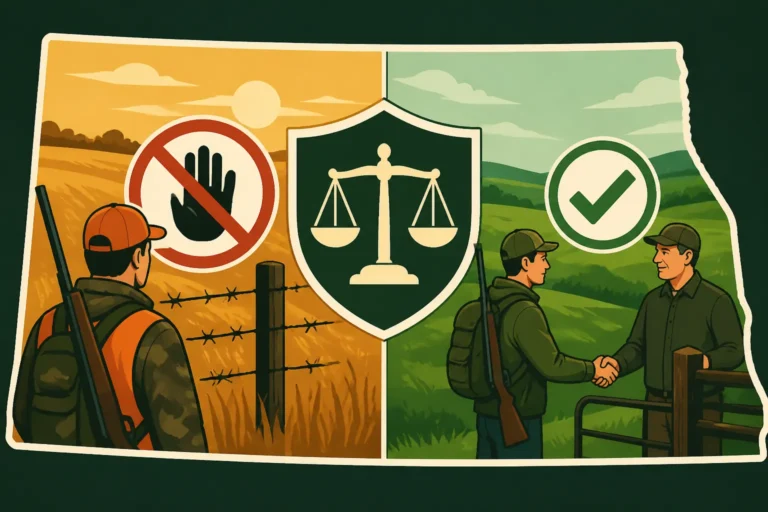
While the Little Missouri National Grassland boasts over a million acres of public access, it's crucial to understand that it's often arranged in a "checkerboard" pattern. This means sections of National Grassland (public) are frequently interspersed with private land, state school lands, and sometimes even other federal designations. This can be one of the biggest frustrations for hunters new to the area. You might be walking a deep draw, confident you're on public ground, only to suddenly encounter a fence line or a "No Trespassing" sign. Ignoring these boundaries, even accidentally, can lead to serious legal issues. This complex ownership mosaic necessitates meticulous planning and navigation. You absolutely cannot simply wander without knowing where you are. Understanding land ownership is paramount to a successful and legal hunt on the Little Missouri. What Counts as Posted Land in North Dakota is something every hunter needs to know before heading out.
| Land Type | Key Characteristics | Hunter Access Considerations |
|---|---|---|
| National Grassland | Federally managed, vast, rugged Badlands and prairie. | Generally open to hunting, but watch for special rules or closures. |
| Private Land | Ranchland, cultivated fields, often fenced and signed. | Requires explicit permission from the landowner before entry. |
| State School Land | Designated by "SLC" or "SCL" signs, managed by the state. | Open to hunting unless posted closed, but often has specific access rules. |
| WMA/PLOTS Land | State or privately owned, but enrolled in public access programs. | Generally open for specific activities; check signs and maps carefully. |
Maximizing Your Hunt on Little Missouri National Grassland
Hunting such a vast and intricate landscape as the Little Missouri National Grassland requires more than just good shooting skills; it demands strategic planning, the right tools, and a deep respect for the land and its resources.
Essential Mapping Tools for Public Land Hunters
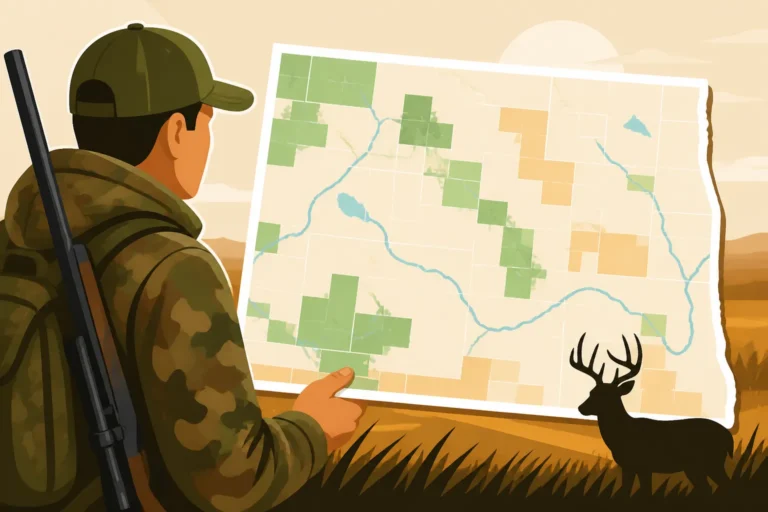
Given the checkerboard land ownership and the sheer scale of the terrain, reliable mapping tools are not just helpful—they're absolutely essential. Trying to navigate the Little Missouri National Grassland with only a paper map can be a recipe for frustration, or worse, a trespass violation. This is where digital mapping applications truly shine. Tools like onX Hunt have become indispensable for countless hunters on the prairie. These apps provide detailed satellite imagery, topographic maps, and, most importantly, clearly delineate property boundaries, showing you exactly where public land ends and private land begins, even in the most remote areas. You can mark waypoints, track your movements, and pre-scout potential hunting areas from home. Using the PLOTS App Without Cell Service is a critical skill for any serious hunter, as cell signal can be spotty out in the Badlands. Another valuable resource is GoHunt, which offers not only mapping capabilities but also detailed draw odds and unit breakdowns that can inform your decisions even before you apply for a tag. Investing in one of these robust mapping subscriptions is arguably one of the best expenditures you can make for a successful and worry-free hunt on the Little Missouri.
Scouting Strategies for Such a Large Area
Scouting the Little Missouri National Grassland can feel like trying to find a needle in a million-acre haystack, but it's far from impossible. The key is to be strategic and leverage technology. Start your scouting process long before you ever set foot in the Badlands. Use your digital mapping tools to pore over satellite imagery. Look for key features: water sources, distinct changes in topography like deep coulees and ridges, isolated timber pockets, and potential access points from roads or trails. Pay attention to how deer or elk might move through the terrain, looking for natural funnels or pinch points. Once you arrive, focus your ground scouting efforts on specific areas identified during your map study. Don't try to cover too much ground at once. Instead, pick a few promising sections and explore them thoroughly, looking for tracks, droppings, rubs, and beds. Early season, Glassing Badlands Coulees for Elk from a high vantage point can save you countless miles, allowing your optics to do the heavy lifting. Pay attention to Wind and Thermals in Badlands Terrain as these will dictate how game moves and where you need to set up. Remember, the goal isn't to know every acre, but to understand patterns and identify productive micro-habitats within the vastness.
Respecting the Resource and Other Users
With such a significant amount of public land, comes a responsibility to be a good steward of the resource and a respectful fellow hunter. While you might feel alone, you're rarely the only one out there. Practice ethical hunting principles, always know your target and what's beyond it, and adhere strictly to all hunting regulations. Leave no trace; pack out everything you pack in, and perhaps even a little more. When you encounter other hunters, offer a friendly nod or a quiet wave, and give them their space. Remember that the Little Missouri National Grassland is also home to ranchers, hikers, and other outdoor enthusiasts. Respect private property boundaries, even if a gate is open, and close any gates you pass through. Drive only on designated routes, and be mindful of your vehicle's impact on the fragile prairie environment. Protecting this incredible public resource ensures that future generations of hunters will be able to experience the same awe-inspiring wildness that you do. Camping Rules on North Dakota National Grasslands are important to know if you plan to extend your stay and truly immerse yourself in the experience.
Disclaimer
This article is for general informational purposes only and does not constitute professional advice. Laws, prices and regulations vary by location and change over time. Consult a qualified professional for guidance on your specific situation.