Tipping in Cash Versus Ahead of Time
Alright, let's talk about something that often leaves even the most seasoned hunters scratching their heads: tipping your guide. It's a topic that can feel a bit awkward, a little unclear, and sometimes downright stressful, especially when you're already focused on the hunt itself. The truth is, guides work incredibly hard to put you on game, ensure your safety, and make your trip memorable, and a good tip is a significant part of their compensation and a direct reflection of your appreciation. This guide aims to clear up the confusion around one specific aspect of that etiquette: whether to tip your North Dakota hunting guide in cash or if it's acceptable to handle it ahead of time.
The Etiquette of Tipping in the Hunting World
Tipping is a deeply ingrained custom in many service industries, and guided hunting is certainly one of them. It's not just about compensation; it's a gesture of gratitude for effort, expertise, and a job well done. When you're out chasing White-Tailed Deer Across North Dakota or Ring-Necked Pheasants in North Dakota, your guide is much more than a driver or a dog handler – they're your expert, your companion, and often, your sounding board.
Why Tipping Matters to Your Guide
For many guides, tips constitute a substantial portion of their income. While lodges and outfitters set their base rates, the daily grind, the early mornings, late nights, scouting, dog training, and sheer physical labor often aren't fully covered by the base fee alone. A guide's reputation is built on client satisfaction, and a generous tip acknowledges their dedication, specialized knowledge of North Dakota's Prairie Pothole Region, and hard work. It shows them that their efforts were seen and valued, which can be a huge morale booster. Think of it as investing in future exceptional service, both for yourself and for other hunters who rely on these professionals. It helps ensure that good guides stay in the industry, continuing to provide incredible experiences for folks like us.
What Factors Influence the Tip Amount
Determining the right tip isn't an exact science, but there are some common factors that hunters consider. First and foremost is the overall experience. Did your guide go above and beyond? Were they knowledgeable about North Dakota Waterfowl on the Prairie Pothole Flyway or the subtle nuances of Hunting the North Dakota Badlands? Was their attitude positive and encouraging, even when the hunting was tough? Beyond the success of the hunt itself (which is often out of a guide's control), look at their preparedness, their equipment, their professionalism, and how well they communicated with you. Some hunters also factor in the physical demands of the hunt – did you tackle challenging terrain for Elk in North Dakota's Little Missouri Badlands or endure harsh weather? The length of the trip, the number of hunters in your party, and whether it was a "full service" experience with meals and lodging also play a role. Reputable outfitters might even give you a guideline, which can be very helpful, but ultimately, the final amount is up to you.
Cash: The Traditional and Often Preferred Method
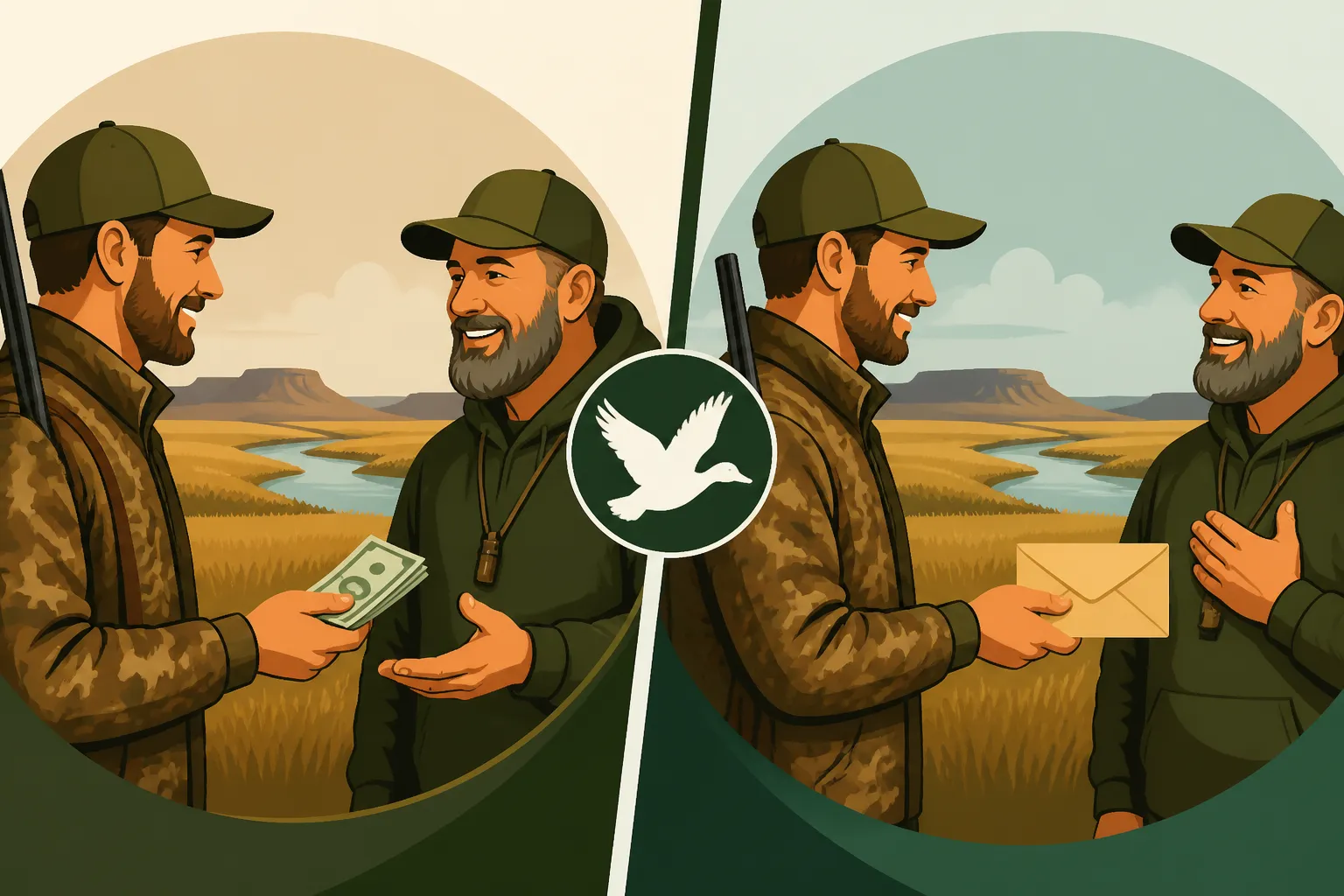
When it comes to tipping in the hunting world, cash has historically been king. It's immediate, discreet, and universally accepted, and many guides appreciate it for several practical reasons.
The Benefits of Tipping in Cash
Handing your guide a crisp envelope of cash at the end of a successful hunt (or even a challenging one) carries a certain weight. It’s a direct, personal gesture. For the guide, cash is often preferred because it's immediately accessible. They don't have to wait for it to be processed through an outfitter's payroll system, which can sometimes take weeks. This immediate access can be crucial for guides who might be traveling for work or who rely on tips to cover immediate expenses. There are also times when a guide might be an independent contractor working for several outfitters, or they might be helping out a friend's operation for a short period. In these scenarios, cash simplifies the transaction and ensures they receive their gratuity directly, without any potential administrative delays or fees that might be associated with other payment methods. It also provides a clear, unmistakable moment of appreciation for their hard work. For nonresidents, especially those Booking a Guided North Dakota Pheasant Hunt, bringing cash can be easier than navigating various digital payment options while in the field.
When Cash Isn't Practical
While cash is often preferred, let's be realistic: carrying large sums of cash isn't always convenient or safe for everyone. Maybe you're flying in and don't want to travel with a significant amount of money. Or perhaps you simply don't have enough cash on hand after paying for other expenses like licenses, travel, and gear. In today's increasingly cashless society, it's a genuine concern for many. Furthermore, if you're hunting in a remote area, finding an ATM might not be an option, leaving you scrambling last-minute. This is where hunters can feel that familiar pinch of "I want to do the right thing, but how do I actually do it?" Sometimes, especially on a multi-day hunt like Packing for an Eight-Day North Dakota Elk Hunt, you might realize mid-trip that you underestimated the scope of the tip or the quality of service, and need to adjust. Having to find more cash in the middle of nowhere can be a real logistical headache.
Tipping Ahead of Time: Pros, Cons, and Considerations
With the rise of digital payments and the convenience of planning everything online, the idea of tipping a guide ahead of time is becoming more common, but it comes with its own set of nuances.
Situations Where Tipping Ahead Might Be Offered
Some outfitters and booking platforms have started offering the option to include a gratuity when you book your trip or pay your final balance. This can seem appealing for its sheer convenience. It streamlines the financial aspect of the trip, allowing you to budget and pay everything in one go, often weeks or months before you even step foot in North Dakota. For those who book through larger services like BookYourHunt or use planning tools like GoHunt, this might appear as a simple checkbox or an additional line item on your invoice. It removes the stress of needing to carry cash or remembering to make a separate payment at the end of a long day of hunting. This can be particularly useful for corporate groups or those managing multiple payments for a larger party, ensuring everyone contributes their fair share to the guide's tip without awkward cash collection on site.
Potential Downsides and How to Navigate Them
While convenient, tipping ahead of time can have several downsides. The biggest one is that you're essentially tipping for service before you've received it. What if the service isn't what you expected? What if there's a personality clash, or the guide just doesn't put in the effort you anticipated? It locks you into an amount that might not accurately reflect the actual experience. Another concern is transparency: will the guide actually receive the full amount you intended as a tip, or will a portion of it be absorbed by the outfitter for administrative fees or worse? It's not always clear how these pre-paid gratuities are disbursed.
To navigate this, if you're considering tipping ahead, always ask the outfitter directly about their policy. Inquire how the tip is handled, when it's paid to the guide, and if there are any deductions. A reputable outfitter will be transparent. If they're vague or evasive, that's a red flag. A better approach might be to pre-pay a portion of the tip, perhaps a smaller base amount, and then plan to supplement with cash if the guide goes above and beyond your expectations. This hybrid approach gives you flexibility and ensures that the guide is rewarded appropriately for exceptional service.
Making the Decision: Cash, Ahead, or a Hybrid Approach
Ultimately, the choice of how to tip your North Dakota hunting guide comes down to personal preference, convenience, and how comfortable you are with the outfitter's transparency. There's no single right answer, but thoughtful planning can make the process smoother for everyone involved.
Communication is Key: Before You Hunt
One of the best ways to alleviate any tipping anxiety is to simply ask. When you're Booking a North Dakota Deer Hunt or a North Dakota Fall Turkey Season Rules trip, reach out to the outfitter or lodge owner before your arrival. Ask about their suggested tipping percentages or amounts. Inquire about their preferred method of gratuity – do their guides prefer cash, or do they have a system in place for pre-paid tips? Most reputable outfits are happy to provide guidance on this sensitive subject. This conversation can clarify expectations and ensure you're prepared. It's a sign of a professional hunter to address these details upfront. For instance, when planning your trip details with a service found on BookYourHunt, don't hesitate to directly message the outfitter about tipping conventions specific to their operation.
A Flexible Approach to Tipping
Perhaps the most practical advice is to adopt a flexible, hybrid approach. Plan to bring a reasonable amount of cash for tips. This allows you to hand a well-deserved gratuity directly to your guide at the end of the hunt, acknowledging their hard work in real-time. This is especially true for day rates, like for a guide focused on Hunting a North Dakota Prairie Pothole Slough Edge. If you've booked a longer stay at a lodge, you might consider tipping the entire staff (cooks, lodge managers, cleaners) separately, and cash is often best for these individuals as well.
However, if you're truly uncomfortable with cash or if your outfitter has a clear, transparent system for pre-paid tips that you're satisfied with, a portion could be handled ahead of time. Just be prepared to add a supplemental cash tip if your guide's performance exceeds all expectations. Having that extra cash on hand, just in case, provides peace of mind and the ability to reward truly exceptional service. Think of it as having an emergency fund for generosity! Services like GoHunt often emphasize pre-trip planning, and including a tipping strategy in that plan is a smart move.
Tipping Methods Comparison
Here's a quick overview to help you decide which tipping method might work best for your next North Dakota hunting adventure:
| Feature | Tipping in Cash | Tipping Ahead of Time (via Outfitter) | Hybrid Approach |
|---|---|---|---|
| Convenience | Requires carrying cash, remembering to withdraw | Very convenient, part of booking | Flexible, combines convenience with discretion |
| Immediacy | Immediate payment to guide | Delayed, depends on outfitter's payout schedule | Immediate cash supplement possible |
| Transparency | Clear, direct transaction with guide | Depends on outfitter's policies; less direct | Clear for cash portion, rest depends on outfitter |
| Flexibility | Allows adjustment based on service quality | Locked-in amount, less flexible | Most flexible; adjust cash portion as needed |
| Personal Touch | Strong personal gesture of appreciation | Less personal, more transactional | Personal touch with cash supplement |
| Control | You control when and how much is given | Outfitter handles disbursement | You control cash, outfitter handles pre-payment |
| Risk | Carrying large sums of money | Funds might not reach guide entirely or quickly | Minimal risk with balanced approach |
No matter how you choose to tip, remember that a gratuity is a meaningful part of the hunting experience. It acknowledges the hard work and dedication of the people who make our outdoor adventures possible, whether you're enjoying Pheasant Hunting North Dakota's Prairie or Duck and Goose Hunting North Dakota's Potholes.
Disclaimer
This article is for general informational purposes only and does not constitute professional advice. Laws, prices and regulations vary by location and change over time. Consult a qualified professional for guidance on your specific situation.