Hunting Hungarian Partridge Field Edges
Hunting Hungarian partridge in North Dakota can feel like chasing ghosts sometimes, especially when those notoriously quick birds burst from seemingly nowhere. You've walked miles of prime-looking cover, only to come up empty, leaving you wondering where in the world these little prairie rockets hide. This guide is all about honing in on one of their most consistent hideouts: the field edge, and giving you the strategies to find and flush them when others can't.
Why Field Edges Are Prime Hungarian Partridge Habitat
Field edges, that transitional strip of ground where one type of cover meets another, are absolute magnets for Hungarian partridge. It’s not just random; there’s a biological reason these birds gravitate to these areas, and understanding it is key to successful hunting.
The Allure of Cover and Food Intersections
Imagine being a small bird on the vast North Dakota prairie. You need quick access to food, but you also need safety from predators swooping from above or stalking from the ground. Field edges offer the best of both worlds. Here, the dense cover of a CRP field, a grassy ditch, or a thick shelterbelt often directly abuts a food source like standing stubble from a wheat field, a patch of sunflower, or an unharvested cornfield. This allows partridge to feed efficiently without exposing themselves for too long. They can dart out, grab a quick meal of seeds or insects, and then instantly dive back into the protective embrace of thick grass or brush.
Think of an old fencerow, overgrown with weeds and volunteer trees, running alongside a freshly cut alfalfa field. That fencerow offers escape cover and roosting spots, while the alfalfa field provides forage. The partridge often hug these lines, moving from one point of safety to the next, taking advantage of the resources available without venturing into the wide-open, vulnerable spaces. This "edge effect" is a well-known ecological principle, and it's especially true for small upland birds like Huns.
Understanding Partridge Movement Along Edges
Hungarian partridge are incredibly adept at using micro-topography and existing cover to their advantage. Along a field edge, they'll often utilize small depressions, subtle rises, or even just taller clumps of grass as temporary cover or lookout points. Their daily movements are heavily dictated by two primary factors: food and thermal regulation. In the early morning and late afternoon, you'll often find them actively feeding closer to the field, picking seeds or gleaning leftovers. As the sun climbs higher, they might move deeper into the thicker cover of the edge to escape the heat, dust bathing in dry soil patches, or simply loafing.
During colder parts of the season, especially in late fall or early winter, those same dense edges provide crucial thermal protection from biting winds and snow. A covey might burrow into a snowdrift along a brushy fenceline, emerging only to feed when absolutely necessary. Understanding these patterns means you're not just walking aimlessly; you're anticipating where the birds will be given the time of day and the prevailing weather conditions. This insight can dramatically increase your odds of a flush.
Scouting and Locating Partridge on Field Edges
Before you even step out with your shotgun, effective scouting is paramount. You can't just expect to drive down any section line and find birds. Hungarian partridge are particular, and identifying their preferred edges will save you a lot of boot leather and frustration.
Reading the Landscape for Subtle Clues
When scouting field edges, you're looking for signs that extend beyond just "good cover." You want to find active signs of partridge. This means keeping an eye out for dusting bowls – small, shallow depressions where birds have ruffled their feathers in dry soil, often found in sandy patches or at the base of dense cover. Look for droppings, which are small, dark, and typically accumulate in areas where birds have roosted or loafed for a while. Sometimes, you'll even spot tiny track marks in soft mud or fresh snow along the edge, showing their travel routes.
Pay close attention to the transition zones. Is there a dense stand of cattails meeting a wheat stubble field? A thick shelterbelt bordering an unharvested soybean field? Or perhaps an old, neglected tree line choked with multiflora rose and volunteer sumac adjacent to a standing cornfield? These are the kinds of specific junctures that offer both security and sustenance. Using advanced mapping tools like GoHunt can give you an incredible advantage here. You can overlay satellite imagery with public land boundaries and even identify different crop types, allowing you to visually scout promising edges from the comfort of your home before ever hitting the road. This helps you narrow down vast tracts of land to the most likely spots.
Utilizing Maps and On-the-Ground Reconnaissance
Modern hunting has been revolutionized by mapping technology, and it's indispensable for finding partridge on field edges. Start by pouring over satellite maps, identifying long, linear strips of diverse cover adjacent to agricultural fields. Look for areas where CRP grass meets a grain field, or where a deep drainage ditch with heavy brush runs parallel to a harvested crop. Once you have some potential spots, cross-reference them with public land maps, such as those found in the PLOTS Program Explained guide, or even better, use the GoHunt app which integrates private and public land information.
On-the-ground reconnaissance is the next critical step. This involves actually driving or walking these edges before the season opens (where permitted and respectful of private property). Look for the fresh signs mentioned earlier. Pay attention to how the wind flows, where snow might collect, or where water might naturally pool, as these factors influence vegetation and insect life, all of which affect where partridge will be. A pre-season scout can confirm your map-based suspicions and help you prioritize your hunting efforts. Remember, partridge are creatures of habit, and once you find them using a particular type of edge, you'll often find them in similar spots on other properties. You might also gain some insights for Scouting PLOTS Land Before Season by observing how birds utilize different cover types.
Effective Hunting Strategies for Field Edges
Once you've identified promising field edges, it's time to talk tactics. Hungarian partridge are notoriously fast and can be challenging, but a well-executed strategy will significantly boost your success rate.
The Walk-and-Flush Approach
For hunters without dogs, or even those who prefer a more methodical approach, the walk-and-flush method along field edges can be highly effective. The key is to walk slowly and deliberately, paying attention to every nuance of the cover. Partridge will often hold tight, relying on their camouflage, sometimes until you're practically stepping on them. Walk into the wind if possible; this helps muffle your approach and allows you to hear birds flushing more clearly. If you have a partner, spread out about 20-30 yards apart, effectively covering a wider strip of the edge. One person might walk closer to the dense cover, while the other walks closer to the field, making it harder for birds to sneak out either side.
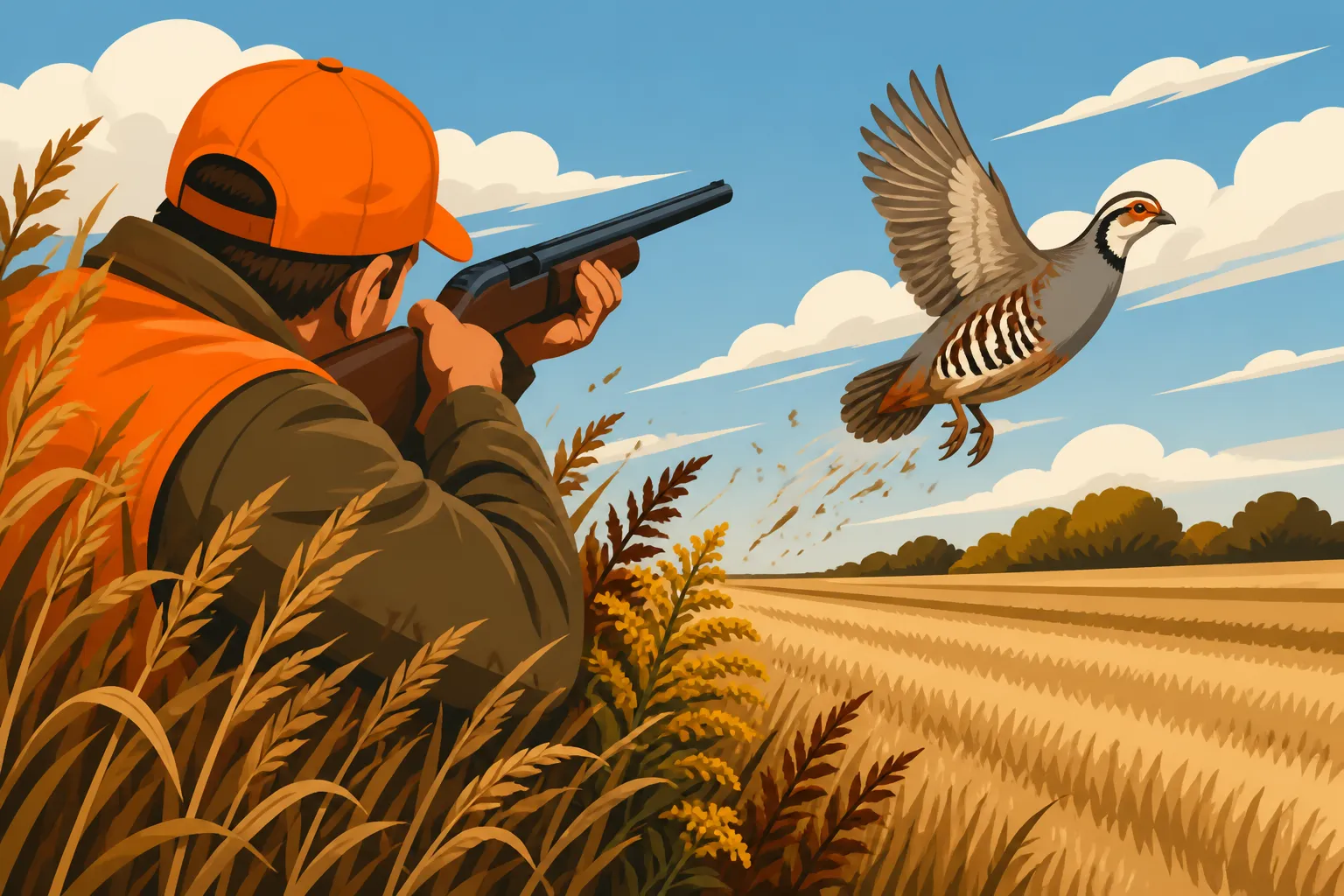
When walking, vary your pace. Pause frequently for 10-15 seconds. These pauses often make nervous birds flush, thinking they’ve been detected. When a covey flushes, try to mark where they fly, as Huns often don't fly too far before pitching down into similar cover. If you can track their flight, you might be able to make a second, strategic approach to a different part of the edge. Be ready for the explosive flush, as these birds are fast, and a quick, decisive swing will be necessary for a clean shot.
Working With Hunting Dogs on Edges
If you have a well-trained bird dog, especially a pointing breed, hunting Hungarian partridge on field edges becomes a whole new experience, and often a much more productive one. A good pointer or flusher can cover ground much more efficiently, locate birds that you would otherwise walk past, and most importantly, retrieve downed birds in thick cover. For insights into canine assistance, you might look at guides like Running Pointing Dogs on North Dakota Pheasant.
When working a dog, let them quarter the field edge, scenting for birds. Pay close attention to their body language. A dog working a scent trail will often become more intense, slowing down, tail wagging subtly, nose to the ground. When they go on point, approach cautiously, ready for the flush. Partridge, like pheasants, will sometimes run ahead of a dog before flushing, so be prepared for a longer walk-up to the point. The dog's ability to pin down the birds and hold them until you arrive is invaluable, turning what might be a wild flush into a more controlled shooting opportunity. After the shot, command your dog to retrieve immediately to ensure no bird is lost in the often-dense edge cover.
Timing Your Hunt for Peak Activity
Just like with any upland bird, timing your hunt for Hungarian partridge on field edges can greatly influence your success. The prime times are typically early morning, right after sunrise, and late afternoon, leading up to sunset. During these periods, partridge are most active, moving from their roosting spots to feed or vice versa. The light is often softer, and the temperatures are cooler, making them more comfortable to be out in the open, closer to the field side of the edge.
Midday hunts can be tougher, as birds tend to be loafing in the thickest cover, conserving energy. However, if the weather is overcast or cool, partridge might remain active longer into the day. A hard frost or a light snowfall can also change their patterns, often concentrating them on south-facing slopes or in areas with readily accessible food. After a significant cold front, birds may be more focused on feeding, making them more vulnerable along food-rich edges. Always check the local forecast and adjust your hunting times accordingly, looking for windows when the birds are most likely to be moving.
Gear and Considerations for Field Edge Hunts
Having the right equipment and keeping a few key considerations in mind will make your Hungarian partridge hunt safer, more comfortable, and ultimately, more successful.
Shotgun and Ammunition Choices
For Hungarian partridge, a fast-swinging shotgun is your best friend. These birds are quick, and you'll often get only a split second for a shot. Many hunters prefer a 20-gauge or 12-gauge shotgun, typically an over/under, side-by-side, or semi-automatic. The 20-gauge offers a lighter carry for miles of walking and enough punch for these smaller birds, while a 12-gauge provides a slightly denser pattern.
As for ammunition, stick with smaller shot sizes. Number 7.5 or even 6 shot is generally ideal. They carry enough pellets to create a dense pattern for quick-flying partridge but aren't so large that they destroy too much meat. For chokes, improved cylinder or modified are good starting points. Hungarian partridge often flush within 20-30 yards, so an open choke helps you get more pellets on target quickly. If you anticipate longer shots or are hunting in more open areas, a modified choke might give you a bit more reach. Always ensure you're using steel shot if hunting on certain public lands, as some areas have restrictions on lead shot.
Dressing for North Dakota's Variable Weather
North Dakota weather is famously unpredictable. A beautiful, crisp fall morning can quickly turn into a blustery, bone-chilling afternoon, even in the early season. Layering is absolutely crucial for any upland hunt here. Start with a moisture-wicking base layer, add an insulating mid-layer like fleece, and top it with a windproof and waterproof outer shell. You'll be walking, generating heat, but also stopping, and you need to be able to adjust as your activity level and the weather change.
Sturdy, comfortable, and waterproof boots are non-negotiable. You'll be covering miles, often through dew-soaked grass, mud, or even light snow. Look for boots with good ankle support and a comfortable fit to prevent blisters. Don't forget a blaze orange vest or hat to ensure visibility to other hunters, which is often a North Dakota Blaze Orange Requirements consideration, especially during overlapping seasons. Gloves and a warm hat can also make a huge difference in comfort, particularly on colder days.
Safety and Ethical Hunting Practices
Safety should always be your top priority. Always know where your hunting partners are, especially when walking in a line. Keep your muzzle pointed in a safe direction, and be absolutely certain of your target and what lies beyond it before taking a shot. Field edges often run close to farmsteads, roads, or livestock, so vigilance is key. It's vital to respect private property and always secure permission before venturing onto someone's land. Understanding North Dakota Trespass and Permission Law is essential, as is knowing the specific rules for public access areas like PLOTS.
| Field Edge Type | Key Features | What to Look For (Partridge Sign) | Best Hunting Approach |
|---|---|---|---|
| CRP Grass / Grain Field | Dense, tall grass meeting stubble/standing crop | Dusting bowls, droppings, short travel trails | Slow, methodical walk-and-flush; good for pointing dogs |
| Shelterbelt / Farm Field | Tree lines, brush, thick undergrowth next to crops | Roosting spots, tracks in soft soil | Push from one end to the other; use blockers if possible |
| Drainage Ditch / Crop Field | Linear depression with varied cover, water access | Roosting/loafing areas, insect activity | Walk ditch sides carefully, anticipate flushes up and out |
| Fenceline / Pasture | Overgrown fencelines with weeds, brush | Travel corridors, feeding areas, some dusting | Walk directly along the fenceline, check both sides |
| Standing Corn / Soybeans | Thick standing rows providing cover and food | Birds feeding at field edge, deeper cover within rows | Walk outer edge slowly, then grid through if no flush |
Ethical hunting also extends to retrieving every bird you shoot. A good bird dog is a tremendous asset here, but if hunting without one, mark your bird carefully and thoroughly search the area. Wounded birds can run or hide remarkably well, and it's our responsibility to ensure a clean kill and full recovery. Familiarize yourself with the North Dakota Pheasant and Upland Season Rules to ensure you're compliant with all bag limits and regulations.
Disclaimer
Please note that hunting regulations, seasons, and access rules can change frequently. Always consult the most current North Dakota Game and Fish Department proclamations and regulations before planning any hunting trip. This guide is for informational purposes only and does not supersede official state regulations.