Hunting the Late Antlerless Elk Period
Drawing a coveted elk tag in North Dakota feels like hitting the lottery, and when it's an antlerless tag for the late season, it brings a unique set of challenges and immense rewards. Many hunters struggle with shifting elk behavior as winter sets in, dealing with unpredictable weather, and finding those elusive herds after other seasons have closed. This guide is designed to walk you through everything you need to know about successfully navigating North Dakota's late antlerless elk period, from understanding the season specifics to effective hunting strategies and crucial field care.
Understanding the Late Antlerless Elk Period in North Dakota
The late antlerless elk season in North Dakota is a special opportunity, often presenting vastly different conditions and elk behavior than what hunters might encounter earlier in the fall. It's a testament to the North Dakota Game and Fish Department's efforts to manage these growing herds, particularly in areas where numbers might exceed carrying capacity or cause agricultural damage.
Why Late Season Antlerless Hunts Matter
Hunting antlerless elk during the late season plays a crucial role in the state's wildlife management goals. These hunts are primarily designed to help control herd sizes and maintain a healthy population balance, which in turn helps prevent overgrazing, disease transmission, and conflicts with agricultural landowners. For hunters, it represents a chance to fill the freezer with some of the finest wild game meat available. Unlike drawing an "any elk" tag, which often means focusing on trophy bulls, an antlerless tag encourages a meat-hunting mindset, allowing hunters to contribute directly to conservation efforts while securing a significant amount of lean, organic protein for their families. It's a challenging hunt, no doubt, but one that offers incredible satisfaction and a tangible connection to the land and its wildlife. The goal here isn't just to harvest an animal; it's to participate in a sustainable system that ensures the future of North Dakota's elk.
Key Dates and Unit Specifics
North Dakota's late antlerless elk period typically runs into December, often overlapping with the very end of the deer gun and muzzleloader seasons, or extending even further into the heart of winter. The exact dates and units are critical and can vary slightly year to year based on population objectives and harvest data. It's imperative to consult the current year's North Dakota Game and Fish proclamation for precise opening and closing dates for your specific unit. For instance, some units, particularly those in the Badlands, might have extended periods for antlerless tags to address specific localized herd growth. Other units, often those in more agricultural areas like the Turtle Mountains or river bottomlands, might also have late season opportunities to manage localized herds impacting private land. These later seasons often provide a unique advantage: fresh snow can make tracking easier and concentrated food sources can lead to more predictable elk patterns. Remember, elk tags in North Dakota are typically unit-specific, meaning your tag is only valid in the designated hunting unit printed on your license.
The "Once-in-a-Lifetime" Aspect for Elk
Drawing a North Dakota elk tag is considered a "once-in-a-lifetime" opportunity for residents, meaning that once you harvest an elk, moose, or bighorn sheep in the state, you cannot apply for those species again. This adds an immense weight and significance to every elk hunt, including the late antlerless period. For many, this tag represents years, even decades, of applying and accumulating preference points. It's not just another hunt; it's the hunt. This "once-in-a-lifetime" status is a key reason why hunters invest so much time and effort into scouting and preparation, ensuring they make the most of their precious tag. While the focus of an antlerless tag is often meat, the experience itself is deeply profound, marking a pinnacle achievement in a North Dakota hunter's career. You'll want to review the full details on North Dakota's Once-in-a-Lifetime Big Game Licenses to understand the regulations thoroughly.
Locating Elk During the Late Season
As North Dakota plunges into winter, elk behavior shifts dramatically. Gone are the bugling days of the rut or the spread-out summer patterns. Now, survival becomes the driving force, and understanding how elk adapt is key to finding them.
Food, Cover, and Water in Winter Conditions
During the late antlerless period, often characterized by cold temperatures and accumulating snow, elk prioritize three things: high-energy food sources, thermal cover, and accessible water. Their diets shift from abundant summer forages to more concentrated, calorie-rich options. Think standing corn, sunflower fields, winter wheat, or even browse on woody vegetation in sheltered areas. These agricultural fields become magnets, especially after deer pressure has subsided.
Thermal cover is equally critical. Elk will seek out dense stands of conifers like junipers in the Badlands, thick willows along river bottoms, or even heavy shelterbelts and unharvested fields that provide a break from the biting wind and deep snow. These areas offer warmth and a sense of security. Water, while often frozen on the surface, is still essential. Elk will paw through snow to reach green browse, eat snow directly, or seek out springs and flowing creeks that remain open. Look for south-facing slopes, which get more sun exposure, melting snow and potentially revealing more accessible forage. Hunters using mapping tools like GoHunt can layer satellite imagery with historical snow depth data to identify potential bedding and feeding areas. Understanding How Many Elk Live in the Badlands and their typical movement patterns in those areas can significantly boost your late-season success.
Utilizing Public Land Opportunities
North Dakota boasts a surprising amount of public land that can hold elk, particularly in the western and central parts of the state. The Little Missouri National Grassland is arguably the most prominent, offering vast tracts of rugged, elk-friendly terrain. During the late season, these areas might see reduced hunter pressure, as many deer hunters have packed up for the year. Look for Waterfowl Production Areas (WPAs) and Wildlife Management Areas (WMAs) that contain suitable timber, dense brush, or proximity to agricultural fields. While these areas are often smaller, elk might use them as temporary sanctuaries or travel corridors between private land feeding areas.
Hunting North Dakota's Little Missouri National Grassland requires robust preparation, especially in winter. Focus your efforts on deep draws, juniper pockets, and areas adjacent to private cropland. Don't overlook the possibilities in the Turtle Mountains or along the Missouri River corridor in areas like the Riverdale WMA, if your tag allows. These areas can sometimes hold small, localized elk herds. Scouting with apps that show PLOTS (Private Land Open To Sportsmen) land can also reveal key parcels that provide access to prime winter habitat. Remember that elk often move long distances to find ideal wintering grounds, so their location can be different from where you might have seen them earlier in the fall.
Gaining Private Land Access for Late Hunts
Securing private land access can be a game-changer for late antlerless elk hunts, especially if elk have congregated on agricultural fields or sheltered river bottomlands. Many landowners, particularly those experiencing crop damage, are often more receptive to hunters during the late season, especially if you're targeting antlerless animals. This is where building relationships and being respectful comes into play. Approach landowners well in advance, explain your intention to harvest an antlerless elk, and offer to help with any potential issues.
Highlighting the benefits of herd management can be persuasive. Always ask for clear boundaries and be prepared to leave your contact information. Sometimes, simply offering to help drag out the elk or even share some of the meat can open doors. Tools like GoHunt's property ownership layers can help identify landowners to contact. Even if your initial approaches are unsuccessful, persistence and a good attitude can pay off. Remember, many elk spend winter on private land, drawn by abundant food sources that aren't available on public lands. A successful late-season hunt often hinges on securing that critical private land permission, or at least understanding where private land bottlenecks occur near public access points.
| Feature / Period | Early Antlerless Elk Period (Sep-Oct) | Late Antlerless Elk Period (Nov-Dec) |
|---|---|---|
| Typical Weather | Mild, cool, occasional early snow | Cold, freezing, significant snow/ice |
| Elk Behavior | Spread out, actively breeding (rut) | Concentrated, seeking food/cover |
| Food Sources | Green grasses, forbs, early crops | Standing crops (corn, sunflowers), browse |
| Cover Preference | Aspen groves, scattered timber, draws | Dense conifers, heavy shelterbelts, thick river bottoms |
| Hunter Pressure | Higher (overlaps with archery deer) | Lower (most deer seasons closed) |
| Tracking Conditions | Dry ground, limited visual sign | Excellent (snow), clear tracks |
| Key Advantage | Milder conditions, bugling activity | Concentrated elk, tracking snow |
| Primary Challenge | Locating widely dispersed herds | Extreme cold, difficult access/extraction |
Strategies and Tactics for Success
Hunting North Dakota elk in the late season demands patience, resilience, and a solid understanding of how elk navigate winter conditions. Your tactics will need to adapt to the colder temperatures and often snow-covered landscape.
Spot-and-Stalk in Open Country
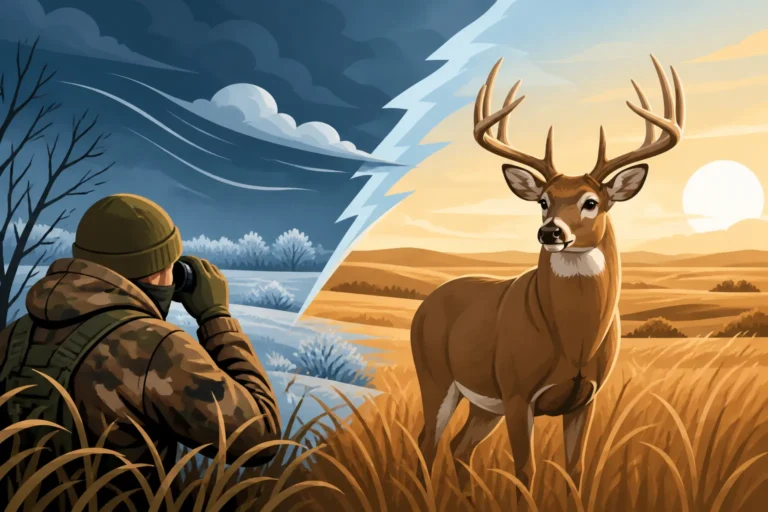
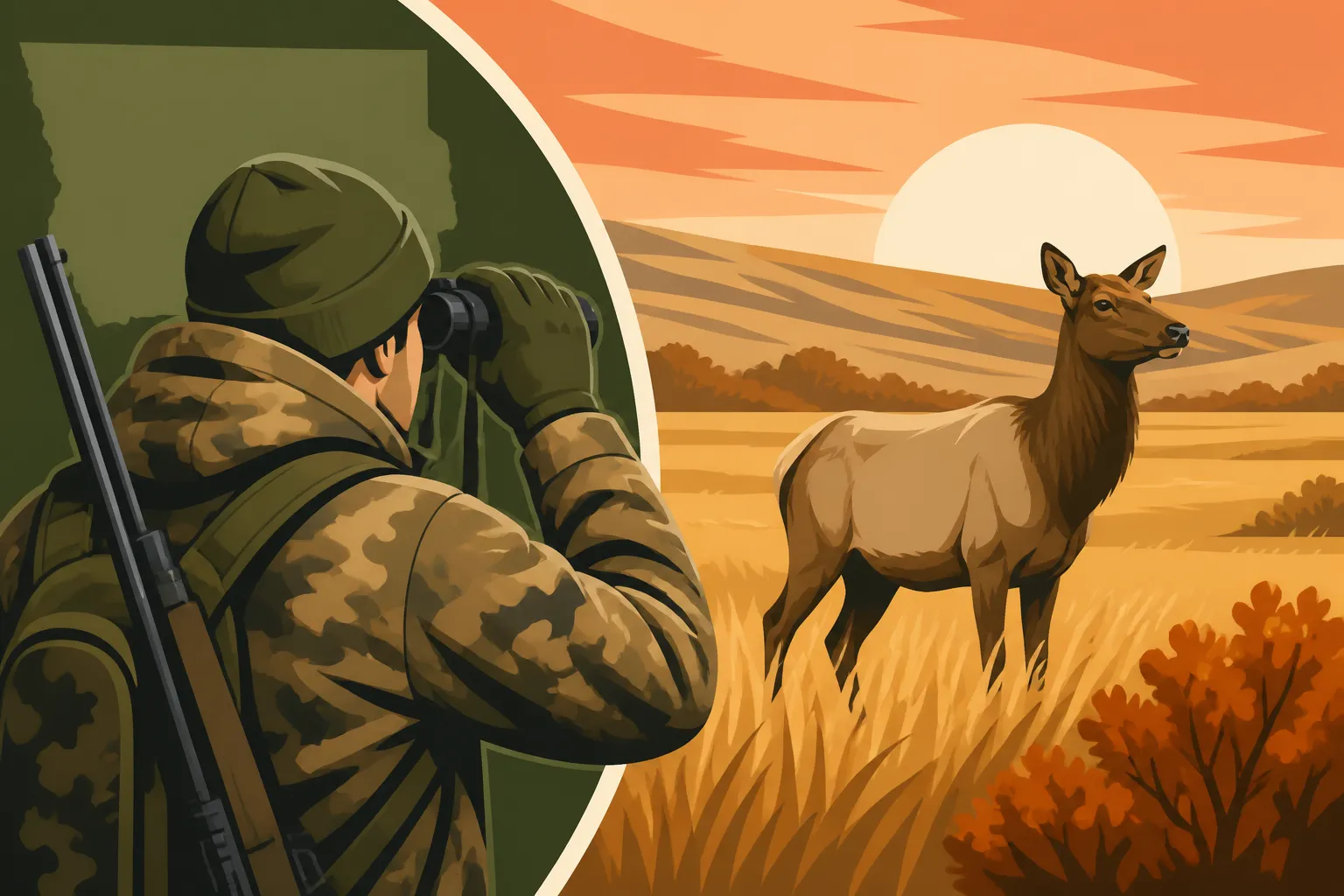
The vast, open landscapes of western North Dakota, particularly within and around the Badlands, lend themselves perfectly to spot-and-stalk hunting, even in late season. With snow on the ground, elk often stand out against the white backdrop, making them easier to spot from a distance. The key here is effective glassing. Spend hours behind quality binoculars or a spotting scope, meticulously scanning coulees, draws, and treelines, especially those with south-facing slopes that offer relief from the cold. Utilize a good tripod for steady glassing, and make sure to scan not just the obvious spots, but also the small, hidden pockets that can hold a bedded elk.
Once you've spotted elk, the real work begins. Planning your approach is critical. You must account for wind direction, thermals (which can be tricky in the broken Badlands terrain), and natural cover to conceal your movement. The late season often means barren trees and less vegetation, making stealth even more challenging. Take your time, use every fold in the landscape, and move slowly, pausing often to re-evaluate the elk's position. This isn't a race; it's a chess match. Don't be afraid to take an entire day to get into position, especially if it means a higher percentage shot. Remember to practice long-range shooting before your hunt, as shots in the open country can often be extended. Glassing Badlands Coulees for Elk is a skill that will serve you well here.
Still-Hunting Timbered Draws and River Bottoms
While the Badlands offer open country, other elk units in North Dakota, such as those along the Missouri River, the Turtle Mountains, or other river bottom areas, might present more timbered and brushy environments. Here, still-hunting becomes a highly effective tactic. Still-hunting involves moving through the woods or thick cover very slowly, taking a few steps, pausing, and scanning the area intently for any sign of movement or an outline of an elk. Think of yourself as a predator, flowing through the landscape, using all your senses.
With snow on the ground, still-hunting offers the added advantage of being able to track elk. Fresh tracks will tell you if elk are in the area and, more importantly, which direction they are heading. Follow their trails, paying close attention to changes in behavior indicated by track patterns – a sudden sprint, a pause to feed, or a shift in direction. These could signal a bedded animal or one that is aware of your presence. Focus on understanding their escape routes and how they utilize terrain features for security. In these dense areas, shots will likely be close and fast, so be prepared for quick target acquisition. Understanding Reading a Missouri River Bottom for Deer can also apply to elk, as both species use similar habitat in these corridors.
Cold Weather Gear and Preparation
A late-season elk hunt in North Dakota means preparing for severe cold. The prairie winds can be brutal, and temperatures can plummet well below zero, often accompanied by significant snowfall. Proper gear isn't just about comfort; it's about survival. Layering is paramount. Start with a good moisture-wicking base layer, add insulating mid-layers like fleece or down, and top it off with a windproof, waterproof outer shell. Brands like Sitka, KUIU, and First Lite offer excellent cold-weather hunting gear designed for extreme conditions. Don't forget extremities: warm boots, insulated gloves or mittens, a heavy hat, and a neck gaiter are non-negotiable. Chemical hand warmers and foot warmers can be a lifesaver.
Beyond clothing, pack an emergency kit with extra food, water, a fire starter, a first-aid kit, a headlamp with spare batteries, and a way to communicate (satellite messenger like a Garmin InReach is highly recommended, especially in areas with no cell service). Hydration is critical, even in cold weather, so carry a thermos with hot coffee, tea, or broth. Make sure your rifle is sighted in for cold conditions and that your ammunition performs reliably. Hunters who use mapping software should download their maps offline using services like GoHunt, as cell service can be spotty. Remember that success in these conditions often comes down to mental toughness and physical preparedness, so don't skimp on your Packing for an Eight-Day North Dakota Elk Hunt checklist.
Field Care and Logistics for a Late Season Elk
Harvesting an elk in the late season brings a unique set of challenges, especially concerning field care and extraction. The cold weather can be a double-edged sword: it helps preserve meat, but it also makes processing more difficult and can be dangerous if you're not prepared.
Efficient Field Dressing in Freezing Temperatures
Once an elk is down, especially in freezing temperatures, time is still of the essence. While the cold helps keep the meat cool, you want to remove the entrails as quickly as possible to allow the carcass to cool down uniformly and prevent spoilage from residual body heat. This is not the time to dilly-dally. Have your knives sharpened and ready, and consider a sturdy game saw for the pelvis and sternum if you plan to split the carcass. Work efficiently, and be mindful of blood getting on your layers, as it can quickly chill you.
If possible, get the elk skinned right away. The hide, while insulating, holds body heat, and removing it allows for faster cooling. You can often quarter an elk in the field, which makes extraction much easier. If you're planning to take the whole animal, ensure you have a plan to get it to a processor quickly. Even in sub-zero temperatures, bacteria can still grow, especially if the internal organs aren't completely removed or if the meat is left in a pile. For specific instructions on handling meat and potential concerns, especially if you're in a CWD-positive area, consult the North Dakota Game and Fish Department's guidelines.
Extraction Challenges and Solutions
Getting a massive animal like an elk out of rugged or snow-covered terrain is perhaps the biggest logistical hurdle of a late-season hunt. A mature antlerless elk can still weigh over 400-500 pounds field dressed. If you're hunting in the Badlands, you're looking at steep coulees, broken ground, and potentially deep snow. Hauling an elk whole is often not feasible unless you have direct vehicle access, which is rare on public land. This means quartering the animal and packing it out.
Investing in a good game cart can be invaluable if the terrain allows, but often, a sturdy internal or external frame backpack with meat hauling capabilities is the only option. Plan for multiple trips, especially if you're hunting alone or with a small group. A heavy-duty sled can be useful in deep snow, allowing you to drag quarters more easily. Consider how you'll get the meat to your vehicle, potentially leaving it cached in game bags overnight if temperatures are low enough. The sheer physical exertion required for extraction can be immense, so staying fueled and hydrated throughout the process is critical. Have a plan for Recovering a Deer From a Coulee, and scale that up significantly for an elk.
Reporting and Regulations
North Dakota mandates that all harvested big game animals, including elk, must be reported to the Game and Fish Department within a specific timeframe after harvest. This can typically be done online through their website or mobile app. This reporting is crucial for wildlife management, helping the department track harvest numbers and make informed decisions for future seasons. Failing to report your harvest can result in fines or penalties.
Additionally, pay close attention to Chronic Wasting Disease (CWD) regulations. If you harvest an elk in one of North Dakota's Fourteen-Unit CWD Zone, mandatory sampling might be required, or at least highly recommended. Be aware of carcass transport restrictions from CWD units, which generally prohibit moving certain parts of the carcass (like the brain, spinal cord, or lymph nodes) outside of the unit unless they are processed or specially prepared. Knowing where to find a Finding a North Dakota CWD Sampling Station in advance will save you time and stress post-harvest. Always double-check the current year's proclamation for any updates or changes to these vital regulations.
Disclaimer
Please remember that hunting regulations and conditions in North Dakota can change. Always consult the most current North Dakota Game and Fish Department official proclamations and regulations before planning and executing your hunt. This guide is for informational purposes only and does not substitute for official legal guidance.