Hunting Missouri River Bluff Country
Hunting the Missouri River bluff country in North Dakota can be an incredibly rewarding experience, but let's be real, it's also a completely different beast than chasing pheasants in a stubble field or still-hunting a flat shelterbelt. The rugged terrain, dramatic elevation changes, and dense cover can leave even seasoned hunters feeling lost and overwhelmed. This guide is here to walk you through the unique challenges and opportunities that await you in these beautiful, unforgiving landscapes, helping you prepare for a successful and safe hunt.
Understanding the Unique Terrain of the Missouri River Bluffs
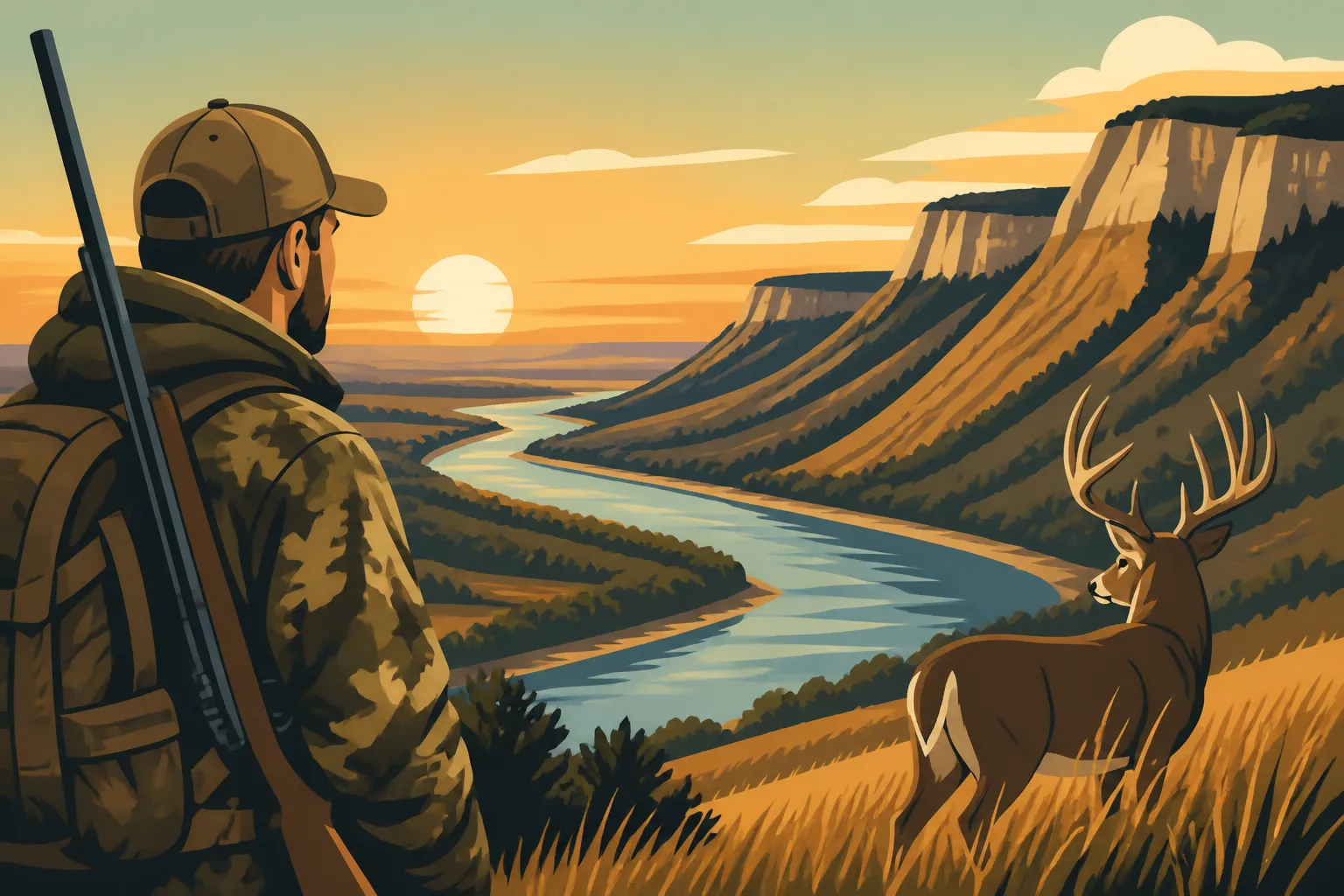
When most people picture North Dakota, they envision endless, flat prairie stretching to the horizon. But the Missouri River, especially along its eastern and western bluffs, carves out a landscape that's a world apart. We're talking about steep, heavily timbered draws that drop sharply down to the river bottom, interspersed with open grasslands on the ridge tops. It’s a transition zone where the prairie meets the forest, creating an incredibly diverse and challenging environment for hunters.
These bluffs are characterized by their dramatic topography. You'll find deep, winding coulees and ravines, often choked with dense brush, cedar thickets, and mature hardwoods like oak, ash, and cottonwood in the bottoms. The slopes themselves can be incredibly steep, making travel physically demanding and testing your balance and endurance. On top, the plateaus might open up into rolling native prairie or cultivated fields, offering a completely different type of cover and travel corridor for game. This complex mix of habitat provides everything a whitetail deer needs: food, water, and crucially, an abundance of secure cover from hunting pressure, which is why these areas can hold some truly impressive bucks. Understanding this vertical world, rather than just horizontal distances, is paramount for success. You can't just walk in a straight line; you have to plan your approach and exit with the terrain in mind.
Strategic Approaches for Whitetail Deer in Bluff Country
Deer in the Missouri River bluffs behave differently than their prairie counterparts. They're masters of using the topography to their advantage, often bedding on benches or points along the side of a deep draw where they can observe below them and catch thermal drafts, making it incredibly difficult to approach undetected. Successfully hunting these areas requires a thoughtful, calculated strategy that prioritizes scouting, wind management, and patience.
Effective Scouting and Locating Deer
Before you even step foot in the bluffs with your weapon, extensive scouting is your best friend. This is where modern tools really shine. Using mapping applications like GoHunt can give you a significant advantage, allowing you to pour over satellite imagery and topographic maps to identify potential bedding areas, travel corridors, and natural funnels. Look for benches, saddles, and confluence points where multiple draws meet. These are often high-traffic areas. Also, pay close attention to water sources—springs, seepages, or even the river itself—as deer will always need access to water. I've spent countless hours virtually scouting using GoHunt to mark potential stand sites and plan my approach routes, which saves a tremendous amount of time and effort on the ground.
On-the-ground scouting, especially during the off-season or just before the season opens, is also critical. Look for fresh sign: rubs, scrapes, and most importantly, tracks and trails. Deer often create distinct trails along these bluffs, particularly leading from bedding areas to food sources. Pay attention to how deer move along the contours of the land. They'll almost always take the path of least resistance. Identifying these key movement patterns will help you determine where to set up. Don't forget to consider areas where deer might escape pressure, like thick cedar pockets or incredibly steep, overgrown sections that most hunters avoid. Remember, your goal is to find where the deer want to be, not just where they can be.
Hunting Tactics for Bluff Terrain
Once you've done your scouting homework, it's time to choose your hunting tactic. The Missouri River bluffs lend themselves well to a few specific methods, each with its own nuances.
Still-Hunting and Spot-and-Stalk: This can be incredibly effective in the bluffs, especially if you have an intimate knowledge of the area and understand how deer use the terrain. Moving slowly, silently, and deliberately, often along a ridge line or contour, allows you to observe a lot of ground. You're constantly scanning, looking for a flick of an ear, a horizontal line in a vertical world, or the tell-tale glint of an antler. When still-hunting, always remember to play the wind; thermals in these deep draws can be tricky, often pulling scent down into the bottoms in the morning and up to the ridge tops in the afternoon. For a deeper dive into moving quietly through timber, check out our guide on Still-Hunting North Dakota's Missouri River Bottomland. If you spot a deer from a distance, particularly across a wide draw, a careful spot-and-stalk approach can be exhilarating but demands extreme patience and precise wind management. It's often a game of "two steps forward, one step back" as you use every bit of cover to get within range.
Stand Hunting and Pinch Points: For those who prefer to sit, identifying strategic pinch points and funnels is paramount. These can be saddles between two ridges, narrow strips of timber between open fields and dense cover, or even a specific bench that deer frequently use as a travel route. Setting up a treestand or ground blind along these pinch points, especially near fresh Scrape Lines Along a Section Line Trail or food sources like oak stands or agricultural fields bordering the bluffs, can be highly productive. When placing a stand, think about prevailing winds and thermals, and choose a location that offers both cover for you and a clear shot opportunity. Don't be afraid to hang a stand in a spot that seems difficult to access; often, those harder-to-reach spots are exactly where the mature bucks feel safest. Remember, you're trying to intercept deer as they move through their natural patterns.
Calling and Decoying: While not always the primary tactic, calling can certainly work in the bluffs, especially during the rut. Grunt calls can be effective, particularly when used sparingly and realistically to pique a buck's curiosity. If you hear a distant deer, a series of soft grunts might just draw him in. For more on this, our article on Grunt Calls in River Bottom Timber offers some great insights. Decoys, especially doe or small buck decoys, can be used in more open areas on top of the bluffs or in wider river bottom areas to draw a buck into range, but always be aware of your backdrop and potential approaches from other hunters.
Gear and Preparation for Rugged Bluff Hunts
Hunting the Missouri River bluffs isn't just a mental game; it's a physical one. The terrain will test your body, and being properly equipped is crucial for both success and safety. You need gear that can withstand the abuse of steep climbs, rocky descents, and abrasive brush, all while keeping you comfortable and quiet.
Essential Clothing and Footwear
Forget your flatland deer boots; in the bluffs, high-quality, ankle-supporting boots with excellent traction are non-negotiable. Look for boots that are waterproof, breathable, and offer stiff midsoles for stability on uneven ground. Brands like Kenetrek or Crispi are popular for a reason in this kind of terrain. You'll be side-hilling, climbing, and descending, and a rolled ankle can quickly end your hunt. Layering is also key. North Dakota weather, especially near the river, can be notoriously fickle, with temperatures swinging wildly. A good base layer to wick moisture, an insulating mid-layer, and a quiet, waterproof/windproof outer shell will allow you to adapt to changing conditions. For November gun season, ensuring you meet North Dakota Blaze Orange Requirements is also critical. Don't forget durable, quiet hunting pants that can stand up to thick brush and thorns.
Navigation and Recovery Tools
Given the complexity of the bluffs, reliable navigation is paramount. While your phone with GoHunt maps is fantastic, always carry a backup physical map and compass, and know how to use them. Cell service can be spotty or non-existent in the deep draws, and a dead phone battery is a hunter's nightmare. A headlamp with fresh batteries is also essential, not just for early morning and late evening treks, but also for blood trailing a deer in the heavy cover. Our guide on Blood Trailing After Dark in North Dakota emphasizes how vital good lighting and patience are, especially in this kind of terrain.
Beyond navigation, consider your recovery plan. Dragging a deer out of a deep coulee or up a steep bluff is incredibly arduous. A quality game cart can be invaluable if you can get it to the animal, but often, the terrain makes it impossible. A sturdy rope, game bags, and a good knife for quartering are often more practical tools for packing out meat in pieces, especially if you're solo or miles from a vehicle. For a broader overview of packing for tough hunts, albeit for a different species, our article on Packing for an Eight-Day North Dakota Elk Hunt offers some transferable insights on essential gear for rugged country.
Accessing and Navigating Missouri River Bluff Country
While the Missouri River bluffs offer incredible hunting opportunities, figuring out where to hunt and how to legally access it can be a challenge. North Dakota is primarily private land, and the bluffs are no exception. However, there are public land options and strategies for gaining access.
Public and Private Land Access
Along the Missouri River, you'll find various forms of public land, including portions of the Little Missouri National Grassland, state-owned Wildlife Management Areas (WMAs), and areas enrolled in the PLOTS (Private Land Open To Sportsmen) program. These can offer excellent access to bluff country, but they often see higher pressure, especially during peak seasons. Always check the North Dakota Game and Fish Department's PLOTS guide and maps, or use your GoHunt app, to identify these areas. Our comprehensive guide on Public Hunting Land in North Dakota can help you navigate the various options available. When hunting public land, be prepared to walk further and work harder to get away from other hunters. Often, the best spots are those that require significant physical effort to reach.
For private land, establishing relationships with landowners is the gold standard. Many ranchers and farmers own land that includes prime bluff habitat, and a polite, respectful request for permission can open up some incredible opportunities. Be prepared for rejections, but persistence and courtesy can pay off. Offer to help with chores, share some of your harvest, or simply be a good steward of their land. Our article on Getting Private Land Permission in North Dakota offers valuable tips for how to approach landowners effectively. Always ensure you have explicit permission before stepping onto private property, and respect all landowner rules. The bluff country can be isolated, and it's imperative to always know exactly where you are relative to property lines.
Reading the Landscape and Hunting Pressure
The bluffs themselves can be a natural barrier to hunting pressure. Areas that are particularly steep, brushy, or far from public roads often hold less pressure and more mature game. Learn to "read" the landscape. Ridgelines offer commanding views for glassing, while deep, timbered draws provide thermal cover and bedding for deer. Water sources, especially during dry periods, act as magnets for all wildlife.
During the general deer gun season, typically North Dakota's November Gun Deer Season, pressure can increase, pushing deer into even thicker, more inaccessible areas. This is when understanding escape routes and secure bedding cover becomes even more critical. Think about where deer would go when they feel pressure, and plan your hunt to intercept them along those routes or in those secure spots. Learning to recognize fresh sign in the soft earth or snow, as detailed in Reading North Dakota Mud for Fresh Deer Movement, will help you stay on active deer, even when others have moved through an area. The Missouri River Corridor is a unique and challenging area, but with the right preparation and strategy, it can offer an unforgettable North Dakota hunting experience.
| Bluff Terrain Feature | Hunting Strategy | Key Considerations |
|---|---|---|
| Steep, Timbered Draws | Still-hunt, drive (small groups) | Play thermals, move slowly, watch for cross-draw movement. |
| Ridge Tops/Plateaus | Glassing, spot-and-stalk, stand hunt (near field edges) | Wind is crucial, watch for deer moving between draws and fields. |
| River Bottoms | Still-hunt, stand hunt (near trails/food) | Dense cover, often humid, watch for thick travel corridors. |
| Benches/Terraces | Stand hunt, ambush | Prime bedding and travel spots, focus on wind. |
| Saddles/Pinch Points | Stand hunt, ambush | Natural funnels for deer moving between draws or ridges. |
| Cedar Thickets | Drive (small groups), still-hunt | Excellent bedding cover, move very slowly and quietly. |
Disclaimer
Hunting is an inherently dangerous activity. Always prioritize safety, understand and follow all North Dakota hunting regulations, and ensure you have the appropriate licenses and permits. This guide provides general information and recommendations, but conditions can vary. Hunters should always exercise good judgment and scout their chosen hunting areas thoroughly.