Mule Deer in North Dakota’s Badlands
Hunting mule deer in North Dakota's rugged Badlands is often painted as a dream, but the reality for many hunters is a grueling test of endurance, strategy, and sheer will against some of the toughest terrain and wariest animals in the state. If you’ve ever felt the sting of disappointment after a long day of glassing nothing but endless coulees, or struggled to even gain access to promising ground, you’re not alone. This comprehensive guide is designed to cut through the romanticized notions and provide a realistic, deeply practical look at how to successfully navigate the unique challenges of pursuing mule deer in North Dakota's iconic Badlands.
Understanding the Badlands Mule Deer Landscape
The Badlands of North Dakota are a truly awe-inspiring, yet deceptively brutal, landscape. For mule deer, it’s home, offering critical cover, food, and escape routes. Understanding this unique environment is the first step toward finding success.
The Unique Terrain and Vegetation of the Badlands
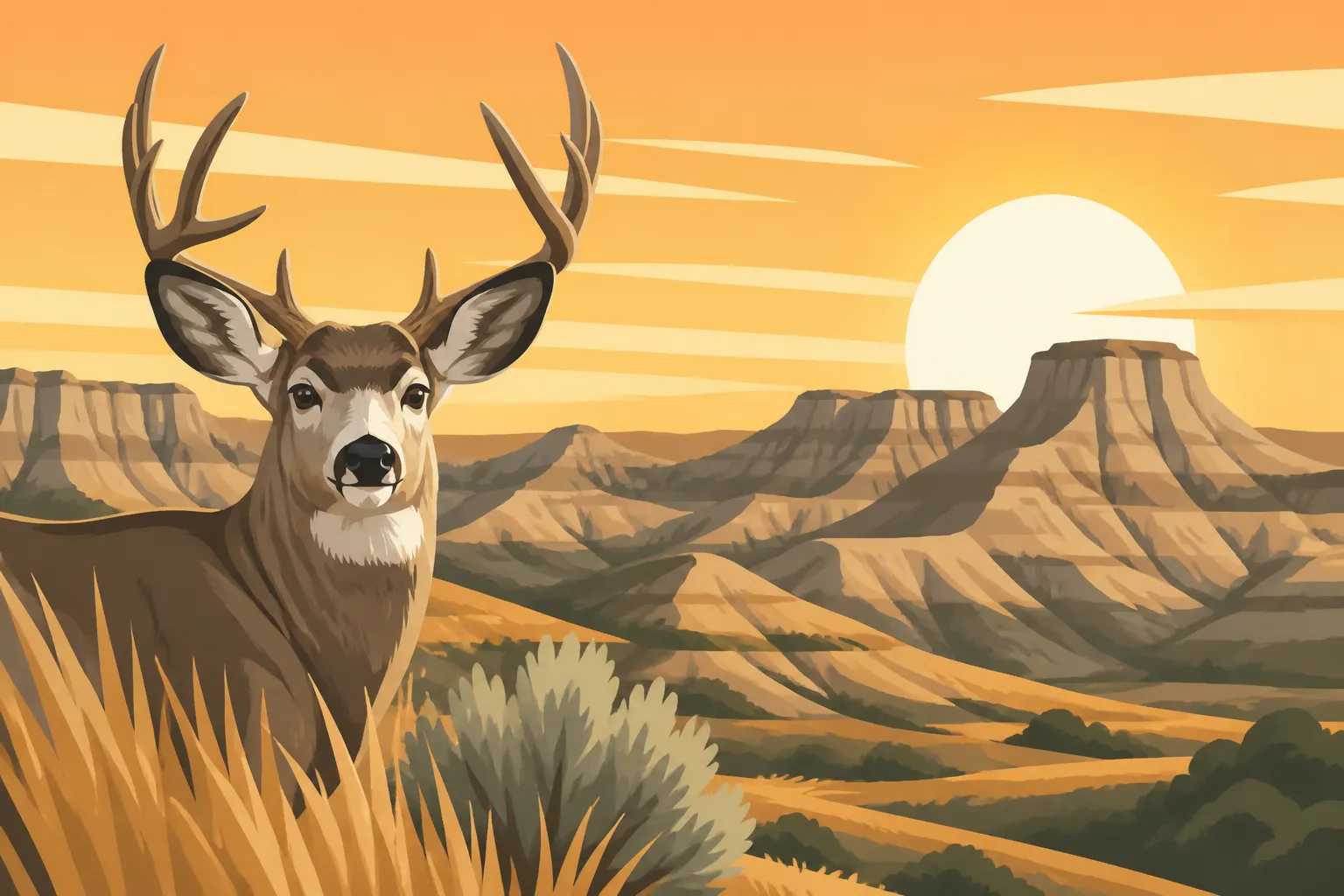
Forget rolling plains or dense timber – the Badlands are a maze of deeply eroded buttes, steep canyons, and winding coulees carved over millennia by wind and water. This isn't just a pretty backdrop; it dictates everything about how mule deer live and how you hunt them. The elevation changes can be dramatic, with sheer drops and climbs that will test every muscle in your body. It’s a place where every step is deliberate, and a short distance on a map can translate to a monumental physical effort on the ground.
Vegetation here is tough and adapted to arid conditions, but it's crucial for mule deer. You'll find scattered pockets of Rocky Mountain juniper, sagebrush, and various grasses clinging to the slopes. Along the deeper coulees and stream beds, you might encounter cottonwoods, ash, and buffaloberry, providing more substantial cover and browse. These denser thickets, though often small, are magnets for deer looking for bedding areas, especially during the heat of the day or when seeking refuge from harsh weather. Identifying these vegetation changes from afar is key to breaking down the vastness.
Think of the Badlands as a giant, three-dimensional puzzle. Each ridge, draw, and flat bench holds potential, and the deer use every bit of it. The "breaks" – where the flatter prairie abruptly drops into the rugged terrain – are often transition zones where deer feed before moving into deeper cover. Learning to read these subtle shifts in elevation and plant life, even from miles away, will drastically improve your chances of locating a good buck. It's a game of observation and understanding how nature provides for these resilient animals.
How Geography Influences Mule Deer Movement
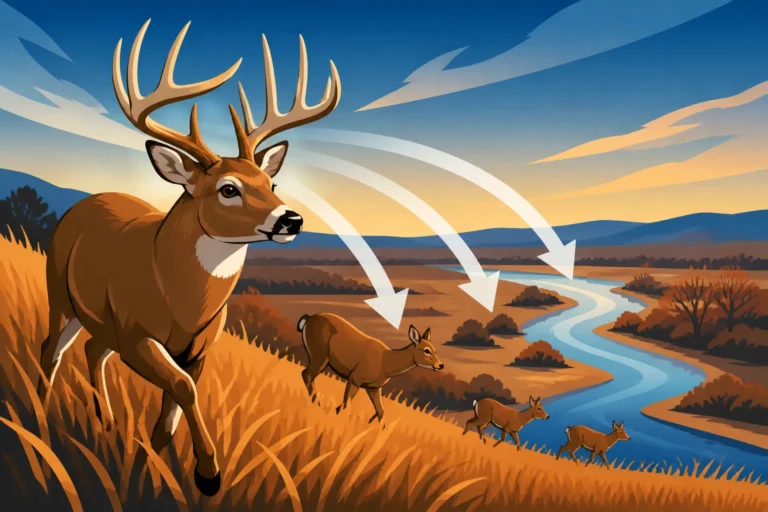
The very geography of the Badlands dictates how mule deer travel, feed, and bed. Unlike whitetails that might stick to a small woodlot, mule deer in this country are masters of using the vast, broken terrain to their advantage. They often traverse the higher, flatter benches and ridge tops under the cover of darkness or low light, moving between feeding areas and more secluded bedding locations. When the sun comes up, they tend to drop into the deeper, shaded coulees or bed down on ledges offering a commanding view with an escape route.
Understanding these patterns is critical. During the heat of midday, you're less likely to find mule deer out on exposed slopes. Instead, they’ll be tucked away, often on north-facing slopes or within the dense juniper thickets that provide both shade and concealment. Their ability to seemingly vanish into a landscape that looks bare from a distance is astounding. A slight fold in the earth, a patch of brush, or a shadowed alcove can hide an entire herd, frustrating even the most seasoned hunter.
Therefore, your hunting strategy must align with their movements. Rather than busting through every drainage, you'll need to use the terrain to your advantage for glassing and approaching. The wind currents, which can be notoriously fickle in this broken country, also play a huge role, often swirling unpredictably through the coulees and over ridges. This makes planning a stalk a complex endeavor, requiring careful consideration of how the topography will channel or deflect air currents. Learning to anticipate how the geography funnels deer, or where they'll seek refuge, is a continuous education in the Badlands.
Water Sources and Their Importance
Water is life, and nowhere is this more evident than in the semi-arid Badlands. Natural springs, seepages, and temporary pools after rain events become critical focal points for mule deer, especially during dry periods or warmer weather. While mule deer are adapted to arid environments and can get a significant portion of their moisture from the plants they eat, they still need to drink, and these water sources often become daily destinations.
Many of the deeper coulees and draws might hold intermittent streams or small pockets of standing water, particularly in spring and early summer. However, as the season progresses, these can dry up, concentrating deer around the few reliable sources. Identifying these vital watering holes on maps or through scouting is like finding a hidden treasure map. A well-used game trail leading to a secluded spring can tell you a lot about local deer movement.
Beyond natural sources, stock ponds and dugouts created for cattle also serve as crucial water points. While these might attract cattle, they also attract deer, especially in areas where natural water is scarce. Observing these areas, often from a distance, can reveal consistent patterns of mule deer activity. Don't underestimate the magnetic pull of water; even if deer aren't drinking when you're watching, they've likely been there or are headed there. It's a fundamental element of their daily routine that every successful hunter must factor into their plans.
Mule Deer Biology and Behavior in North Dakota
Understanding the specific traits and habits of mule deer in the North Dakota Badlands will give you a significant edge. These aren't your typical whitetails; they have unique adaptations and behavioral patterns shaped by their environment.
Distinctive Characteristics of Badlands Mule Deer
North Dakota's Badlands mule deer are iconic. They're often characterized by their striking physical features: large, expressive ears that swivel independently (hence "mule" deer), a rope-like tail with a black tip, and a bounding gait known as a "pronk" or "stot." This pronking, where all four feet leave the ground simultaneously, is a common escape mechanism in open, broken terrain, allowing them to cover ground quickly while maintaining visual contact with perceived threats. Seeing a big buck pronk away over a ridge is a common, and sometimes frustrating, sight.
Their coloration provides excellent camouflage against the varied hues of the Badlands, from the pale grasses to the reddish-brown scoria and gray clay buttes. They tend to be a grayish-brown in winter, lightening slightly in summer. This natural camouflage makes them incredibly difficult to spot, even when they’re standing relatively exposed. You could be glassing a hillside for hours, only for a deer to materialize out of what looked like nothing, blending perfectly with the shadows and rock formations.
Moreover, mule deer in this region are known for their strong "home range fidelity," meaning they tend to stick to specific areas, often using the same bedding coulees or travel corridors year after year. However, within that home range, they are constantly adapting their patterns based on food availability, water, weather, and hunting pressure. They are creatures of habit but also opportunists, ready to shift if conditions demand it. This blend of predictability and adaptability is what makes hunting them so captivating and challenging.
Seasonal Movements and Rutting Activity
Mule deer in the North Dakota Badlands exhibit predictable seasonal movements, though these can vary year to year based on environmental factors. In the spring and summer, after fawning, does and fawns tend to utilize areas with lush forage, often in the deeper, more protected coulees and draws. Bucks, however, are typically more solitary or in bachelor groups, growing their antlers in higher, more secluded country, conserving energy and staying away from potential disturbances.
As fall approaches and hunting seasons open, mule deer patterns begin to shift. Cooler temperatures and changing forage trigger them to seek out different food sources and prepare for the rut. The rut itself is perhaps the most anticipated period for mule deer hunters. In North Dakota, the peak of the mule deer rut typically occurs in early to mid-November, often coinciding with the early part of the state's gun season. During this time, bucks become less cautious, actively seeking out does, making them more visible and vulnerable. This can be an incredible time to be in the Badlands, witnessing the raw drama of nature unfold.
However, the rut is also a period of intense activity and can concentrate hunters. Bucks will be seen chasing does, often covering significant distances in their pursuit. They might abandon their usual bedding areas to follow a hot doe, appearing in unexpected places. Understanding When the North Dakota Rut Peaks is vital for planning your hunt, as targeting this window can dramatically increase your chances of encountering a trophy buck. After the rut, deer will focus heavily on feeding to recover lost weight, often moving into areas with the best late-season browse before winter sets in.
Diet and Foraging Habits
Mule deer are primarily browsers, meaning their diet consists largely of shrubs, forbs (herbaceous plants other than grasses), and the tender shoots of trees, rather than just grass. In the Badlands, this means they rely heavily on plants like sagebrush, serviceberry, chokecherry, and various native forbs that thrive in the arid environment. They are quite adaptable, though, and will take advantage of grasses and even agricultural crops bordering the Badlands when available, particularly in the early morning or late evening.
Their foraging habits directly influence where you'll find them. They'll spend significant portions of their day browsing, often moving slowly through a draw, nipping at various plants. This is why glassing large areas, patiently watching for movement or even just the flick of an ear, is so effective. They tend to feed most actively during low-light periods – dawn and dusk – but will often browse throughout the day in secluded, shaded areas or during overcast weather.
Understanding what plants are available and palatable to mule deer at different times of the year can help you pinpoint their likely feeding grounds. For instance, after a good rain, new green growth might attract them to areas that were previously less desirable. In late fall, as other forage fades, evergreens like juniper can become an important food source, drawing deer to dense thickets. Their diet is a reflection of their habitat, and by studying the plants around you, you’ll gain a deeper insight into where the deer are and where they're heading.
Key Challenges and Frustrations for Hunters
Hunting mule deer in the Badlands is undeniably rewarding, but it's not without its significant challenges. Being prepared for these hurdles, both mentally and physically, is crucial for a successful and enjoyable experience.
Navigating the Rugged and Remote Terrain
The Badlands are gorgeous, but they are also incredibly tough on the body. This isn't a walk in the park; it's a strenuous trek over uneven, steep, and often slippery ground. You'll encounter loose rock, crumbling shale, and slick clay, especially after rain or snow. Every step requires attention, and a moment of carelessness can lead to a twisted ankle or worse. For anyone not accustomed to consistent, steep elevation changes and uneven footing, the physical demands can be a rude awakening.
Beyond the physical exertion, the sheer remoteness of much of the Badlands presents its own set of frustrations. Cell service is often nonexistent in the deeper coulees or more secluded areas, leaving you without GPS or communication. Getting lost or disoriented in the labyrinthine landscape is a very real possibility, even with maps and modern technology. It can feel overwhelming when every ridge and draw starts to look the same.
Therefore, meticulous navigation planning is non-negotiable. Always carry a physical map and compass, and know how to use them. While apps like OnX can be invaluable, don't rely solely on them. Marking your truck or camp location, and key waypoints as you go, is vital. Remember, a downed deer in the bottom of a steep coulee means an incredibly difficult pack-out, often requiring multiple trips or specialized gear. The terrain itself is an active participant in your hunt, and you must respect its power and plan accordingly.
Dealing with Hunting Pressure and Limited Access
While the Badlands might feel vast and empty, hunting pressure is a very real factor, especially during the gun season and on easily accessible public land. Hunters often flock to popular areas, which can quickly make deer nocturnal or push them into the most secluded, inaccessible pockets of private land. It's incredibly frustrating to spend days scouting, only to have another hunter beat you to your spot or spook the very deer you've been watching.
Limited access further compounds this. Much of the prime mule deer habitat in North Dakota's Badlands is private land. While the state's PLOTS program offers fantastic opportunities, these areas can also experience heavier pressure. Securing Getting Private Land Permission in North Dakota is often a difficult task, requiring polite persistence, respect for landowners, and sometimes, just plain luck. Non-residents, in particular, face additional challenges regarding public land access during specific periods, as highlighted by How Many Days Nonresidents Wait for Public Land Bow Access.
This means you need to get creative. Don't be afraid to put in the miles and hike deeper than other hunters are willing to go. Look for those overlooked pockets, small public land tracts, or areas that require a significant hike to reach. Remember that mule deer are very sensitive to disturbance, and even a little pressure can shift their patterns dramatically. Being flexible with your hunting times and locations, and being willing to adapt if you encounter other hunters, is essential for maintaining your sanity and increasing your chances of success.
Weather Extremes and Their Impact on the Hunt
North Dakota weather is legendary for its unpredictability and extremes, and the Badlands are no exception. You could start your morning with crisp, cool air, only to be baking under a scorching sun by midday, or battling a sudden, fierce prairie thunderstorm that turns clay trails into slick, impassable mud. Later in the season, bitter cold, heavy snow, and brutal winds can sweep through, making conditions incredibly harsh and dangerous. This isn't just uncomfortable; it impacts deer behavior and hunter safety.
These sudden shifts in weather can make planning a hunt a nightmare. High winds can make glassing nearly impossible and cause thermals to swirl erratically, blowing your scent to deer you never even knew were there. Heavy rain can turn dirt roads into impassable quagmires, trapping vehicles and making it impossible to get into or out of hunting areas. Extreme cold demands specialized gear and constant vigilance against frostbite and hypothermia, pushing the limits of your physical endurance.
Deer, too, react to the weather. They might move less during a bitter cold snap, hunkering down in thick cover to conserve energy. Conversely, a mild, sunny day might bring them out to feed more actively. Always check the forecast, but be prepared for anything. Layer your clothing, carry emergency supplies, and have a solid bail-out plan if the weather turns dangerous. Hunting Into a December Cold Snap or dealing with sudden blizzards are real possibilities, and your ability to adapt to these conditions can make or break your hunt.
Essential Gear and Preparations for a Badlands Mule Deer Hunt
Success in the Badlands isn't just about knowing deer behavior; it's about being prepared for anything the environment throws at you. The right gear and physical conditioning can make the difference between a memorable hunt and a miserable one.
Optics and Their Crucial Role
If there’s one piece of gear you absolutely cannot skimp on for a Badlands mule deer hunt, it’s high-quality optics. This is not negotiable. The vast, open nature of the terrain, combined with the mule deer’s incredible ability to blend in, means you will spend more time glassing than walking. A good pair of binoculars, a spotting scope, and a tripod are your best friends in this country. Forget trying to "walk up" on deer – you’ll spook them long before you ever see them in this open environment.
Start with your binoculars, ideally 10×42 or 12×50 power, mounted on a solid tripod. This allows you to steadily scan hillsides, coulees, and distant ridges for extended periods without fatigue or shaky hands. You're not just looking for a whole deer; you're looking for a horizontal line where there should be none, an antler tip glinting in the sun, a patch of hide that doesn't quite match the dirt, or the tell-tale flick of an ear. The goal is to pick apart the landscape, section by section, leaving no rock unturned.
A good spotting scope (20-60x or 25-75x power) is equally vital. Once you spot a potential deer with your binoculars, the spotting scope allows you to confirm it, assess its size, and determine if it's worth a stalk. It saves you countless miles of walking after "rock deer" or small bucks. Brands like Zeiss, Swarovski, and Kowa are top-tier, but there are excellent mid-range options from Vortex or Athlon that offer incredible value. Remember, Glassing Badlands Coulees for Elk is a skill directly transferable to deer, and it's one you'll hone constantly out here.
Physical Fitness and Mental Fortitude
Hunting mule deer in the Badlands is a physically demanding endeavor. This isn't a sedentary hunt from a blind; it’s an active, high-intensity pursuit that requires serious physical preparation. You'll be hiking steep grades, traversing uneven ground, and potentially packing out a heavy animal over miles of rugged terrain. If you're not in shape, you'll burn out quickly, miss opportunities, and potentially put yourself in a dangerous situation.
Start your physical conditioning months before your hunt. Focus on cardiovascular endurance (hiking, running, stair climbing) and strength training, particularly for your legs, core, and back. Practice hiking with a loaded pack, simulating the weight of your gear and a potential meat load. Incorporate uneven terrain and elevation changes into your workouts if possible. The goal isn't just to get to a spot; it's to get there quietly, efficiently, and with enough energy left to make a shot and pack out. Think of it like training for a marathon, but with a rifle.
Beyond the physical, mental fortitude is equally important. The Badlands can be beautiful, but they can also be brutal. Long days of seeing no deer, frustrating stalks that end in failure, and unpredictable weather can wear down even the most optimistic hunter. You need resilience, patience, and a positive attitude. Embrace the challenge, enjoy the solitude, and learn from every outing. Physical Prep for Badlands Elk Terrain provides excellent guidance that applies directly to mule deer, emphasizing the importance of a strong body and a stronger mind.
Packing for Self-Sufficiency and Safety
Given the remote nature of the Badlands, packing for self-sufficiency is paramount. You can't rely on quick trips back to the truck or easy access to supplies. Every item in your pack needs to be considered for its weight, utility, and necessity for survival and success. This means having more than just your rifle and tags; it means being prepared for unexpected nights out, sudden weather changes, or minor injuries.
Your pack should include ample water, high-energy snacks, a first-aid kit, a headlamp with extra batteries, fire-starting materials, emergency shelter (even a lightweight tarp can be a lifesaver), navigation tools (GPS, map, compass), and signaling devices (whistle, satellite messenger if no cell service). Layered clothing is crucial for adapting to fluctuating temperatures, from cool mornings to warm afternoons, and potentially freezing nights. Durable, broken-in hiking boots are non-negotiable – new boots are a recipe for blisters and misery.
Think about what you'd need if you were forced to spend a night on the mountain, or if you had to drag a deer out in the dark. A good quality hunting knife, game bags for meat, and a sharpener are also vital. Brands like Mystery Ranch and Kifaru make excellent packs designed for hunting and hauling heavy loads. Always communicate your hunting plans and expected return time with someone reliable. The Badlands are not a place to take lightly, and being well-prepared is the best way to ensure your safety and enjoyment.
Effective Hunting Strategies for North Dakota Mule Deer
Hunting mule deer in the Badlands demands a specific set of strategies. These animals are wary and their environment gives them every advantage. Adapting your approach to their behavior and the terrain is key.
The Power of Spot-and-Stalk Hunting
Without a doubt, spot-and-stalk is the quintessential and most effective strategy for hunting mule deer in the North Dakota Badlands. This isn't dense timber hunting; it's a game of long-distance observation, patience, and calculated movement. The vast, open landscape, while challenging, also provides the advantage of visibility if you know how to use it. You'll spend far more time behind glass than with your boots moving, patiently picking apart the terrain.
The process typically begins by finding a high vantage point, often a prominent butte or ridge line, that allows you to glass large expanses of country. From here, with your binoculars and spotting scope on a tripod, you meticulously scan every shadow, every juniper patch, every fold in the earth. You're looking for deer bedded down, feeding, or moving between cover. This takes time, often hours in one spot, waiting for a deer to stand up, stretch, or simply shift position, revealing itself against the monotonous backdrop.
Once a buck is spotted and evaluated (and trust me, you'll evaluate a lot of "rock deer" before you find a real one!), the next, and often most challenging, phase begins: the stalk. This involves carefully planning your approach, using the terrain features like coulees, ridges, and vegetation to remain out of sight and downwind of the deer. A successful stalk might mean covering miles, crawling on hands and knees, or waiting for hours for the deer to move into a more favorable position. Patience, stealth, and a deep understanding of the wind are paramount. This is where Hunting North Dakota's Badlands Mule Deer Country really comes to life, demanding an intimate knowledge of the ground.
Understanding Wind and Thermals in Badlands Terrain
The wind and thermals in the Badlands are notoriously tricky and, if not respected, will ruin your hunt faster than anything else. Unlike flat ground where wind tends to be consistent, the broken topography of the Badlands creates complex air currents. Wind can swirl unpredictably through coulees, eddy around buttes, and even reverse direction as temperatures change throughout the day. Mule deer, with their keen sense of smell, rely heavily on their nose to detect danger, so managing your scent is absolutely critical.
Thermals are another major factor. As the sun rises and warms the earth, air currents (thermals) typically rise up the slopes. As evening approaches and the air cools, thermals reverse and flow downhill into the coulees. This means if you're stalking a deer high on a ridge in the morning, your scent will likely be carried up to them. In the evening, stalking a deer in a coulee, your scent will be carried down to them. Knowing Wind and Thermals in Badlands Terrain is not just academic; it's a fundamental part of every stalk decision.
Therefore, you must constantly monitor the wind direction, using a wind checker frequently. Plan your stalks to stay downwind or crosswind of the deer. This often means taking longer, more circuitous routes, or waiting for specific times of day when the thermals are in your favor. Sometimes, the best strategy is to simply wait. If the wind isn't right, pushing the stalk is almost always a mistake. It’s a frustrating reality, but respecting these invisible forces is essential for success in this environment.
Still-Hunting Coulees and Timber Pockets
While spot-and-stalk from a distance is primary, there are times and places where still-hunting can be highly effective, especially when deer are bedded tight or when you're working through thicker cover. Still-hunting involves moving slowly and deliberately through an area, pausing frequently to observe, listen, and scan your surroundings. It's about being as stealthy as possible, blending into the environment, and letting your eyes do most of the work.
In the Badlands, still-hunting is best applied in the bottom of deeper coulees that have denser vegetation, such as juniper thickets or pockets of cottonwoods and ash. These areas provide the cover that mule deer crave for bedding, especially during midday or in adverse weather. You might also find success still-hunting along the rim of a coulee, using the breaks and shadows to conceal your movement as you slowly peek over, looking into the folds below. This is where you might catch a mule deer unaware, particularly if you're approaching into the wind.
The key to successful still-hunting is extreme patience. Take one or two steps, then pause for several minutes, scanning every detail, listening for any sound – a rustle, a stomp, a snort. Use your binoculars to pick apart every patch of cover. Deer often bed in spots that offer them a good view downwind, allowing them to smell danger, while also providing visual escape routes. You might also find success still-hunting along Where Badlands Bucks Bed, which are often found in thick cover or on specific points that offer strategic advantages. Remember, in this scenario, you are trying to beat the deer at their own game of stealth, which is no easy feat.
Locating and Scouting Prime Mule Deer Habitat
Finding mule deer in the Badlands isn't about aimlessly wandering; it's about strategic scouting and understanding where they want to be. The right tools and techniques can save you days of unproductive hiking.
Using Maps and Technology to Identify Key Areas
In today's hunting world, digital mapping tools are indispensable, especially for vast, complex landscapes like the Badlands. Applications like OnX Hunt, BaseMap, and even specialized platforms like GoHunt (a fantastic resource for detailed public land maps and filtering by species) can revolutionize your scouting efforts. These tools allow you to study satellite imagery, topo maps, and land ownership boundaries from the comfort of your home, helping you identify potential hotspots long before you set foot in the field.
Look for areas that offer a combination of key features: steep, north-facing slopes with good cover (juniper, dense brush) for bedding, proximity to water sources (springs, stock ponds), and accessible benches or draws that lead to potential feeding areas. Identify potential vantage points – those high buttes or ridge lines – from which you can glass large swaths of country. Pay close attention to subtle changes in vegetation density, as these can indicate preferred browse or bedding cover.
Beyond simply identifying features, these apps allow you to mark waypoints, track your routes, and measure distances. This is invaluable for planning realistic stalks, understanding travel times, and ensuring you don't get lost. You can even use historical weather data overlays to understand typical wind patterns or identify areas that might hold snow longer. Effective Reading Aerial Photos for Badlands Deer will show you where the natural funnels are, where deer are likely to travel between feed and bed, and where isolated pockets of cover might hide a mature buck away from pressure.
Reading Sign and Interpreting Deer Behavior
Once you're on the ground, your boots-on-the-ground scouting shifts to reading the subtle language of the deer. Fresh sign tells a story of recent activity and can confirm your map-based predictions. Look for tracks, scat, rub lines, and especially fresh beds. Tracks in dusty creek bottoms or soft soil are obvious indicators of travel, and the size and freshness can tell you if a buck has been through recently.
Scat can also provide clues – fresh, dark, moist pellets are recent, while old, dry, scattered pellets indicate older activity. Rubs (where bucks rub their antlers on trees or shrubs) and scrapes (pawed-up ground often with an overhanging branch) are clear indicators of buck activity, especially as the rut approaches. While not as prevalent as with whitetails, mule deer do make them. Finding a significant rub line in a secluded coulee can be a sign that a good buck is calling that area home.
Perhaps the most informative sign is fresh beds. Mule deer beds are typically oval depressions in the dirt or grass, often found on ledges or slopes that offer a good view of their surroundings while providing concealment. Pay attention to the orientation of the beds – they'll often face into the wind to catch scent or face downslope to keep an eye on approaching danger. Freshly pressed beds, especially in thick juniper, are like gold, indicating a deer has recently been, or still is, very close by. Interpreting these signs correctly is paramount to understanding current deer patterns and planning your approach.
Pre-Season Scouting and In-Season Adaptations
Pre-season scouting is your secret weapon. If you have the luxury, visiting the Badlands a month or two before the season, or even earlier in the year, can provide invaluable intelligence. You can identify primary travel corridors, pinpoint water sources, discover specific bedding areas, and get a feel for the terrain without the pressure of hunting season. During the summer, you might even be able to glass velvet-antlered bucks, helping you identify specific animals to target.
However, even the best pre-season scouting needs to be adapted in-season. Deer patterns can change rapidly due to hunting pressure, shifts in food availability, or sudden weather events. What was a hotspot in September might be quiet in November. Be prepared to be flexible and constantly re-evaluate your strategy. Don't cling to a preconceived notion if the evidence on the ground (or lack thereof) suggests otherwise.
Use the first few days of your hunt as intensive scouting days. Don't feel pressured to kill a deer immediately. Spend time glassing, observing, and learning current patterns. If you notice deer are moving more at midday due to overcast skies, adjust your tactics. If pressure is pushing them deeper, be willing to hike further. The most successful Badlands hunters are those who are constantly learning, adapting, and fine-tuning their approach based on real-time observations.
Post-Harvest Considerations and Regulations
Congratulations, you've taken down a mule deer in the Badlands! Now the real work begins. The remote, rugged environment presents unique challenges for field dressing, packing out, and adhering to regulations.
Field Dressing and Meat Care in Remote Areas
Taking an animal down in the Badlands is exhilarating, but the reality of getting that meat off the mountain quickly and cleanly can be daunting. You're likely miles from your vehicle, in steep terrain, possibly under warm sun. Speed and efficiency in field dressing are critical to preserving the quality of your venison. Gutting the animal immediately helps it cool down, preventing spoilage.
If you're hunting alone or deep in a coulee, you'll almost certainly need to quarter your animal to pack it out. This means boning out the meat from the deer and placing it into breathable game bags. High-quality game bags are essential to protect the meat from dirt, flies, and other contaminants. Carrying a sharp, sturdy knife, a bone saw (or a reciprocating saw with an extra battery if you're really remote), and even a small tarp to keep the meat clean while you work are indispensable.
Consider the temperature. If it's warm, getting the meat cooled quickly is paramount. Find a shady spot, hang the quarters if possible, and allow air to circulate. If you have a long pack-out, consider carrying a small amount of ice in a cooler pack to place around the meat once you get back to the vehicle, especially for the choice cuts. Remember that in North Dakota, you'll need to keep proof of species and sex attached to at least one quarter for transport, usually the antlered head with the tag attached.
Tracking and Recovery Challenges in the Badlands
Even a perfectly placed shot can result in a deer running a short distance, and tracking in the Badlands presents its own set of difficulties. The uneven, hard ground, rocky slopes, and dense patches of vegetation can make blood trailing incredibly challenging, even for an experienced tracker. Blood might be sparse on rocky terrain, and the broken ground can easily obscure tracks.
If your shot isn't immediately fatal, give the deer time. A gut-shot deer might need 6-8 hours, or even overnight, before you attempt to track. A deer hit in the leg or shoulder might move a great distance. Patience is a virtue here, as pushing a wounded deer too soon can push it miles away into even more difficult country, making recovery nearly impossible. Mark your last known blood or track point, and if possible, use landmarks to triangulate the direction of travel.
If darkness falls, consider returning in the morning with fresh eyes and a clear head. Bring friends or hunting partners if available, as extra eyes on a blood trail can be invaluable. Even after the deer is down, retrieving it from a deep coulee or up a steep bluff is a significant undertaking. This is where your physical conditioning truly pays off. Knowing Recovering a Deer From a Coulee can be a game-changer, often involving rope, teamwork, and careful planning to avoid injury.
Important Reporting and CWD Regulations
Once your mule deer is harvested, your responsibilities aren't over. North Dakota has specific regulations regarding tagging, reporting, and handling deer, especially concerning Chronic Wasting Disease (CWD). Familiarize yourself with these rules before you hunt.
Immediately after harvesting, you must notch and attach your deer tag to the animal. This tag must remain with the animal until it reaches its final destination for processing or storage. Then, within 12 hours of harvest, or before processing or transportation out of state, you must report your harvest. This can typically be done online through the North Dakota Game and Fish Department (NDGFD) website or via their mobile app. Knowing Reporting a Deer Through North Dakota's App makes this process quick and easy, even if you’re still out in the field.
CWD is a serious concern, and North Dakota has established North Dakota's Fourteen-Unit CWD Zone with specific testing requirements. If you harvest a deer within one of these designated CWD zones, mandatory sample submission may be required. You'll need to transport the head (with at least 4 inches of neck attached) to an official CWD sampling station. Familiarize yourself with the locations of these stations before your hunt. It's a crucial step in monitoring and managing the disease, and every hunter's participation is vital for the health of the herd and for ensuring North Dakota CWD Prevalence Rate Trends can be accurately tracked. Always review the latest NDGFD regulations regarding CWD before your hunt, as rules can change.
Conservation Efforts and the Future of Badlands Mule Deer
Beyond the thrill of the hunt, every mule deer hunter has a responsibility to understand and support the conservation efforts that ensure healthy populations and access for future generations. The future of mule deer in North Dakota's Badlands depends on it.
Habitat Preservation and Management Efforts
The health of the mule deer population is inextricably linked to the quality of their habitat. In the Badlands, this means protecting the delicate balance of native grasslands, sagebrush, and juniper thickets that provide their food, cover, and fawning grounds. Threats to this habitat include development, invasive species, and improper land management practices that can degrade forage quality or disrupt critical migration corridors.
The North Dakota Game and Fish Department, along with various conservation organizations like the Mule Deer Foundation and the National Wild Turkey Federation (which often contributes to broader habitat projects), work tirelessly on habitat preservation and enhancement projects. These efforts might include prescribed burns to rejuvenate native grasses, targeted removal of invasive plants, or projects to improve water sources. Landowners also play a crucial role, and partnerships between state agencies and private landowners are vital for managing habitat across the vast private holdings within mule deer range.
Hunters contribute directly to these efforts through license fees and excise taxes on hunting equipment (Pittman-Robertson Act funds). These funds are crucial for financing habitat projects, scientific research, and population surveys. By supporting conservation groups and advocating for sound land management policies, we ensure that the Badlands remain a viable home for mule deer and continue to offer incredible hunting opportunities. It’s a collective responsibility that extends far beyond pulling a trigger.
Population Trends and Hunter Contributions
Understanding mule deer population trends is essential for effective management and for making informed decisions about hunting seasons and tag allocations. North Dakota Game and Fish biologists conduct aerial surveys, fawn production studies, and other research to estimate population numbers, assess herd health, and monitor factors like buck-to-doe ratios and fawn survival rates. These scientific data points directly influence the number of tags issued each year, ensuring sustainable hunting opportunities.
Unfortunately, mule deer populations in some areas of North Dakota have faced challenges in recent years, often due to severe winters, EHD outbreaks, or habitat loss. When populations dip, the NDGFD often reduces tag numbers, particularly for antlered bucks, to allow the herd to recover. This can be frustrating for hunters who are eager to draw a tag, but it’s a necessary step to ensure the long-term health and stability of the species. Remember, North Dakota Deer Harvest Records are a critical part of understanding these trends and informing future management.
As hunters, our contributions go beyond license fees. Our observations from the field, our willingness to report harvest data accurately, and our support for responsible harvest quotas are all vital. When we report our deer, we provide valuable data points that help biologists understand the distribution, age structure, and health of the herd. This active participation in the management process is what defines ethical and responsible hunting.
Supporting Responsible Hunting Practices
Responsible hunting is the cornerstone of conservation. For mule deer in the Badlands, this means adhering strictly to all regulations, practicing ethical shot placement, and respecting the land and its wildlife. It means being a good ambassador for hunting, whether you're interacting with landowners, other hunters, or the non-hunting public.
It also means understanding the nuances of fair chase and making ethical decisions in the field. This includes knowing your personal shooting limitations, ensuring you have a clean background, and always prioritizing a humane harvest. Tracking and recovery are part of the hunt, and no effort should be spared to retrieve a wounded animal. Furthermore, being respectful of private property and leaving no trace on public lands ensures continued access and positive perceptions of hunters.
Engaging with organizations like the North Dakota Game and Fish Department, reading their publications, and staying informed about changing regulations or biological studies are all part of being a responsible hunter. Consider becoming involved in local conservation efforts or joining a group that advocates for wildlife and habitat. Ultimately, the future of Mule Deer in North Dakota's Badlands rests on the shoulders of those who value and protect them—and that means every one of us who ventures into their wild and beautiful home.
Disclaimer
The information provided in this guide is for general informational purposes only and is not intended as legal advice. Hunting regulations in North Dakota are subject to change. Always consult the most current North Dakota Game and Fish Department regulations and official publications before planning and undertaking any hunting activities.