North Dakota Moose Hunt Success Rates
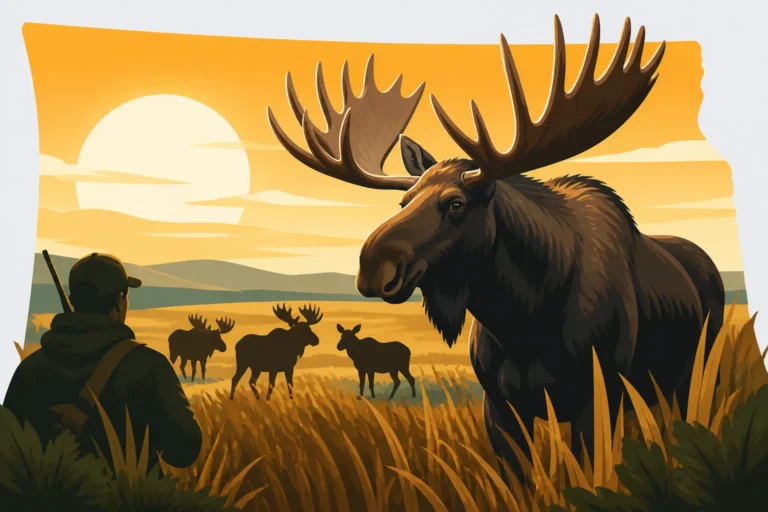
Oh, the elusive North Dakota moose hunt! If you've ever found yourself dreaming of a moose tag in this prairie state, you know it's a special kind of aspiration. The reality, however, is that drawing one of these coveted tags is just the beginning of a truly unique challenge. Many hunters wonder, once they beat the incredible odds of drawing, what are their actual chances of success? This comprehensive guide will pull back the curtain on North Dakota moose hunt success rates, exploring what factors truly influence them and how you can maximize your own potential when that once-in-a-lifetime opportunity finally arrives.
Understanding North Dakota's Moose Hunt Lottery
Getting a moose tag in North Dakota isn't like picking up a deer license over the counter. It's a testament to patience, persistence, and a healthy dose of luck. The state manages its moose population very carefully, which means tags are incredibly limited, making every successful draw a cause for celebration.
The Rarity of a North Dakota Moose Tag
Let's be real: actually drawing a North Dakota moose tag feels like winning the lottery, because in many ways, it is. The state issues a very small number of moose licenses each year, reflecting the smaller, carefully managed population of these majestic animals. Unlike deer, where thousands of tags are available, moose tags are counted in the hundreds, sometimes even less. This makes them a true What a Once-in-a-Lifetime Moose Tag Means proposition for most hunters.
The application window is usually a specific period, and missing the North Dakota Moose Application Deadline means waiting another year to even have a chance. Because the odds are so slim, many hunters apply for decades before their number finally comes up. It’s a hunt that requires long-term commitment long before you even step foot in the woods.
Factors Influencing Tag Allocation
The North Dakota Game and Fish Department doesn't just pull numbers out of a hat when it comes to moose tags. Their allocation process is rooted in scientific population management. They conduct aerial surveys and ground studies to estimate How Many Moose Live in North Dakota and the health of the herds in specific units, like the Pembina Hills, Turtle Mountains, or the various river bottom units. These estimates, coupled with harvest data from previous years, help determine how many tags can be issued to maintain a healthy population balance and sustainable hunting opportunities. They aim to achieve specific population goals, sometimes focusing on bull-to-cow ratios or antlerless harvest to control overall herd size.
This meticulous approach ensures that the limited number of tags issued isn't jeopardizing the long-term viability of North Dakota's moose. The allocation also considers specific tag types, such as "any moose" or "antlerless only," which can further influence where and how many tags are available in a particular unit.
Breaking Down Moose Hunt Success Rates
When people talk about "success rates" for any hunt, it's easy to get caught up in a single, overarching number. However, for a unique opportunity like a North Dakota moose hunt, a statewide average can be deceiving. It's far more nuanced than that.
Statewide Averages vs. Unit-Specific Numbers
A quick glance at the North Dakota Game and Fish Department's annual harvest reports might show a statewide moose hunt success rate that seems quite high. You might see numbers that make you think, "Wow, if I draw a tag, I'm almost guaranteed to get one!" But hold on a second. That statewide figure averages together wildly different hunting experiences and conditions across the state.
The reality is that success rates can vary dramatically from unit to unit. For example, a unit composed primarily of the dense aspen and willow thickets of the Pembina Hills, where moose can hide effectively in thick cover, might have a different success rate than a unit in the Turtle Mountains with more accessible terrain, or a river bottomland unit where moose stick to heavy timber. Hunters often spend years researching specific units, trying to understand their unique challenges and advantages. Using a robust mapping tool, or even an application like GoHunt, can provide granular, unit-specific data that paints a much clearer picture than any statewide average ever could. This kind of detailed analysis is crucial for managing expectations and preparing effectively, especially for understanding North Dakota moose population estimate within your specific unit.
What "Success" Truly Means
For most, when we talk about "success rates" in hunting, we're talking about harvesting an animal. Did the hunter who drew the tag actually fill it? That's the most common metric. However, it's important to remember that success can mean different things to different people. For some, success might be simply seeing a moose in the wild, having a close encounter, or experiencing the incredible challenge of a hunt in some of North Dakota's wildest places.
Nevertheless, official statistics almost always refer to harvest success: the percentage of tag holders who successfully took a moose. It means navigating tough terrain, enduring potentially harsh weather, making good decisions under pressure, and ultimately, making an ethical harvest. Drawing the tag might be the first big hurdle, but executing a successful hunt requires a whole different set of skills and a commitment that goes well beyond the application process.
Key Factors Affecting Your Success Rate
Once you've beaten the odds and a moose tag lands in your hands, the real work begins. Your eventual success isn't just about luck anymore; it's heavily influenced by your preparation, the specific characteristics of your hunting unit, and even Mother Nature herself.
Hunter Preparation and Scouting
Receiving that coveted moose tag is an incredible moment, but it's just the starting gun for months of serious preparation. Unlike some other hunts where you might just show up and hope for the best, a North Dakota moose hunt demands meticulous homework. Pre-season scouting is absolutely critical, even if you're limited to digital reconnaissance. This means poring over aerial maps, topography, and property boundaries using tools like those found on GoHunt. You're looking for prime moose habitat: dense willow thickets, aspen stands, river bottoms, and areas with good forage. Understanding Where North Dakota Moose Concentrate in your unit is paramount.
You need to identify potential bedding areas, feeding zones, and travel corridors. This is also the time to consider access points, whether they're public roads, trails, or areas requiring permission from private landowners. Physical conditioning is another huge factor. Moose often inhabit incredibly dense, unforgiving cover, and you'll likely be doing a lot of walking, often post-holing through snow or slogging through marshy ground. Being physically ready for the grind will directly impact your ability to pursue a moose effectively for days on end.
Habitat and Unit Characteristics
Each moose unit in North Dakota presents its own unique set of challenges and opportunities. For instance, the Pembina Hills are known for their steep, timbered coulees and dense brush, making spotting a moose difficult but offering excellent cover for the animals. The Turtle Mountains, on the other hand, feature more rolling terrain with mixed forest and boggy areas. River bottom units, such as those along the Red or Missouri Rivers, will have different characteristics still, with heavy timber and oxbow lakes.
The type of habitat directly impacts how you hunt. In thick willows, for example, you might be relying more on still-hunting or methodical pushes, knowing that getting a clear shot might be tricky. Understanding how to approach and navigate these diverse environments is key. Knowing how to pick out a bedded animal in dense cover, a skill essential for Picking Out a Bedded Moose in Willow Cover, can make or break your hunt. Furthermore, prevailing snow cover can reveal tracks and aid in tracking, but deep snow can also make travel excruciatingly difficult. Familiarizing yourself with the specific unit regulations, including any access restrictions or weapon limitations, is also a non-negotiable part of preparation.
The Role of Weather and Timing
North Dakota weather is famously unpredictable and can swing wildly, especially during the fall hunting seasons. Weather conditions play a massive role in moose behavior and hunter success. An early season hunt might involve milder temperatures and less snow, meaning moose are more spread out and potentially more active, but also harder to track. A late-season hunt, often extending into November or December, could mean frigid temperatures, heavy snow, and strong winds.
While challenging, cold and snow can sometimes work to a hunter's advantage. Fresh snow reveals tracks, making it easier to follow a moose's movements. Extreme cold can also cause moose to move less, concentrating them in thermal cover. However, a hard winter with deep snow can also impact moose health, as seen with issues like North Dakota Moose Winter Tick Impact, which can influence their overall condition and movement patterns. Being prepared for everything from rain to blizzards is essential. Proper gear, including layers of warm, waterproof clothing, is not just about comfort; it's about safety and your ability to stay out in the field long enough to find your moose.
Strategies to Maximize Your Odds
Drawing a North Dakota moose tag is a monumental achievement, but it's only the first step. To ensure you make the most of this once-in-a-lifetime opportunity, a strategic approach to planning and execution is absolutely essential.
Extensive Pre-Season Research
Your research phase should be as comprehensive as possible. Don't just look at unit boundaries; dive deep into every detail. Start by getting your hands on current and historical harvest data for your specific unit from the North Dakota Game and Fish Department. This will give you insights into past success rates, the types of moose harvested (bull/cow), and even the general timing of successful hunts.
Next, combine this data with detailed map work. Utilize satellite imagery, topographic maps, and land ownership maps (many of which are easily accessible through platforms like GoHunt). Identify potential moose habitat: dense willow pockets, stands of aspen, areas with abundant browse, and any riparian zones. Look for pinch points, travel corridors, and potential bedding areas. Understand public and private land boundaries, and start identifying potential access points. If you're a resident, contacting past tag holders for their insights can be invaluable, as can speaking with local Game and Fish biologists who have intimate knowledge of the unit. While non-residents cannot hire a guide to hunt moose unless they've already drawn a tag, residents can consult with experienced locals. Remember, even if you can't physically scout, thorough digital scouting can get you incredibly close to understanding the lay of the land and where a moose might be found. You can even use resources like the North Dakota's Once-in-a-Lifetime Moose Herd information to understand the history and dynamics of the population you're hunting.
Boots-on-the-Ground Scouting (if possible)
For resident hunters, there's no substitute for physical, boots-on-the-ground scouting, ideally long before the season opens. Walking the unit allows you to verify what you've seen on maps, find fresh sign, and discover areas that satellite imagery might miss. Look for fresh moose tracks, rubs on trees, browse lines, and droppings. Identify good vantage points for glassing, especially for skills like Glassing for Moose in River Bottom Willows.
Scout the actual access routes you plan to use, noting any obstacles or tricky terrain. Pay attention to wind direction and thermals in different areas of the unit. Even if you can't scout the entire unit, focusing on promising pockets identified during your map research can give you a significant advantage. This intimate knowledge of the terrain will not only boost your confidence but also make your actual hunt more efficient and reduce wasted time in unproductive areas. For those who aren't residents, digital scouting, combined with detailed conversations with local sources, becomes even more critical. Keep in mind rules like Can You Apply for Elk and Moose the Same Year? as you plan your big game applications.
Persistence and Adaptability During the Hunt
The moose hunt itself is often a grind. Moose are large animals, but they are masters of hiding in dense cover, and they can be incredibly quiet. Expect long days of walking, often in challenging conditions. Persistence is key; a successful hunter doesn't give up after a few tough days. You might cover miles without seeing a hair.
Beyond persistence, adaptability is crucial. The weather can change in an instant, moose might not be where you expected them, or hunting pressure might shift their patterns. Be ready to adjust your strategy. If calling isn't working, switch to still-hunting. If a particular area seems devoid of fresh sign, be prepared to move to a different section of your unit. Having a solid Plan B and even a Plan C is vital. This is also where your physical and mental toughness come into play. Staying positive, staying focused, and learning from every step you take will increase your chances exponentially. Remember that moose are generally non-migratory and remain in their established ranges, so once you locate fresh sign, focus your efforts nearby.
To summarize, here's a quick overview of factors that can influence your success:
| Factor | Positive Influence on Success | Negative Influence on Success |
|---|---|---|
| Hunter Preparation | Extensive pre-season scouting (maps & boots-on-ground), physical fitness, understanding moose behavior. | Minimal scouting, poor physical conditioning, lack of research on unit. |
| Unit/Habitat | Abundant moose sign, varied terrain allowing for different tactics, good cover for moose but also for hunter concealment. | Dense, impenetrable cover making visibility difficult, lack of accessible areas, low moose density. |
| Weather/Timing | Fresh snow for tracking, calm conditions, early season activity, late-season cold concentrating moose. | Extreme heat (moose become nocturnal), heavy rain/fog (poor visibility), deep crusty snow (noisy walking). |
| Hunting Strategy | Patience, adaptability, methodical still-hunting, effective calling (if applicable), good shot placement. | Rushing the hunt, sticking to a failing plan, lack of tracking skills, poor marksmanship. |
| Knowledge | Deep understanding of unit-specific regulations, moose biology, and ethical hunting practices. | Ignorance of regulations, misunderstanding moose patterns, unsafe hunting practices. |
While a North Dakota moose tag is incredibly hard to come by, the hunt itself is an unforgettable experience, win or lose. The challenge, the solitude, and the opportunity to pursue such a magnificent animal in the wild prairie landscape are what draw hunters back year after year, hoping for that one special draw. With diligent preparation, a strategic approach, and a healthy dose of persistence, you can significantly tip the scales in your favor when your turn finally comes.
Disclaimer
This article is for general informational purposes only and does not constitute professional advice. Laws, prices and regulations vary by location and change over time. Consult a qualified professional for guidance on your specific situation.