North Dakota Fawn Survival Rates
It’s a tough reality for any hunter or wildlife enthusiast in North Dakota: the annual fawn crop is the lifeblood of our deer herds, and seeing healthy, thriving young deer is always a good sign. But behind those adorable spotted hides lies a perilous journey, and understanding North Dakota fawn survival rates is absolutely critical to grasping the overall health and future of our deer populations. This guide will dive deep into the numerous factors that challenge these young animals, from the moment they hit the ground until they're old enough to truly fend for themselves, offering insights into what influences these vital numbers across our diverse landscapes.
Factors Influencing North Dakota Fawn Survival
The first few months of a fawn's life are arguably the most dangerous period they will ever experience. From birth to their first winter, these tiny deer face an onslaught of environmental pressures, nutritional demands, and a constant threat from predators. When we talk about fawn survival rates, we're really looking at a complex equation influenced by many variables.
The Role of Maternal Health and Nutrition
A healthy doe is more likely to birth healthy fawns that have a better chance of survival. This might seem obvious, but consider the subtle factors at play. If a doe has gone into winter in poor condition, or if the preceding spring and summer offered sparse forage, her body simply won't have the resources to properly develop a strong fawn, or multiple fawns. Poor nutrition can lead to lower birth weights, which directly correlates with reduced survival rates as smaller fawns are more vulnerable to cold, disease, and predation. A doe's ability to produce rich milk, crucial for early fawn development, is also heavily dependent on her diet and overall health. Adequate cover and high-quality browse are essential for expectant and nursing mothers, especially in areas where agriculture might limit natural food sources or human development encroaches on traditional habitats.
Beyond just the quantity of food, the quality of nutrition plays a significant role. Does that consume a balanced diet rich in proteins and minerals are better equipped to handle the physiological stress of pregnancy and lactation. This means accessible patches of lush forbs, clover, and woody browse in the spring and summer are far more important than just acres of standing corn in the fall, which, while providing energy, might not offer the full spectrum of nutrients needed for optimal fawn development. When you’re looking at an area, consider if it’s truly prime for a pregnant doe, or if she’s just scraping by.
Weather Extremes and Early Life Challenges
North Dakota is renowned for its wild weather swings, and these extremes can be incredibly harsh on newborn fawns. A late spring cold snap, especially one that brings unexpected snow and freezing rain after fawning has begun, can be devastating. Fawns have very little body fat at birth and struggle to regulate their body temperature. Prolonged exposure to cold and wet conditions can lead to hypothermia, even in otherwise healthy individuals. Similarly, early summer heat waves can also be problematic, increasing the risk of dehydration, particularly if water sources are scarce or if the does are under stress and unable to lead their fawns to water frequently enough.
Drought conditions, which are not uncommon in parts of North Dakota, can exacerbate these issues. Dry springs mean less lush forage for lactating does, impacting milk production. Dry summers can reduce water availability and overall habitat quality, pushing deer into less optimal areas where they might face higher predation pressure or human disturbance. Conversely, exceptionally wet springs can create challenges too, with standing water potentially harboring disease or making travel more difficult for young fawns. The "Goldilocks" zone for fawn survival—not too hot, not too cold, just enough moisture—is a narrow window in our state. You can often see how good a year's fawn crop was by using tools like GoHunt to analyze past population trends in specific units.
Key Predators and Their Impact
Predation is a natural and often primary factor in fawn mortality. While it's easy to point fingers, predators are simply doing what they do to survive, but their presence and density can significantly influence the number of fawns that make it to adulthood.
Coyote Predation and Hunting Pressure
Coyotes are perhaps the most prolific and impactful fawn predators across much of North Dakota. They are adaptable, widespread, and have excellent hunting instincts. Fawns, especially in their first few weeks of life when they are most vulnerable, rely heavily on camouflage and remaining still to avoid detection. However, coyotes are adept at sniffing out these hidden newborns. Studies have consistently shown that coyotes account for a significant percentage of fawn mortality, often far more than any other single predator species. Areas with higher coyote densities often correspond with lower fawn survival rates. North Dakota Predator Impact on Fawn Recruitment is a clear example of this dynamic at play in our state.
The impact of coyotes isn't just about direct kills; it can also affect doe behavior, pushing them into less ideal fawning grounds if they perceive a high threat, which can then introduce other challenges. While hunting coyotes is a popular pastime in North Dakota, the sheer numbers and reproductive capacity of coyotes mean that general hunting pressure on them typically has a limited effect on overall fawn survival rates unless it's intensely localized and sustained.
Other Carnivores and Avian Predators
While coyotes take the lion's share, other predators also contribute to fawn mortality. Bobcats, especially in western North Dakota's more rugged terrain like the Badlands, can certainly take fawns. They are stealthy ambush hunters perfectly suited to navigating dense cover and picking off vulnerable prey. Though not as widespread as coyotes, local bobcat populations can have a noticeable impact. Even domestic dogs, particularly those allowed to roam freely, can be significant predators of fawns, a frustrating reality for landowners and wildlife managers alike.
Don't forget the sky! Golden eagles, especially in the Badlands, are powerful raptors known to prey on young deer. Their keen eyesight allows them to spot camouflaged fawns from high above. While their overall impact is usually less than terrestrial predators, they represent yet another threat in the early life of a fawn. Understanding the diverse predator landscape, as detailed in North Dakota Fox and Bobcat Populations or North Dakota Coyote Range and Density, gives us a fuller picture of the challenges young deer face.
Here's a quick look at common fawn mortality factors:
| Mortality Factor | Primary Impact Area | Timing of Impact | Relative Severity | Notes |
|---|---|---|---|---|
| Predation (Coyote) | Widespread | First 2-4 weeks | High | Most significant factor in many regions. |
| Predation (Bobcat) | Western/Rugged | First 2-4 weeks | Moderate (localized) | Stealthy ambush hunters. |
| Weather Extremes | State-wide | First few days/weeks | High (episodic) | Cold snaps, severe storms, heat waves, drought. |
| Disease/Parasites | Localized | Throughout year | Moderate (variable) | EHD, CWD (indirectly), brainworm, ticks. |
| Malnutrition | Habitat-dependent | From birth to winter | Moderate | Poor maternal health, scarce forage. |
| Accidents/Injury | Localized | Throughout year | Low to Moderate | Falls, vehicle collisions (as they get older). |
| Human Disturbance | Near populated areas | Anytime | Low to Moderate | Construction, recreational activity. |
Habitat and Environmental Challenges
Beyond direct predation and immediate weather impacts, the broader environment and habitat quality play a monumental role in fawn survival. The quality of their surroundings directly affects their ability to hide, feed, and escape danger.
The Critical Importance of Fawning Cover
Fawns are born with a spotted coat that provides excellent camouflage, and their primary defense mechanism is to lie perfectly still, hidden by vegetation. This makes dense fawning cover absolutely paramount for their survival. Think about thickets of willows along a river bottom, tall grass in a North Dakota Waterfowl Production Areas, or the dense understory of a shelterbelt. Without sufficient, high-quality cover, fawns are simply too exposed to predators. If does are forced to fawn in open, sparse areas due to lack of better options, fawn mortality can skyrocket. This also connects back to maternal health; a doe needs to feel secure enough to give birth and hide her fawn effectively.
Habitat fragmentation, where natural areas are broken up by roads, development, or agricultural fields, can reduce the availability of ideal fawning cover. Deer might have to cross dangerous open areas to get to suitable spots, increasing risk. Tools like GoHunt can help hunters identify areas with good cover and analyze how it relates to deer density, but for fawns, the cover needs to be particularly dense and undisturbed. Finding PLOTS Ground Others Walk Past might offer insights into areas that provide this critical, undisturbed cover.
Disease, Parasites, and Nutritional Gaps
Disease and parasites, while often not the immediate cause of death for fawns, can weaken them, making them more susceptible to other mortality factors. Epizootic Hemorrhagic Disease (EHD) outbreaks, for instance, can decimate local deer populations, and while primarily affecting adults, fawns can also be impacted, especially if they lose their mothers to the disease or contract it themselves. Parasites like ticks or internal worms can cause anemia and reduce a fawn's vitality, slowing their growth and making them less able to evade predators or withstand harsh weather. For more on this, check out EHD Die-Offs in North Dakota Deer.
Nutritional gaps are another insidious challenge. Even if there's some food, if it lacks essential vitamins and minerals, fawns won't develop strong bones, muscles, and immune systems. A prolonged lean period, even if not leading to immediate starvation, can set a fawn up for failure later in the year, particularly when their bodies are trying to prepare for the rigors of their first North Dakota winter. Understanding North Dakota Deer Herd Size and density in relation to available food sources is crucial for assessing this risk.
Measuring and Monitoring Fawn Survival
How do we even know what North Dakota fawn survival rates are? It's not like deer wear name tags! Wildlife agencies, like the North Dakota Game and Fish Department (NDGFD), employ various scientific methods to estimate these critical numbers, which then inform management decisions.
Research Methods: Collaring, Surveys, and Modeling
One of the most direct ways to measure fawn survival is through intensive research projects involving radio-collaring. Biologists capture newborn fawns shortly after birth, fit them with tiny, expandable radio collars, and then monitor their movements and survival status over several months. If a fawn dies, researchers can often locate the carcass quickly and determine the cause of death. While labor-intensive and expensive, these studies provide invaluable, detailed data on specific mortality factors and survival rates in different areas. This kind of hands-on research gives a truly granular look at what happens in those crucial early weeks and months.
Beyond direct monitoring, broader population surveys also provide indirect clues. Aerial surveys conducted in late fall or winter can help estimate the proportion of fawns to adult does, giving a ratio that reflects the year's reproductive success. How Game and Fish Counts the Deer Herd details these large-scale efforts. Statistical modeling, which incorporates data on weather patterns, predator populations, habitat quality, and previous fawn survival rates, can also be used to predict or estimate survival. Combining these methods helps paint a comprehensive picture, even though an exact, statewide real-time number is always elusive. This is where insights from platforms like GoHunt can also be useful, as they often aggregate data and give hunters a better sense of population trends.
The Importance of Long-Term Data Trends
Understanding fawn survival isn't about a single year's number; it's about identifying long-term trends. A single bad year might not be catastrophic, but a consistent decline in fawn survival over several years can signal serious problems for the deer population. This long-term perspective helps wildlife managers understand if issues are cyclical (like weather patterns) or symptomatic of deeper problems (like habitat degradation or chronic disease outbreaks). For instance, knowing the North Dakota Deer Population Estimate year after year and comparing it to fawn survival helps to understand population dynamics.
This data is crucial for setting future hunting seasons and license allocations. If fawn survival is consistently low, managers might reduce antlerless tags to protect the breeding herd, hoping to boost future fawn crops. Conversely, high survival rates might allow for more liberal hunting opportunities. Hunters often use resources that consolidate harvest data, like those found through GoHunt, to gauge the health of a unit's deer herd, often correlating directly to the success of previous fawn crops. It’s all interconnected, from a tiny fawn making it through its first week to the adult buck walking through the woods during deer season.
Regional Differences in North Dakota
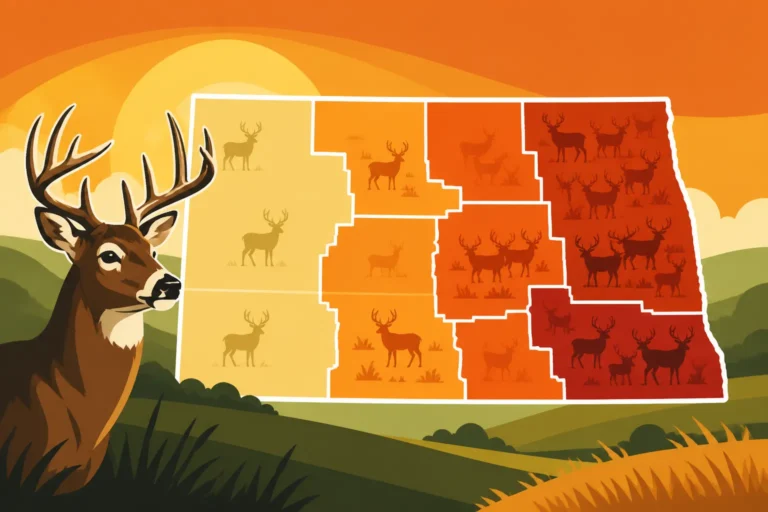
Fawn survival rates are not uniform across North Dakota. The challenges faced by a fawn born in the rugged Badlands are often different from those in the eastern prairie pothole region or the river bottomlands. For example, fawns in the Badlands might face increased predation from mountain lions (though rare, they are present) or golden eagles, and the terrain itself can pose risks. In the prairie pothole region, coyotes might be the dominant threat, alongside the vagaries of agricultural practices that can alter fawning cover year to year. Badlands Versus Prairie Pothole Deer illustrates some of these fundamental differences in habitat and, by extension, survival challenges.
These regional differences necessitate localized management strategies. What works to boost fawn survival in one area might not be effective, or even necessary, in another. Wildlife managers need to consider the unique ecological characteristics of each region, including North Dakota Deer Density by Region, when interpreting survival data and making decisions. This granular approach ensures that efforts to support the deer herd are tailored and effective, ultimately contributing to healthy and sustainable populations across our state.
Disclaimer
This article is for general informational purposes only and does not constitute professional advice. Laws, prices and regulations vary by location and change over time. Consult a qualified professional for guidance on your specific situation.