North Dakota Buck-to-Doe Ratio by Region
It's incredibly frustrating when you're trying to piece together a hunting strategy, and all the information you find about deer populations feels vague or generalized. You want to know where the big bucks are, where the competition might be less fierce for a mature animal, and how likely you are to even see a good deer. This guide is all about cutting through that ambiguity by diving deep into North Dakota's buck-to-doe ratios, exploring how these numbers change across different regions, and explaining why understanding them is absolutely crucial for any hunter looking to maximize their success in the field.
Why Understanding Buck-to-Doe Ratios Matters to Your Hunt
The buck-to-doe ratio isn't just some dry biological statistic tossed around by wildlife agencies; it's a vital piece of the puzzle for any serious deer hunter in North Dakota. Think of it as a key indicator of the health and potential of a deer herd in a specific area. A balanced ratio—meaning not too many does for the number of bucks—often points to a more robust, healthier deer population with better genetics and, critically, a higher likelihood of older, larger-antlered bucks surviving to maturity.
The Impact on Trophy Potential
When you're dreaming of that wall-hanger, the buck-to-doe ratio can tell you a lot about your chances before you even step foot in the woods. In regions where there are simply too many does for the available bucks, the younger bucks are working overtime during the rut, chasing more does and expending far more energy. This can stress them, making them more vulnerable to disease, winter kill, and hunter harvest. On the flip side, areas with a more even ratio mean that bucks don't have to spread themselves as thin. They can be more selective, expend less energy, and often have a better chance of surviving to older age classes. An older buck usually means a bigger buck.
Consider a scenario in a unit with a highly skewed ratio, say 1 buck for every 7 or 8 does. You might see a lot of deer, but the majority of them will be does and fawns, with young, smaller-antlered bucks constantly on the move. Now imagine a unit with a ratio closer to 1 buck for every 2 or 3 does. While you might not see as many deer overall, the bucks you do encounter are more likely to be mature animals, less stressed, and exhibiting more natural behavior. This is the kind of information that can make a huge difference in your planning, especially if you're targeting a mature animal. It ties directly into understanding North Dakota Buck Age Structure.
Influencing Rut Activity and Strategy
The buck-to-doe ratio has a profound effect on the intensity and predictability of the rut. In areas with a heavily skewed ratio, the rut can feel stretched out and less intense, as bucks are constantly seeking out receptive does over a longer period. This makes it harder to pinpoint peak rut activity and can make traditional rut hunting tactics, like rattling or calling, less effective because bucks are spread out and busy.
Conversely, in areas with a more balanced ratio, the rut tends to be more concentrated and explosive. Bucks are competing more intensely for fewer does, leading to more visible activity, more aggressive responses to calls, and more consistent patterns. If you're planning your hunt around the rut, knowing the regional buck-to-doe ratio can significantly inform your timing and strategy. For instance, in areas with better ratios, your chances of success during Hunting the Rut in Early-to-Mid November might be considerably higher, as buck activity will be more pronounced. This insight can help you decide when to take your vacation days, when to focus on specific tactics, and ultimately, where to concentrate your efforts for the best results.
North Dakota's Regional Differences in Deer Ratios
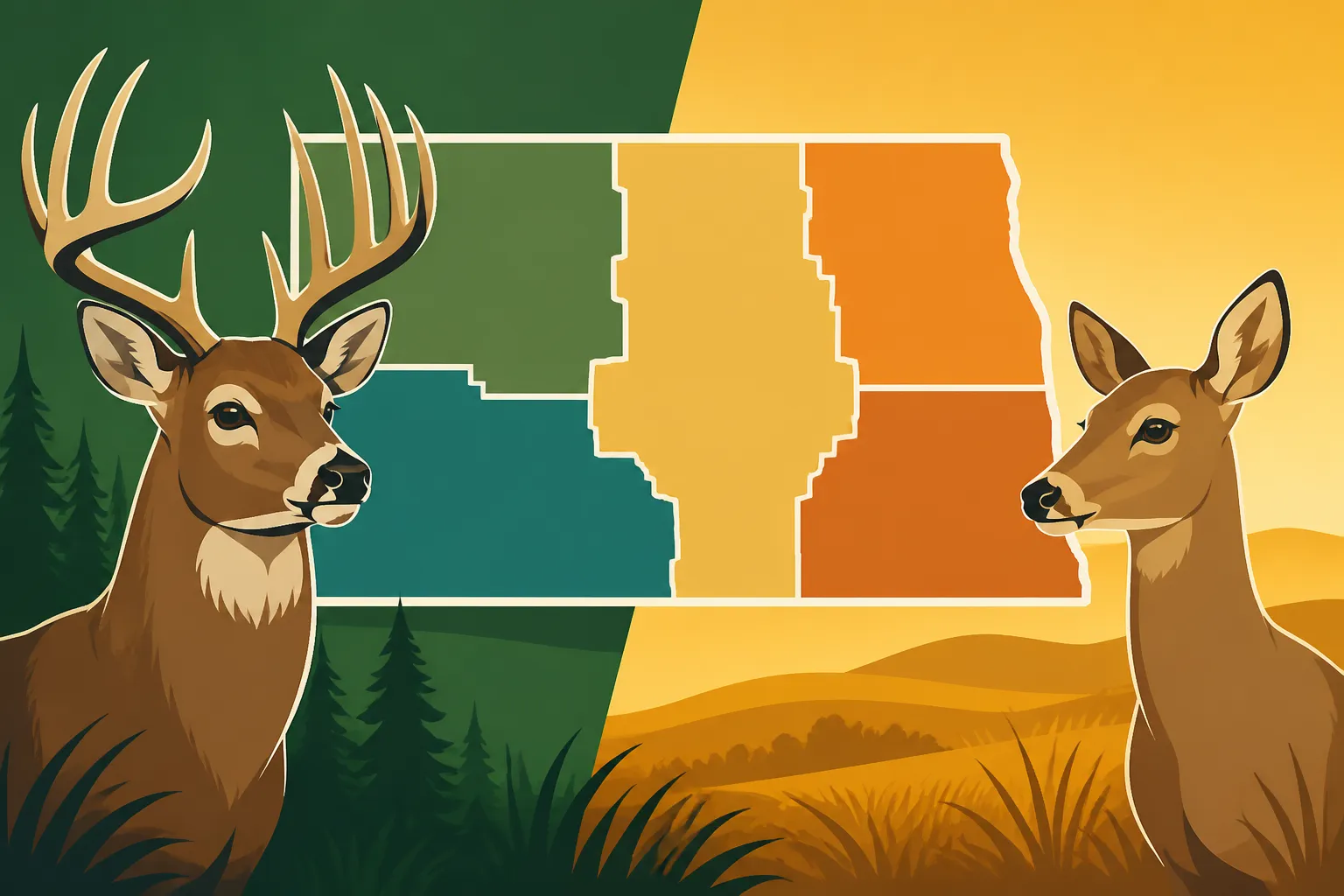
North Dakota is a vast state, and its deer populations, including the critical buck-to-doe ratios, are anything but uniform. What you find in the rugged Badlands will be vastly different from the fertile river bottoms or the open prairie potholes. Understanding these regional distinctions is paramount for effective hunt planning.
Badlands and Western River Breaks
The Badlands, particularly the Little Missouri National Grassland and the associated river breaks of the Little Missouri River, are renowned for their mule deer and unique whitetail populations. These areas often exhibit some of the most favorable buck-to-doe ratios in the state. The challenging terrain, limited access in some areas, and the inherent wildness of the landscape contribute to higher buck survival rates and, consequently, a better balance.
Here, you're more likely to find ratios in the range of 1 buck for every 2 to 3 does, sometimes even tighter in specific pockets. This translates to older age classes of bucks and a more competitive rut. Hunters who focus their efforts in this region, utilizing tactics like Glassing Badlands Coulees for Elk (even for deer, the glassing principles apply) or Reading aerial photos for Badlands Deer, are often looking for those mature, heavy-antlered animals. The downside, of course, is that these areas can be physically demanding, and deer densities might be lower overall compared to agricultural regions. However, for a quality buck encounter, the Badlands often deliver.
Missouri River Corridor and Major River Drainages
The Missouri River Corridor, including the land bordering Lake Sakakawea and the major tributaries like the Knife and Heart Rivers, represents another distinct deer habitat. This area is characterized by a mix of timber, thick river bottom cover, and adjacent agricultural fields, providing excellent food and cover for whitetails. The buck-to-doe ratios here can be quite good, often hovering around 1 buck for every 3 to 4 does.
The rich resources in these drainages allow deer populations to thrive, and while hunting pressure can be significant in accessible areas, the dense cover helps some bucks evade harvest and reach maturity. Hunters in these regions often focus on Hunting North Dakota's Missouri River Corridor, utilizing techniques like Still-Hunting North Dakota's Missouri River Bottomland or focusing on key pinch points and travel corridors. These areas are productive for both quality bucks and general deer harvest, and the ratio here supports a healthy population with good trophy potential. Tools like GoHunt can be particularly useful in scouting these complex river systems, helping hunters identify bottlenecks and bedding areas before they arrive.
Prairie Pothole Region and Agricultural Lands
Moving into the vast Prairie Pothole Region and the eastern agricultural plains, the landscape changes dramatically, and so do the deer dynamics. Here, you'll find extensive farmlands—corn, soybeans, wheat—interspersed with grasslands, shelterbelts, and wetlands. Whitetail deer dominate this landscape, and their populations can be incredibly dense due to abundant food sources.
In many parts of the prairie pothole and agricultural regions, buck-to-doe ratios can be more skewed, sometimes reaching 1 buck for every 4 to 6 or even 7 does. While you might see a high number of deer in a day, the proportion of mature bucks relative to does can be lower. This is often due to higher hunter success rates on bucks, as well as the prolific breeding capacity of whitetails in an agricultural environment. Hunters here might focus on Hunting North Dakota's Prairie Pothole Region, working field edges, shelterbelts, and slough bottoms. The strategy often shifts slightly, perhaps focusing more on antlerless tags for meat or targeting younger bucks during the rut when they are more active. While trophy bucks are certainly harvested here, the overall herd structure might lean towards younger animals. For those using GoHunt to research units, paying close attention to the harvest data and population trends for specific units in these areas is crucial to understanding the potential.
Turtle Mountains and Forested Pockets
In the northern reaches of the state, areas like the Turtle Mountains offer a unique, more heavily timbered habitat. While smaller in scale compared to other regions, these forested pockets also hold deer populations with their own distinct characteristics. The buck-to-doe ratios in these areas can sometimes be more balanced than the open prairie, perhaps closer to 1:3 or 1:4, due to the dense cover providing excellent sanctuary from hunters and predators. However, deer densities might be lower compared to the agricultural zones. Hunting here can be more akin to traditional forest hunting, focusing on timber cuts, swamps, and trail systems.
Understanding these regional variations is not just academic; it directly informs your hunting strategy, helps you manage your expectations, and ultimately, helps you decide where and how you want to pursue deer in North Dakota.
How North Dakota Game and Fish Monitors Deer Ratios
You might wonder how we even know these buck-to-doe ratios exist or how they change. It's not like someone is out there counting every single deer! The North Dakota Game and Fish Department (NDGFD) employs a variety of scientific methods to estimate deer populations, including buck-to-doe ratios, across the state. This data is critical for making informed management decisions, such as setting license numbers and unit boundaries for North Dakota's Lottery-Based Deer Gun Season.
Aerial Surveys and Observation Counts
One of the primary methods for estimating deer populations, especially in open country, involves aerial surveys. During winter, after snowfall, NDGFD biologists fly fixed-wing aircraft or helicopters over specific transects and areas. The snow cover makes deer much easier to spot against the landscape. During these flights, they count not just the total number of deer, but also categorize them by age and sex: adult bucks, does, and fawns. This allows them to generate regional estimates for overall deer density, herd health, and, yes, buck-to-doe ratios.
These surveys are often conducted in designated "survey units" that are representative of larger regions. While they don't cover every acre of the state, the data extrapolated from these surveys provides a valuable snapshot of the herd. Of course, weather conditions play a huge role; sufficient snow cover and calm winds are essential for accurate counts. Without ideal conditions, some years' data might be less comprehensive, which adds to the challenge of precisely tracking these dynamic ratios. This is part of how the department understands How Game and Fish Counts the Deer Herd.
Hunter Harvest Data and Check Stations
Another crucial piece of the puzzle comes from hunters themselves. Every deer harvested in North Dakota must be reported, and this harvest data is a goldmine of information. When hunters report their deer, they typically provide details on the sex of the animal, and sometimes age (e.g., fawn, yearling, adult). This aggregate data, collected over thousands of successful hunts, allows NDGFD to track trends in buck harvest versus doe harvest.
In addition, in certain areas, particularly those designated as North Dakota's Fourteen-Unit CWD Zone, mandatory or voluntary check stations are set up. At these stations, biologists can physically examine harvested deer, determine age more accurately through tooth wear, and record sex. This direct observation provides highly reliable data points that help corroborate aerial survey estimates and fine-tune understanding of herd demographics, including buck-to-doe ratios, at a very local level. This information contributes to North Dakota Deer Harvest Records and helps inform future management decisions.
Leveraging Ratio Data for Strategic Hunting
So, you have this information about buck-to-doe ratios by region. How do you actually use it to make your North Dakota hunt more successful? It’s not just about picking a region; it’s about refining your strategy, adjusting your expectations, and understanding the nuances of the deer you’ll be pursuing. GoHunt, for example, offers detailed unit statistics that can help you dive into some of this harvest data, giving you a clearer picture of what to expect on the ground.
Choosing Your Unit and Timing
The buck-to-doe ratio can heavily influence which hunting unit you apply for, particularly if you're a nonresident or resident playing the lottery for a gun tag. If your primary goal is to harvest any deer for meat, and you're not overly concerned with antler size, a unit in the rich agricultural areas with a higher doe population and a more skewed ratio might be a good choice. These units often have more antlerless tags available and higher deer densities overall, increasing your odds of filling the freezer.
However, if you're holding out for a mature buck, you might prioritize units in the Badlands or the prime river bottoms. While these units might have fewer total deer, their more balanced buck-to-doe ratios suggest a healthier age structure among bucks. You might consider combining this with information about Best North Dakota Units for Big Bucks to make a truly informed decision. Furthermore, knowing the ratio can help you time your hunt. In areas with balanced ratios, the rut is likely to be more intense, making the peak rut weeks the absolute prime time to be in the woods, Hunting the Rut in Early-to-Mid November.
Adapting Hunting Tactics
Your hunting tactics should also shift based on the regional buck-to-doe ratio. In areas with a high doe population and a wide ratio, bucks are almost constantly searching for receptive does throughout the rut. This means rattling and grunting might be less effective because bucks are already busy and don't necessarily need to challenge other bucks to find a mate. Instead, focusing on food sources where does congregate, or pinch points between bedding and feeding areas, might be more productive, as bucks will inevitably cruise these areas looking for does. Consider practices like Reading a Missouri River Bottom for Deer to identify these key travel corridors.
Conversely, in regions with a more balanced ratio, bucks are often more aggressive and territorial. Here, rattling, grunt calls, and even decoys can be incredibly effective, as bucks are more likely to respond to a perceived rival. They have fewer does to go around, so competition is higher. If you're hunting in the Badlands, for instance, a unit with a good ratio might be ideal for trying Rattling and Decoying Prairie Pothole Bucks tactics (even though it says prairie pothole, the aggressive calling works when bucks are competing). Understanding this dynamic helps you fine-tune your approach, moving beyond generic strategies to ones specifically suited to the deer behavior in your chosen area.
| North Dakota Region | Typical Buck-to-Doe Ratio (Approximate) | Primary Deer Species | Hunting Characteristics |
|---|---|---|---|
| Badlands / Western River Breaks | 1:2 to 1:3 | Mule Deer, Whitetail | Lower density, higher quality bucks, physically demanding, excellent for spot-and-stalk |
| Missouri River Corridor | 1:3 to 1:4 | Whitetail | Good density, strong trophy potential, diverse habitat, combination of stand and still-hunting |
| Prairie Pothole / Agricultural | 1:4 to 1:7 | Whitetail | High density, abundant food, high doe numbers, focus on field edges and cover |
| Turtle Mountains / Forested Pockets | 1:3 to 1:4 | Whitetail | Lower density, heavy cover, traditional timber hunting, limited range |
Managing Expectations and Realistic Goals
Ultimately, using buck-to-doe ratio data is about setting realistic expectations for your hunt. If you're heading to an area known for a more skewed ratio, don't get discouraged if you don't see a giant buck every day. Your chances for a "meat deer" are still excellent, and you can enjoy a productive hunt regardless. But if you've meticulously researched a unit with a more balanced ratio and invested in the appropriate tag, you can be confident that the biological potential for a mature buck encounter is higher.
This data, combined with other scouting tools, maps like those found on GoHunt, and local knowledge (perhaps even Knocking on Doors in North Dakota Farm Country), empowers you to make smarter decisions, year after year. It allows you to transform from a hopeful hunter into a strategic one, increasing not just your chances of success, but also your overall enjoyment and understanding of North Dakota's incredible deer resource.
Disclaimer
This article is for general informational purposes only and does not constitute professional advice. Laws, prices and regulations vary by location and change over time. Consult a qualified professional for guidance on your specific situation.