North Dakota Whitetail Migration to River Bottoms
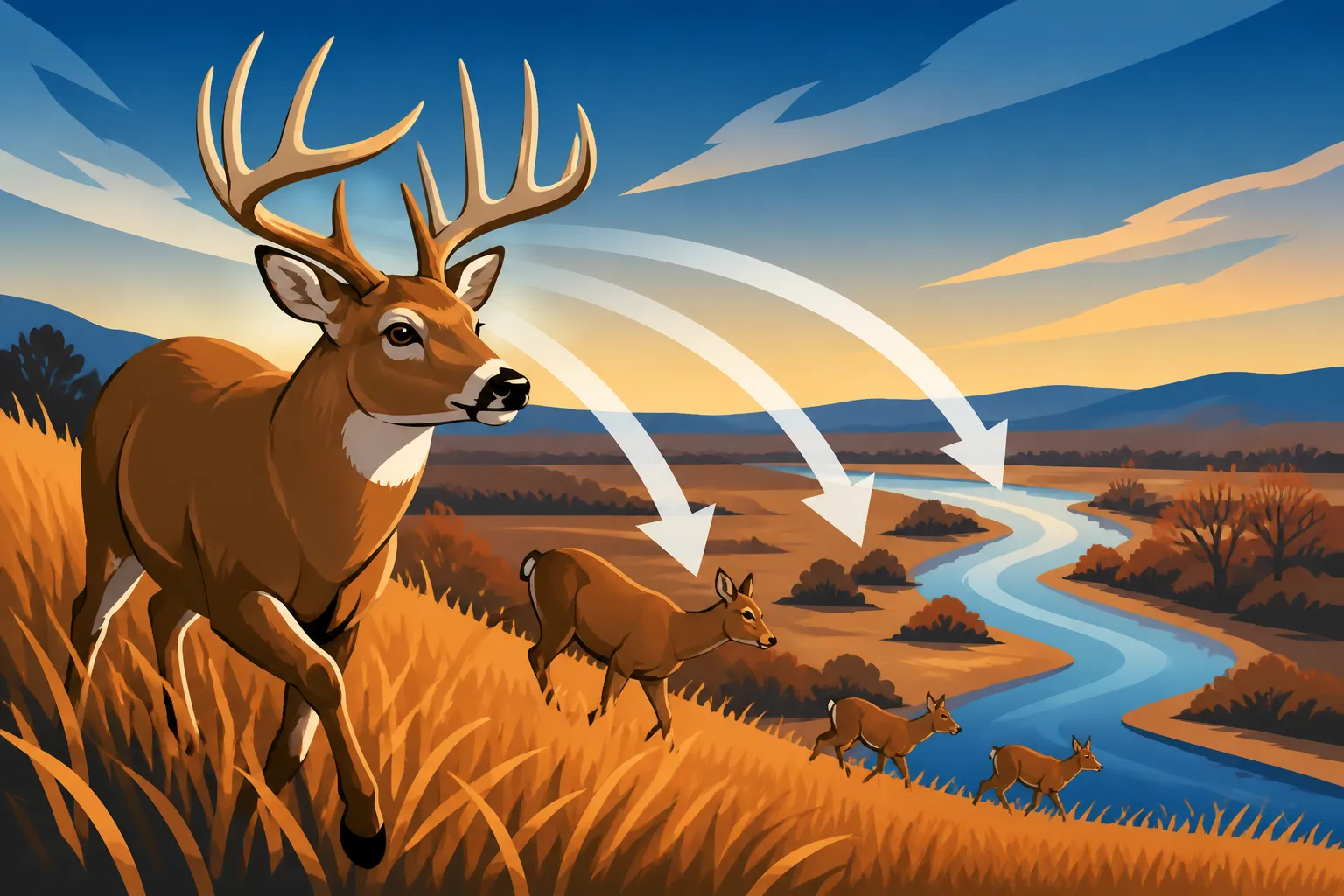
Ever wonder where all those deer seem to vanish to once the snow really starts to fly and temperatures plummet? You're not alone. Hunters across North Dakota often notice a distinct shift in whitetail patterns, particularly as they migrate towards the more sheltered river bottoms. This guide will take a deep dive into this crucial seasonal movement, explaining why it happens, when to expect it, where these whitetails go, and how you can adapt your hunting strategies to find success during this challenging but rewarding time of year.
The Annual Call to the River Bottoms: Why Whitetails Migrate
The sheer expanse of North Dakota's prairie is breathtaking, but it's also a landscape of extremes. When winter truly settles in, with its biting winds, heavy snowfalls, and plummeting temperatures, the exposed prairie becomes an unforgiving environment. Whitetail deer, while incredibly resilient, are driven by an instinct for survival to seek refuge. This innate need for protection and sustenance is the primary force behind their migration to the relative sanctuary of river bottoms.
The Brutal Reality of a North Dakota Winter
Imagine standing out on a vast, open prairie in January. The wind howls, unobstructed for miles, carrying snow that stings your face and piles into drifts. Temperatures can drop well below zero, and the wind chill makes it feel even colder. For a whitetail deer, this isn't just uncomfortable; it's a matter of life and death. The energy expenditure required to simply stay warm in such conditions is immense, burning through precious fat reserves built up during the fall. Without adequate shelter, prolonged exposure can lead to hypothermia and starvation, especially for fawns and older deer. This harsh reality is the initial, powerful push that sends deer seeking more hospitable grounds.
The lack of natural windbreaks on much of the prairie means that deer have little respite from the elements. Shallow depressions might offer a temporary break from the direct blast, but they do little to insulate against the pervasive cold. Deep snow further compounds the problem, making travel difficult and costly in terms of energy. Every step through heavy drifts saps strength, making escape from predators harder and foraging more laborious. It's a cumulative effect where the constant battle against the weather leaves deer vulnerable and desperate for relief.
This isn't just about comfort; it's about survival mathematics. Deer need to conserve energy, and an open prairie blizzard is an energy drain of epic proportions. Their thick winter coats provide insulation, but even that has its limits against sustained sub-zero temperatures and relentless winds. So, as the mercury drops and the snowflakes start to fly in earnest, the whitetails begin to feel an undeniable urge to find cover that can offer a buffer against Mother Nature's fury. They know, instinctively, that their chances of making it through the season improve dramatically when they can get out of the open and into the timber.
Food Security and Thermal Cover
Beyond just escaping the raw cold, river bottoms offer two critical resources: reliable food sources and vital thermal cover. The dense timber, brush, and steep banks found along river corridors provide a natural shield from the wind and often hold snow at more manageable depths, allowing for easier movement and access to forage. This combination is precisely what a whitetail needs to conserve energy and find enough to eat to sustain itself through the leanest months.
Thermal cover is essentially protection from the wind and extreme cold. The thick canopy of trees in a river bottom, even when deciduous and bare, breaks up wind patterns and traps warmer air close to the ground. Ever notice how much warmer it feels in a sheltered grove of trees compared to an open field on a windy day? Deer certainly do. Coniferous trees, like cedars or pines, provide even better year-round cover, creating dense pockets where deer can bed down, out of sight and out of the worst of the weather. These sheltered bedding areas are invaluable, allowing deer to rest and conserve energy without constantly battling the wind.
Food, during a North Dakota winter, is often a matter of finding accessible browse. While prairie fields might hold some leftover forage early on, heavy snow quickly buries it. River bottoms, however, often feature a more diverse array of woody browse—twigs, buds, and bark from various trees and shrubs—that remains available even under moderate snow. The microclimates created by the river and its associated timber can also lead to areas with shallower snow, making it easier for deer to paw through and find residual forbs or grasses. This dual benefit of shelter and accessible food makes river bottoms veritable havens for whitetails once winter truly sets its grip on the landscape. Many hunters use tools like GoHunt to scout these diverse habitats and identify potential food sources and bedding areas even before the snow hits.
Timing the Shift: When Deer Head for the Timber
The whitetail migration to river bottoms isn't an overnight event, but rather a gradual process influenced by a combination of environmental cues. While the exact timing can vary slightly from year to year based on weather patterns, there's a predictable window when hunters can expect to see this significant shift in deer movement. Understanding these cues is paramount for adapting your hunting strategies.
Early Winter's Subtle Push
The initial push towards river bottoms often begins subtly, even before the ground is blanketed in deep snow. As daylight hours shorten dramatically after the fall equinox, and temperatures begin their consistent downward trend, deer start to feel the urgency of winter's approach. This period often coincides with the post-rut exhaustion for bucks, who have expended significant energy during the breeding season. Their need to recover and conserve energy becomes a driving factor. While they might still be seen in crop fields or smaller pockets of cover on the prairie, their movements become more purposeful, often orienting towards the nearest timbered river corridor.
This subtle shift is often triggered by the first few significant cold snaps or early season snowfalls, even if they don't last long. A week of daytime highs struggling to break freezing, coupled with overnight lows in the single digits, is usually enough to send deer seeking better thermal protection. They might not fully abandon the prairie immediately, but they'll start using the river bottoms more frequently for bedding, returning to fields to feed during periods of milder weather. It’s a testing of the waters, a slow transition as they assess the severity of the coming winter. Observing these early shifts can give you a crucial advantage in predicting their full migration. Hunting the Rut in Early-to-Mid November is a great resource to understand what deer are doing just before this migration begins.
For hunters, this early winter phase can be a transitional challenge. Deer might be less predictable, moving between various habitat types. However, if you're watching the weather forecasts, you can anticipate when those colder temperatures and first snows will start funneling deer towards more permanent wintering grounds. This is a good time to focus on pinch points and travel corridors that lead from open prairie country into the more sheltered riverine environments. Using mapping features on platforms such as GoHunt can help identify these natural funnels and ensure you're in the right place when deer begin to move.
The Deep Freeze and Mass Movement
When the "deep freeze" truly sets in, usually from mid-December through January and February, the subtle push becomes a mass migration. This is when sustained sub-zero temperatures, heavy and persistent snow cover, and relentless prairie winds make the open country virtually uninhabitable for whitetails. At this point, the river bottoms aren't just an option; they're an absolute necessity for survival. All but the most stubborn or vulnerable deer will have relocated to the timber, seeking the dense cover and accessible food sources that these areas provide.
During this period, deer activity often becomes concentrated within the river bottom itself. They might create extensive trail networks, moving between dense bedding cover on steep slopes and pockets of browse along the banks. Their world shrinks dramatically, focused on the immediate vicinity of the river. This concentration of deer can be a boon for hunters, but it also means deer are under increased pressure and are often warier. The sheer amount of snow and ice can also make travel challenging for hunters, requiring specialized gear and a willingness to brave the elements. Cold-Weather Sitting Strategy on the Prairie can offer insights into how deer, and hunters, manage during these brutal months.
This late-season concentration means that while finding deer might be easier, getting close to them without detection becomes much harder. Every sound echoes in the cold, still air, and movement through crunchy snow can alert deer from a considerable distance. Understanding the specific areas within the river bottom that offer the best thermal protection and food becomes critical. Many seasoned hunters utilize digital mapping, like what you find on GoHunt, to analyze topography, identify south-facing slopes that catch more sun, and pinpoint dense evergreen thickets that offer superior cover. This allows them to plan their approach carefully and minimize disturbance in these crucial wintering grounds.
Key River Bottom Sanctuaries: Where Deer Concentrate
North Dakota is crisscrossed by several vital river systems, each offering unique characteristics that attract and hold whitetail deer during the harsh winter months. While all timbered river corridors provide some level of relief, some stand out as primary wintering grounds due to their size, habitat diversity, and historical significance for the state's deer population. Knowing these key areas can greatly inform your late-season hunting efforts.
The Mighty Missouri River and Its Tributaries
Undoubtedly, the Missouri River Corridor stands as the king of North Dakota's whitetail wintering grounds. From the upper reaches near Williston, through the major bends and impoundments like Lake Sakakawea and Lake Oahe, all the way to the southern border, the "Big Mo" offers extensive and invaluable habitat. The sheer scale of its timbered banks, deep coulees, and adjacent bluffs provides unparalleled thermal cover and a diverse range of browse that can sustain large numbers of deer through even the most brutal winters. The river itself creates a microclimate, often moderating extreme temperatures slightly and influencing snow depth. Hunting North Dakota's Missouri River Corridor is a must-read for anyone considering hunting this iconic waterway.
The Missouri's tributaries, such as the Little Missouri River, Knife River, Heart River, and Cannonball River, also play a crucial role. These smaller drainages feed into the main river, creating a complex network of timbered draws and valleys that act as extensions of the primary winter range. Deer will often utilize these tributary systems, sometimes migrating several miles from the main river to reach prime bedding or feeding areas deeper within these corridors. The confluence points where these smaller rivers meet the Missouri can be particularly active, acting as natural funnel points for deer movement. Scouting these areas for sign, such as heavy trails, rubs, and beds, is key to pinpointing concentration areas.
Furthermore, the varied topography along the Missouri—from steep, rocky bluffs to flatter river bottomlands—provides a mosaic of habitat. Deer can move vertically to escape strong winds, bedding on leeward slopes or seeking out benches that offer a compromise between cover and access to food. The presence of mature cottonwoods, ash, and various understory shrubs provides both canopy cover and palatable browse. This combination of scale, diversity, and natural protection makes the Missouri River system an irreplaceable sanctuary for North Dakota's whitetail deer during the winter, and a prime focus for late-season hunters. Reading a Missouri River Bottom for Deer can help you interpret the subtle signs of deer movement in this complex environment.
Other Vital River Corridors
While the Missouri River gets much of the attention, North Dakota boasts several other important river systems that serve as critical wintering habitat for whitetails. These areas, though perhaps smaller in scale, provide essential cover and food for local deer populations and can offer excellent hunting opportunities, often with less pressure than the more renowned Missouri breaks.
The James River, winding through southeastern North Dakota, is another significant whitetail corridor. Its floodplains and timbered edges provide shelter in an otherwise agricultural landscape. Deer here will concentrate heavily in the larger timber blocks along the river, using them as safe havens from the open farm fields. Similarly, the Red River of the North, forming the eastern border, has scattered timbered patches that, while not as extensive as the Missouri, still draw deer seeking refuge. These areas are particularly important in regions dominated by agriculture, where natural cover is at a premium.
Further north, the Souris River (or Mouse River) and its associated wetlands and timber provide critical winter habitat, especially in central North Dakota. The Pembina River Valley in the northeast also offers significant timbered draws and rugged terrain that attract and hold whitetails. Even smaller creeks and drainages, if they possess sufficient timber and topographical relief, will see increased deer activity in winter. It’s important not to overlook these smaller systems, as they can sometimes hold a surprising number of deer seeking solace from the elements.
| River System | Primary Location | Habitat Characteristics | Deer Concentration Level (Winter) | Hunting Pressure (Relative) |
|---|---|---|---|---|
| Missouri River | Central/Western ND | Extensive timber, deep coulees, bluffs, diverse browse | High | Moderate to High |
| Little Missouri River | Southwestern ND (Badlands) | Rugged breaks, cedars, junipers, deep draws | Moderate | Moderate |
| James River | Southeastern ND | River bottom timber, agricultural interface | Moderate | Moderate |
| Heart/Knife/Cannonball | Western/Central ND | Tributary timber, smaller scale than Missouri | Moderate | Low to Moderate |
| Souris (Mouse) River | North Central ND | River bottom timber, associated wetlands | Moderate | Low to Moderate |
| Red River of the North | Eastern Border | Scattered timber blocks, agricultural interface | Low to Moderate | Low |
These diverse river systems collectively highlight how crucial these linear strips of cover are for North Dakota's whitetail population, making them prime areas for late-season hunting focus. Understanding White-Tailed Deer Across North Dakota in general helps paint a picture of their overall distribution before these winter movements.
Hunting the Migration: Adapting Your Strategy
Hunting whitetails during their migration to and concentration within river bottoms demands a significant shift in strategy compared to early season or rut hunting. The deer are focused on survival, often grouped up, and highly sensitive to pressure. Success hinges on precise scouting, strategic stand placement, and a patient, methodical approach that respects the challenging conditions and the deer's drive for security.
Scouting Migration Routes and Funnels
Before you can effectively hunt the river bottoms, you need to understand how deer are getting there and where they're choosing to hold up. This means dedicated, often physically demanding, late-season scouting. Look for obvious trails leading from higher prairie ground down into the river corridors. These migration routes will often follow the path of least resistance, such as gradual slopes, old pasture roads, or breaks in dense brush. Snow on the ground is an invaluable tool for this, revealing fresh tracks and preferred travel paths that might be invisible earlier in the year.
Pay close attention to funnels—natural constrictions that force deer movement into a smaller area. This could be a narrow section of timber between two open fields, a saddle in a ridge that deer use to cross, or a specific draw that provides the easiest access to water or a bedding area. Tools like GoHunt can be invaluable for pinpointing these crucial areas by allowing you to study topography, identify changes in vegetation, and visualize potential travel corridors from the comfort of your home. By overlaying public land maps from the PLOTS program or WMA boundaries, you can effectively plan your access. Scouting PLOTS Land With the ND Hunt App is an excellent resource for leveraging technology in your scouting efforts.
When scouting these river bottoms, look for secondary sign that confirms heavy deer use: bark rubbed off saplings (indicating bucks are still around, even post-rut), pawed-out areas where deer have dug for browse under the snow, and fresh droppings. Focus on areas where food sources (like persistent browse, standing corn, or leftover beans if accessible) are close to dense thermal cover. Deer in winter minimize unnecessary movement, so their feeding, bedding, and travel will be tightly integrated. Finding the intersection of these critical elements is where you'll find success.
Stand Placement for River Bottom Whitetails
Once you've identified key migration routes, funnels, and concentration areas within the river bottom, careful stand placement is critical. Unlike hunting open fields, visibility can be limited in dense timber, so precise positioning is paramount. Your goal is to intercept deer moving between bedding and feeding, or traveling along a migration corridor, without alerting them. This often means placing stands along the edges of dense cover, overlooking trails, or at points where multiple deer trails converge.
Consider the prevailing wind direction carefully. In river bottoms, winds can swirl due to the topography, making scent control even more challenging. Try to position your stand where your scent will be carried away from known deer travel paths. Also, think about sun exposure; a stand facing east or south might offer a bit more warmth on a frigid morning, making your sit more bearable and your ability to remain still much easier. Remember, deer will often utilize south-facing slopes for bedding to catch the sun's warmth, so setting up on the opposite slope or downwind of such an area can be productive.
Visibility and shooting lanes are also vital. Clear out any branches that might impede a shot, but do so minimally to avoid creating too much disturbance. A ground blind, especially one brushed in with natural materials, can be highly effective in dense river bottom cover, offering both concealment and a barrier against the cold wind. For public land hunting, always check local regulations regarding stand placement and removal. North Dakota Public Land Hunting Hours are important to review, as hunting hours often differ from private land.
Late-Season Tactics in the Timber
Hunting the river bottoms in late season requires patience, stealth, and a willingness to embrace the cold. Deer activity often shifts to mid-day, as they might wait for temperatures to rise slightly before moving to feed, or bed down through the coldest parts of the night. This means longer, colder sits are often necessary. Dress in layers, prioritize warmth, and bring plenty of hand and foot warmers to stay comfortable and focused.
Still-hunting or slow-stalking can be effective in dense river bottom timber, especially after a fresh snow. The snow not only quiets your footsteps but also highlights fresh tracks, allowing you to follow a hot trail. Move slowly, pausing often to scan ahead, listening for the subtle sounds of deer moving through the brush. Focus on thickets, standing evergreens, and pockets of accessible browse. Remember, deer are trying to conserve energy, so they won't be moving fast unless pushed. A slow, deliberate approach that mimics the movement of another deer can be incredibly effective.
Finally, don't underestimate the power of quiet. In the still, cold air of winter, sounds carry further. Minimize talking, rattling (unless you're confident in the conditions and setup), and unnecessary movement. Focus on being present and observing the subtle nuances of the river bottom environment. The deer that have survived this far into the season are exceptionally wary, and every detail matters. By understanding their motivations and adapting your tactics, you can unlock incredible opportunities in North Dakota's river bottom sanctuaries during the challenging but rewarding late season. And remember, before heading out, check the latest regulations for North Dakota Wildlife Management Areas if you plan to hunt public ground.
Disclaimer
This article is for general informational purposes only and does not constitute professional advice. Laws, prices and regulations vary by location and change over time. Consult a qualified professional for guidance on your specific situation.