Hunting Little Missouri’s Backcountry Draws
There's a special kind of challenge that calls to the soul of a hunter, and for many in North Dakota, that call echoes from the deep, rugged cuts of the Little Missouri National Grassland. If you've ever stood on a windswept rim, gazing down into those labyrinthine backcountry draws, you know the feeling: excitement mixed with a healthy dose of trepidation. These aren't easy places to hunt; they demand a particular kind of grit, preparation, and strategy. This guide is all about equipping you with the knowledge to confidently and successfully navigate and hunt these formidable, yet incredibly rewarding, backcountry draws.
Understanding Little Missouri's Backcountry Draw Ecosystem
The Little Missouri National Grassland, part of the larger Badlands landscape, is an immense area, and its backcountry draws are the veins and arteries of its ecosystem. These aren't just ditches; they are complex, micro-environments that demand respect and understanding from any hunter hoping to succeed there. Forget flat prairie hunting; this is a totally different ballgame, physically and strategically.
Topography and Vegetation Challenges
When we talk about the topography of these draws, we're talking about a world carved by eons of wind and water. Imagine steep, eroded buttes dropping sharply into narrow, winding canyons. The slopes are often crumbly shale and clay, making footing treacherous, especially when wet or covered in loose rock. You'll encounter dramatic elevation changes, sometimes hundreds of feet in a short distance, and the draws themselves can be incredibly deep, creating natural sound barriers and visual obstructions that both help and hinder a hunter.
The vegetation within these draws is equally varied and challenging. On the rims and upper slopes, you might find open grassland dotted with sagebrush. But as you descend into the draws, things change. Pockets of dense Ponderosa pine, gnarled cedar trees, and thick patches of buckbrush create exceptional cover for wildlife. This dense cover, while ideal for game, can be a nightmare for hunters trying to move quietly or get a clear line of sight. It's a constant battle of using the terrain to your advantage while battling its inherent difficulties. Understanding these nuances is key to knowing Where Badlands Bucks Bed and planning your approach.
Deer and Elk Movement in the Draws
Animals in the Little Missouri's backcountry draws are masters of their environment. They use these features for everything: bedding, travel, escape, and finding food and water. Whitetail deer often prefer the thicker cover of the draw bottoms, especially areas with dense cedar or pine, using the steep slopes to gain elevation quickly if threatened. Mule deer, while often found on the more open, broken faces of the badlands, will readily dive into the depths of a draw for escape or to bed down, especially if they feel pressured. Elk, too, frequently utilize these deep cuts, moving between bedding areas on north-facing slopes and feeding grounds on more open benches or ridgetops.
Wind and thermals play an absolutely critical role in how game moves here, and understanding them is paramount. In the mornings, cool air often sinks into the draws, creating a downward thermal draft. As the sun warms the slopes, these thermals reverse, carrying scent upwards. Animals instinctively use these air currents to detect danger. Hunting into a rising thermal in the morning or a dropping thermal in the evening can be a recipe for busted stalks. Conversely, using these exact patterns to your advantage, such as approaching a draw from the downwind, uphill side in the afternoon, can significantly increase your chances. This deep knowledge is critical when you consider Wind and Thermals in Badlands Terrain.
Seasonal Considerations for Backcountry Hunting
The challenges and opportunities within Little Missouri's draws shift dramatically with the seasons.
- Early Archery Season (Late August-September): The heat can be brutal during early archery season. Water sources are often scarce, and animals might be concentrated around the remaining ones. Vegetation is at its thickest, making visibility difficult and quiet movement a challenge. Deer and elk are still in summer patterns, often nocturnal, and focused on food sources. The dense cover makes still-hunting incredibly tough, and animals will hear or smell you long before you see them.
- Rifle Season (November): As rifle season arrives, typically in November, the landscape transforms. Temperatures drop, often bringing the first snow. This can be a double-edged sword: snow improves tracking and visibility, but it also makes travel more arduous and can force game into deeper cover. The rut for deer will often be in full swing, leading to more active animal movement, but also increased hunting pressure pushing animals deeper into the draws. Access can become a real issue with snow-drifted roads. For those pursuing North Dakota's November Gun Deer Season, these draws can be productive, but tough.
- Late Muzzleloader Season (December): By the late muzzleloader season, the draws can be frozen solid or buried under significant snow. This is a time when animals are focused on winter survival, seeking thermal cover and remaining food sources. They will be concentrated in the warmest, most sheltered parts of the draws, making them predictable but also wary. The quiet of fresh snow can aid in stalking, but the cold and difficult terrain demand peak physical conditioning and specialized gear. Consider the challenges of Hunting the December Muzzleloader Close.
Essential Gear and Preparedness for Backcountry Draws
Hunting Little Missouri's backcountry draws isn't a casual affair you decide on a whim. It demands meticulous planning and the right gear, otherwise, you could easily find yourself in a dangerous situation. The remote nature of these areas means you're largely on your own, far from immediate help.
Navigation and Communication Tools
In a landscape defined by countless similar-looking draws, accurate navigation is non-negotiable. A reliable GPS unit or a robust mapping application on your smartphone is your best friend. I personally swear by onX Hunt. Its satellite imagery, topo maps, and public land overlays are invaluable for identifying promising draws, marking bedding areas, and tracking your movement, especially when navigating dense cover or unfamiliar terrain. You can even download maps for offline use, which is critical since cell service in these remote draws is often nonexistent.
Beyond navigation, communication is paramount. A satellite messenger or personal locator beacon (PLB) is not a luxury; it's a lifeline. If you take a fall, suffer an injury, or get truly lost, your cell phone likely won't work. Devices like a Garmin inReach or a Zoleo can send texts, track your movements, and, most importantly, send an SOS signal to emergency services, letting them pinpoint your exact location. Always carry a physical compass and a paper map as a backup. Batteries die, electronics fail, and a topographical map helps you understand the bigger picture of the terrain.
Physical Demands and Conditioning
Let's be blunt: hunting these draws is a gut check. The terrain is relentless. You'll be climbing steep, often loose, slopes, descending into deep ravines, and navigating through thick brush. It's not just walking; it's often scrambling, crawling, and pushing your way through. This is why Physical Prep for Badlands Elk Terrain is not just a suggestion, but a requirement. You need excellent cardiovascular fitness, strong legs, and core strength.
Start your conditioning months in advance. Hike with a loaded pack, simulating the weight of your gear plus the potential weight of meat on the way out. Practice navigating steep, uneven terrain. Don't underestimate the impact of carrying a rifle, optics, and a daypack over several miles of this kind of ground. Proper hydration and nutrition during your hunt are also crucial to maintaining energy levels and avoiding cramps or exhaustion.
Water and Emergency Supplies
The Badlands can be surprisingly arid, even with scattered potholes. Carrying enough water is absolutely critical, and then some. Don't just pack for the day; pack enough to get you through an unexpected night or if you get turned around. A water filter or purification tablets are also smart additions, allowing you to safely replenish from natural (though often scarce) sources.
Beyond water, a well-stocked emergency kit is a must. This should include:
- First-aid kit: Comprehensive enough for cuts, sprains, blisters, and more serious injuries.
- Fire-starting tools: Waterproof matches, lighter, fire starter.
- Shelter: An emergency blanket or lightweight tarp.
- Headlamp: With extra batteries.
- Knife/multi-tool: For various tasks.
- High-energy snacks: Nuts, dried fruit, energy bars.
- Signaling device: Whistle or signal mirror.
Think about Packing for an Eight-Day North Dakota Elk Hunt even if you're only planning a day hunt; the principles of self-sufficiency are the same, just scaled differently. The goal is to be self-reliant for at least 24-48 hours if something goes wrong.
Strategies for Effectively Hunting Backcountry Draws
Now that you're geared up and physically ready, let's talk tactics. The key to hunting these draws effectively lies in a blend of meticulous planning, smart movement, and keen observation.
Scouting and E-Scouting the Draws
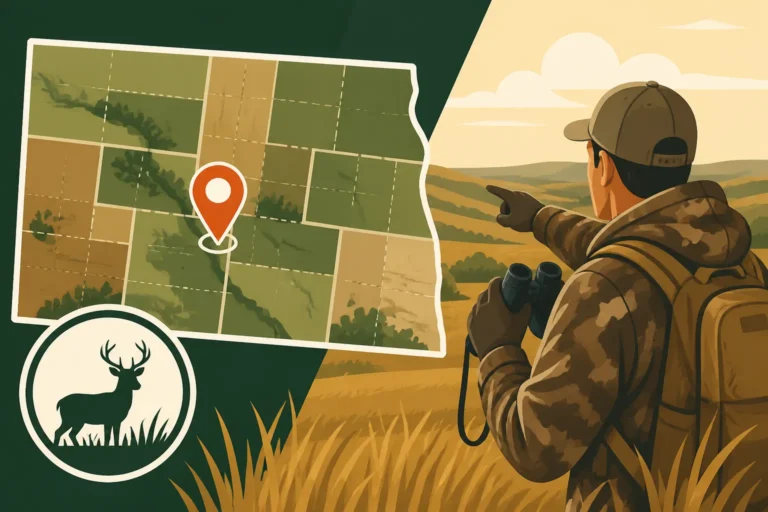
Before you ever set foot in the Badlands, your hunt begins with "e-scouting." This involves intensely studying satellite imagery and topographical maps. Tools like onX Hunt and GoHunt become your virtual binoculars. Look for:
- Water sources: Seeps, springs, small ponds within draws. These are magnets for game, especially in dry periods.
- Heavy cover: Dense pockets of timber, particularly on north-facing slopes, indicate prime bedding areas.
- Travel corridors: Subtle trails, saddles, or benches that connect different parts of the draws.
- Pinch points: Areas where the draw narrows, funneling animal movement.
- Escape routes: Steep, brushy paths animals might take when pressured.
Spend hours dissecting these maps, marking potential hot spots, and planning your entry and exit routes. This initial work dramatically cuts down on wasted time and energy in the field. For Reading Aerial Photos for Badlands Deer, this detailed analysis is irreplaceable. If at all possible, boots-on-the-ground scouting before the season is invaluable to confirm what you see on the map, identify fresh sign, and learn the lay of the land firsthand.
Approach and Entry Tactics
Approaching a backcountry draw is often the make-or-break moment of your hunt. You need to be stealthy, deliberate, and always mindful of the wind and thermals. Never approach a draw directly from the bottom or skyline yourself on a ridge; these are surefire ways to alert game.
Instead, try to get above the draw on a parallel ridge or bench, using terrain features to mask your approach. Pay close attention to the wind, ensuring it's in your favor for your intended direction of travel and where you expect game to be. In the mornings, when thermals are dropping, it might be advantageous to start high and work your way down. In the afternoons, as thermals rise, approaching from the bottom and working upwind can be effective. Always move slowly, scanning ahead, and listening for any subtle sounds. Consider how you'd utilize these tactics for Hunting a Coulee Rim at Last Light.
Still-Hunting and Glassing Techniques
Once you're in a draw, the real work begins. Still-hunting is a highly effective, yet demanding, technique here. It involves moving incredibly slowly, pausing frequently, and using your binoculars or spotting scope to pick apart every piece of cover. Take three to five steps, then stop, scan, and listen for several minutes. Look for horizontal lines (an animal's back) in a vertical world, subtle movements, or flashes of color.
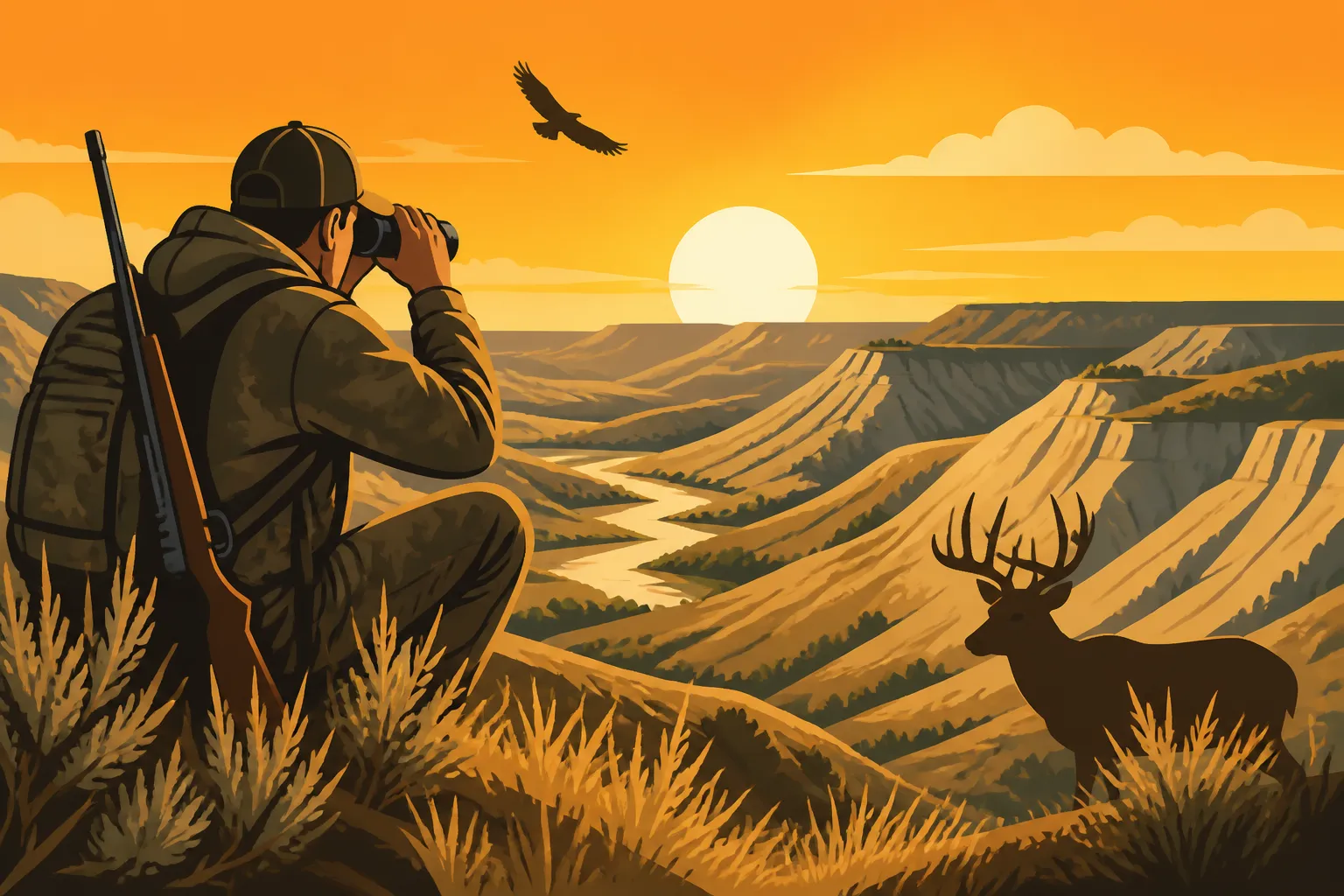
Glassing is equally vital. Find a vantage point, whether it's a small rise within the draw or a stable spot on a slope, and systematically grid out the opposite side and the draw bottom. Use good quality optics and spend significant time behind them. Animals blend in seamlessly with the broken terrain and brush. Remember, you're not just looking for an animal, you're looking for parts of an animal—an ear twitch, a horizontal line, a patch of hide. This is especially true when Glassing Badlands Coulees for Elk. Patience and persistence are your greatest assets.
Retrieving Game from Difficult Terrain
Let's not sugarcoat it: packing an animal out of a deep backcountry draw in the Little Missouri is one of the toughest parts of the hunt. It's physically grueling and can take hours, even with help. If you're fortunate enough to harvest a deer or elk in one of these locations, you need a plan.
- Field Dressing: Thorough field dressing immediately is crucial to cool the meat, especially in warmer weather.
- Quartering: For larger animals like elk or even mule deer, quartering the animal is often the only practical way to get it out. This means breaking it down into manageable sections: four quarters, backstraps, tenderloins, neck meat, and the cape if you're keeping the hide. Carry game bags to protect the meat.
- Pack Frame: A sturdy pack frame is essential. A regular hunting backpack won't cut it for heavy loads. Practice packing weight with your frame before the hunt.
- Teamwork: If possible, hunt with a partner. Two people can dramatically reduce the time and effort required for extraction. Even then, it will be a monumental task. The difficulty of Recovering a Deer From a Coulee cannot be overstated. Prepare for it mentally and with the right tools.
Safety and Ethical Considerations in Remote Draws
Hunting remote backcountry draws inherently carries more risk than hunting closer to accessible roads. Being prepared for emergencies, understanding the rules, and adhering to ethical hunting practices are non-negotiable.
Lone Hunter Safety Protocols
If you're heading into the draws alone, your safety net is much smaller. It's imperative to implement rigorous safety protocols. First and foremost, always tell someone exactly where you're going and when you expect to return. Give them a detailed map or onX Hunt pin of your intended area and your vehicle's location. Establish a check-in time, and if you don't call by then, they should know to initiate contact or even alert authorities.
Carry that satellite communicator mentioned earlier – it's your primary means of reaching help when cell service is gone. Beyond that, be aware of your physical limits. Don't push yourself past the point of exhaustion, especially when traversing steep or unstable ground. A momentary lapse in judgment due to fatigue can lead to a serious injury. Always be aware of your surroundings, scan for potential hazards like unstable cliffs, rattlesnakes, or other large animals, and listen for changes in weather.
Respecting the Resource and Other Hunters
The Little Missouri National Grassland is a shared resource, and ethical behavior ensures everyone can enjoy it, now and in the future. Practice "Leave No Trace" principles. Pack out everything you pack in, including spent shell casings, food wrappers, and anything else you brought. Leave the area cleaner than you found it.
Be mindful of other hunters. These draws can hide a lot of people, but they can also create surprise encounters. Avoid sky-lining yourself on ridges, which makes you visible to both game and other hunters. If you see another hunter, give them a wide berth. A simple wave or a quiet acknowledgment is usually sufficient, allowing both of you to continue your hunt undisturbed. Remember that many hunters venture into these areas for solitude, and respecting that is part of the unspoken etiquette.
Understanding Regulations and Unit Boundaries
North Dakota hunting regulations are specific, and being in a remote area doesn't exempt you from knowing and following them. Always carry your valid license and any required tags. Familiarize yourself with the season dates for the specific unit you are hunting, particularly if you are pursuing Elk Hunting North Dakota's Badlands or Mule Deer in North Dakota's Badlands.
Pay very close attention to unit boundaries, especially in the Badlands. Many draws can span multiple units, and having the wrong tag for the wrong side of a specific ridge could lead to serious violations. This is another area where onX Hunt shines, as it clearly displays unit lines. Also, be aware of any CWD (Chronic Wasting Disease) regulations for the unit you are in. North Dakota has North Dakota's Expanding CWD Hunting Units, and knowing the specific rules for carcass transport and mandatory testing, if applicable, for your unit is vital. Check the North Dakota Game and Fish Department website before your hunt for the latest information on North Dakota's Fourteen-Unit CWD Zone.
Here's a quick overview of seasonal considerations for hunting these challenging draws:
| Season | Typical Dates | Key Considerations | Ideal Approach |
|---|---|---|---|
| Archery (Early) | Late Aug – Mid-Sep | Hot, dense vegetation, limited water, animals nocturnal | Morning sit near water; evening ambush near feeding areas |
| Archery (Mid) | Mid-Sep – Oct | Cooler, some vegetation die-back, pre-rut activity | Still-hunting dense draws, glassing clearings |
| Gun | Nov | Cold, potential snow, rutting activity, high pressure | Drive deep draws, patient glassing from high vantage |
| Muzzleloader | Early – Mid-Dec | Deep snow, extreme cold, animals in winter cover | Stalking fresh tracks, targeting thermal bedding areas |
Disclaimer
This article is for general informational purposes only and does not constitute professional advice. Laws, prices and regulations vary by location and change over time. Consult a qualified professional for guidance on your specific situation.