Why Baiting Is Banned on National Grasslands
It can be incredibly frustrating to hear about hunting regulations that feel like they’re just putting up more barriers, especially when you're used to certain practices or see them commonly used elsewhere. The ban on baiting on National Grasslands in North Dakota is one of those rules that can really make you scratch your head. This guide is here to shed light on why these restrictions exist, what they mean for your hunt, and how you can still find success out in the field without bait.
Understanding the National Grassland Baiting Ban in North Dakota
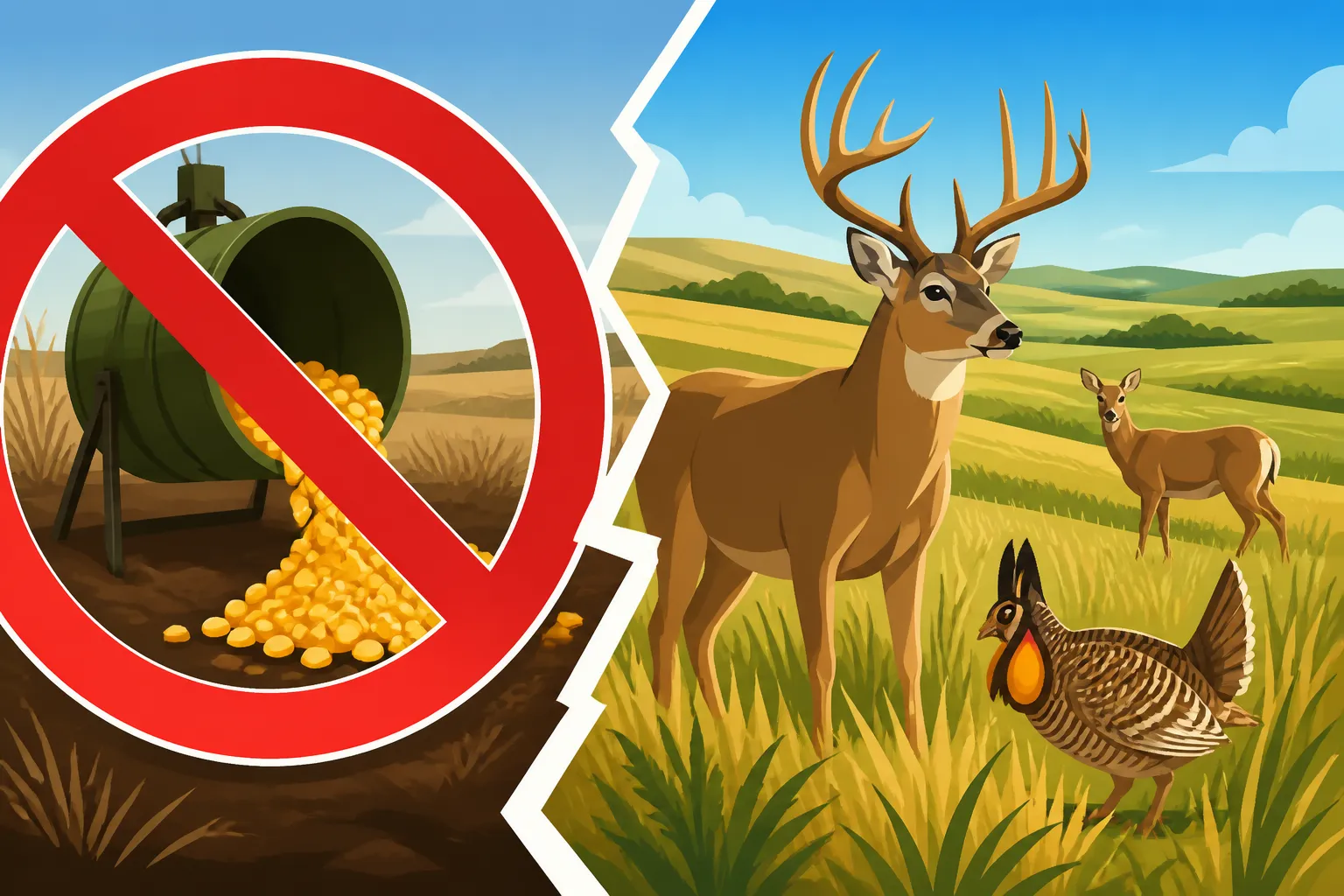
Let's face it, for many hunters, the idea of setting out some corn or a mineral block to draw in deer or other game is a time-honored tradition. It feels like a natural extension of providing a food source, right? But on public lands, specifically the National Grasslands here in North Dakota, baiting is strictly off-limits. This isn't just an arbitrary rule to make your life harder; it's a carefully considered policy rooted in wildlife management, disease prevention, and maintaining fair chase ethics.
The Rationale Behind Baiting Restrictions
The primary reasons behind baiting bans boil down to a few critical points, all aimed at protecting our wildlife resources and ensuring sustainable hunting for generations to come. First and foremost is the heightened risk of disease transmission. When you concentrate animals around a bait site, you're essentially creating a communal feeding trough where saliva, urine, and feces are easily exchanged. This is a superhighway for pathogens, especially for diseases like Chronic Wasting Disease (CWD), which we'll dive into more deeply in a moment.
Beyond disease, baiting can significantly alter natural wildlife behavior. Animals become accustomed to readily available, often unnatural, food sources, disrupting their natural foraging patterns and movements. This dependency can make them more vulnerable to predation or even vehicle collisions as they frequent predictable bait sites. Environmentally, leaving large amounts of bait can also introduce non-native substances into the ecosystem, potentially affecting soil health or attracting non-target species. The intent of hunting is to engage with animals in their natural state, and baiting, by its very design, manipulates that natural state.
Specifics of the North Dakota Ban
In North Dakota, the regulations around baiting are quite clear, especially when it comes to areas like the Little Missouri National Grassland and the Sheyenne National Grassland. The North Dakota Game and Fish Department defines baiting as placing, exposing, depositing, distributing, or scattering salt, minerals, grain, or other feed to attract game animals. This means no piles of corn, no mineral licks, no molasses blocks – absolutely anything intended to lure animals.
The ban applies year-round on these federal lands. It's not just during hunting season; you can't place bait out at any time. This comprehensive approach is necessary because the presence of bait, even if you remove it before opening day, can have lasting effects on animal behavior and disease vectors. Hunters utilizing these areas need to be acutely aware of this, as violations can lead to significant fines and loss of hunting privileges. Ignorance of the law is, unfortunately, no excuse. You really have to do your homework and understand what you can and can't do on specific public lands, especially if you're planning on Hunting North Dakota's Little Missouri National Grassland.
Chronic Wasting Disease CWD and Its Role in Baiting Bans
If you've been following hunting news at all in the last couple of decades, CWD is a term you've likely heard, and for good reason. It's a game-changer in wildlife management, and it plays a massive role in why baiting is banned on our National Grasslands.
How CWD Spreads and Its Devastating Effects
Chronic Wasting Disease is a neurological disease that affects deer, elk, moose, and other cervids. It's caused by abnormal proteins called prions, which can persist in the environment for years, even after an infected animal has long been gone. The scary part? There's no cure, and it's always fatal. Animals infected with CWD progressively waste away, showing symptoms like extreme weight loss, stumbling, listlessness, and behavioral changes. It's a heartbreaking disease to witness.
The primary way CWD spreads is through direct animal-to-animal contact, but also through indirect contact with contaminated environments. This includes contact with infected saliva, urine, feces, and carcasses. Now, imagine a bait site: a place where multiple animals gather, nose around the same food, urinate, defecate, and chew. It’s a perfect storm for CWD transmission. By concentrating deer and other cervids in such close proximity, baiting dramatically increases the likelihood of the disease spreading within a herd and contaminating the environment for future animals. This is why agencies, including North Dakota Game and Fish, are so vigilant about practices that bring animals together unnaturally.
North Dakota's Proactive Stance on CWD
North Dakota is actively working to monitor and mitigate the spread of CWD. We have established North Dakota's Fourteen-Unit CWD Zone, primarily along the Missouri River corridor and in the western part of the state. Within these units, there are often mandatory testing requirements for harvested deer, especially during the gun season. This proactive approach includes requesting CWD Testing for North Dakota Hunters in designated areas to better understand prevalence and distribution.
The connection to baiting is clear: eliminating activities that promote nose-to-nose contact and communal use of feeding areas is a crucial tool in preventing CWD from taking a stronger hold. While the exact long-term impact of CWD on human health isn't fully understood, wildlife agencies err on the side of caution, prioritizing the health of the herds and the safety of hunters. Hunting regulations, like the baiting ban, are direct responses to the serious threat CWD poses to our cherished White-Tailed Deer Across North Dakota and Mule Deer in North Dakota's Badlands populations. Tools like the GoHunt app can be incredibly useful for hunters wanting to stay informed on current CWD unit boundaries and regulations, making sure you’re always in compliance and helping protect our shared resources.
Ethical Hunting and Fair Chase Considerations
Beyond disease prevention, the ban on baiting also ties into fundamental principles of ethical hunting and fair chase. These concepts are at the very heart of why many of us hunt. It’s about more than just harvesting an animal; it's about the challenge, the experience, and the respect we have for wildlife.
Defining Fair Chase in Modern Hunting
Fair chase, at its core, is a set of principles that dictates how a hunter interacts with their quarry. It's about giving the animal a reasonable chance to escape and ensuring that the hunter’s advantage doesn’t become so overwhelming that the hunt loses its ethical foundation. Historically, this meant avoiding things like hunting animals trapped in snow or confined spaces. In modern times, it extends to technology and methods.
It's a balance. We use modern equipment – accurate rifles, advanced optics, scent control – which certainly gives us an advantage over what our ancestors had. But fair chase means drawing a line. It's about respecting the animal's natural instincts and abilities, and not reducing the hunt to a simple target practice exercise. For many, the true satisfaction comes from outsmarting an animal in its natural environment, relying on skill, knowledge, and patience rather than artificial means to lure it in.
Why Baiting Can Undermine Fair Chase
From a fair chase perspective, baiting can significantly reduce the challenge and the need for traditional hunting skills like scouting, tracking, and understanding natural animal behavior. When animals become conditioned to a specific food source at a predictable location, much of the "hunt" aspect can be diminished. Instead of actively pursuing or ambushing an animal based on its natural movements, a hunter using bait is often waiting for the animal to come to a pre-determined spot.
This isn't to say baiting is "easy" or guarantees success, but it does fundamentally change the dynamic. It can create an unfair advantage by drawing animals out of their natural cover, making them more vulnerable, and concentrating them for an easier shot. This goes against the spirit of hunting for many, including the North Dakota Game and Fish Department's regulations on public lands. The goal on National Grasslands, therefore, is to encourage hunters to develop their skills in reading the landscape, understanding animal patterns, and truly engaging with the wild, fostering a deeper connection to the land and the animals inhabiting it. It keeps the hunt a hunt, not just a feeding station visit.
Practical Implications and Alternative Strategies for Hunters
So, if baiting is out, what's a hunter to do? It's a valid question, and one that often leads to frustration, particularly for those who have relied on baiting in the past. But I promise you, success is absolutely attainable on the National Grasslands without it. It just means shifting your focus and embracing different strategies.
What to Do If You Can't Bait
The biggest shift you'll need to make is to put a much greater emphasis on scouting and understanding natural food sources. Instead of creating a food source, your job becomes finding the existing ones and figuring out how deer and other game are using them. This means boots on the ground, exploring areas of Public Hunting Land in North Dakota like the Sheyenne National Grassland and the Little Missouri National Grassland, looking for acorns, forbs, browse, and agricultural crop edges that might be bordering the public land.
Think about water sources too. In arid regions, water can be a huge draw, especially during dry periods. Spend time observing travel corridors between bedding areas, feeding zones, and water. These natural funnels are where animals are most likely to pass through. You'll want to become a master at Reading Aerial Photos for Badlands Deer and using topographic maps to identify key terrain features that dictate animal movement. Services like GoHunt are invaluable for this, offering detailed maps with public/private land boundaries, satellite imagery, and even layers for potential habitat features, allowing you to scout effectively from your couch before you ever step foot in the field. This preparation is paramount when you remove bait from the equation.
Effective Hunting Methods for National Grasslands
Without baiting, your hunting methods will naturally lean towards techniques that capitalize on natural animal movements and the terrain. Here are a few highly effective strategies for hunting North Dakota’s National Grasslands:
- Spot-and-Stalk: This is incredibly effective for species like mule deer and pronghorn in the open, rolling terrain of the Badlands. Get to a high vantage point, use good optics to Glassing Badlands Coulees for Elk or deer, locate your quarry, and then carefully plan a stalk using terrain features for cover. Patience and wind awareness are crucial here.
- Still-Hunting: This involves moving slowly and deliberately through cover, pausing frequently to observe your surroundings. It's about blending in with the environment and being extremely quiet. This works well in timbered river bottoms or areas with dense shrubbery, allowing you to intercept deer as they move naturally through their habitat. Consider applying this when Still-Hunting North Dakota's Missouri River Bottomland for whitetails.
- Hunting Pinch Points and Natural Funnels: These are areas where the landscape forces animals into a constricted travel path. Think about saddles between hills, narrow strips of cover connecting larger blocks of timber, or creek crossings. These are high-percentage areas to set up an ambush. Hunting a Badlands Draw for Mule Deer at first light or last light can be incredibly productive.
- Ambushing Food/Bedding Transitions: Identify where animals are bedding down for the day and where they are feeding. Set up along the routes they use to travel between these two areas, often during the dawn and dusk hours. This requires meticulous scouting to find fresh sign.
To give you a clearer picture, here’s a quick comparison of tactics:
| Tactic/Strategy | Baiting (Prohibited on NG) | Non-Baiting (Allowed & Encouraged on NG) |
|---|---|---|
| Primary Attraction | Artificial food/minerals at a fixed spot | Natural food sources, water, bedding, cover |
| Hunter's Role | Waiting for animals to come to a predetermined spot | Actively seeking animals, predicting movement |
| Skills Emphasized | Patience, shot placement, identifying bait site | Scouting, tracking, navigation, camouflage, animal behavior |
| Disease Risk | High, due to animal concentration | Lower, animals are dispersed |
| Fair Chase Principle | Often seen as compromising fair chase | Upholds fair chase, relies on hunter skill |
| Environmental Impact | Potential for site contamination, altered behavior | Minimal, works with natural environment |
| Tools Utilized | Bait, trail cameras, stand | Optics, maps (e.g., GoHunt), scent control, calls |
As you can see, hunting without bait on our National Grasslands isn't about doing without; it's about embracing a more traditional, skill-based approach that truly tests your abilities as a hunter and fosters a deeper appreciation for the animals and their habitat. It leads to a more rewarding experience, knowing you truly earned that harvest.
Disclaimer
Please remember that hunting regulations can change. It is always your responsibility to consult the most current North Dakota Game and Fish Department regulations before heading afield. This guide is for informational purposes only and should not be considered legal advice.