North Dakota Elk Application Deadline
Chasing an elk tag in North Dakota feels like hitting the lottery, and nothing stings more than realizing you've missed the application deadline for such a coveted opportunity. This guide is dedicated to helping you navigate the precise timelines and critical steps involved in applying for a North Dakota elk tag, ensuring you have the best possible chance to get your name in the hat and avoid the heartbreak of a missed application.
Understanding the North Dakota Elk Application Process
Let's face it, the dream of hunting elk in North Dakota is a powerful one, but the reality is that these tags are incredibly rare and highly sought after. Unlike some other big game species, elk in North Dakota are managed under a strict, limited quota system, and the state issues what are often considered "North Dakota's Once-in-a-Lifetime Big Game Licenses". This means if you're lucky enough to draw one, you might not be eligible to draw for that species again. The entire process hinges on a lottery system, meaning it’s not first-come, first-served, but rather a random draw from all eligible applicants.
For residents of North Dakota, this opportunity represents a true chance at an unforgettable hunting experience. However, it's crucial to understand that only North Dakota residents are eligible to apply for elk tags in the state. This is a common point of confusion for nonresidents who might be looking to expand their hunting horizons, but unfortunately, Why Elk, Moose and Pronghorn Stay Resident-Only is a policy aimed at preserving these limited opportunities for in-state hunters.
Eligibility and Requirements for Application
Before you even think about the deadline, you need to ensure you meet all the basic eligibility requirements. First and foremost, you must be a resident of North Dakota. Beyond that, anyone applying for a hunting license in the state, including for big game like elk, typically needs to meet "North Dakota Hunter Education Requirements". If you were born after December 31, 1961, you'll generally need to have completed an approved hunter education course, unless you fall under an apprentice hunter exemption.
Another key aspect is understanding that the elk application is usually part of a broader big game lottery process managed by the North Dakota Game and Fish Department (NDGFD). This isn't just a simple online form; it requires careful attention to detail. You’ll need a valid North Dakota hunting license (often a basic resident license) to even be considered. You can typically find all the detailed requirements and options for North Dakota Resident License Options on the NDGFD website or through their online portal. Each application also typically incurs a small, non-refundable How North Dakota's Application Fees Work, which helps cover the administrative costs of running the lottery.
The Role of Hunting Units in Elk Applications
North Dakota's elk are primarily concentrated in the western part of the state, particularly within the rugged terrain of the Elk in North Dakota's Little Missouri Badlands. When you apply for an elk tag, you won't just apply for "an elk tag"; you'll be applying for a specific unit. These units are geographical areas designated by the NDGFD to manage game populations effectively.
Understanding these units is critical because tag allocations, herd sizes, and even success rates can vary significantly from one unit to another. For instance, Unit E1 (North) and Unit E2 (South) are common areas for elk hunting, often overlapping with the Little Missouri National Grassland. Your choice of unit can drastically impact your chances of drawing a tag and your potential hunting experience if successful. Many seasoned hunters will spend considerable time researching North Dakota Elk Herd Population Estimate and historical harvest data for each unit before making their application decision. Tools and platforms like GoHunt can be incredibly useful here, offering detailed breakdowns of past draw odds, success rates, and unit-specific information that can give you an edge in making an informed choice.
Key Dates and Deadlines for Elk Applications
This is where the rubber meets the road. Missing the application deadline for a North Dakota elk tag is a common, and completely avoidable, mistake. The state's big game lottery process has a very specific window, and if you're even a day late, you're out of luck for the entire year.
The North Dakota Game and Fish Department runs a unified lottery system for deer, elk, and moose. While specific dates can shift slightly from year to year, the elk application period generally opens in the spring and closes in late March or early April.
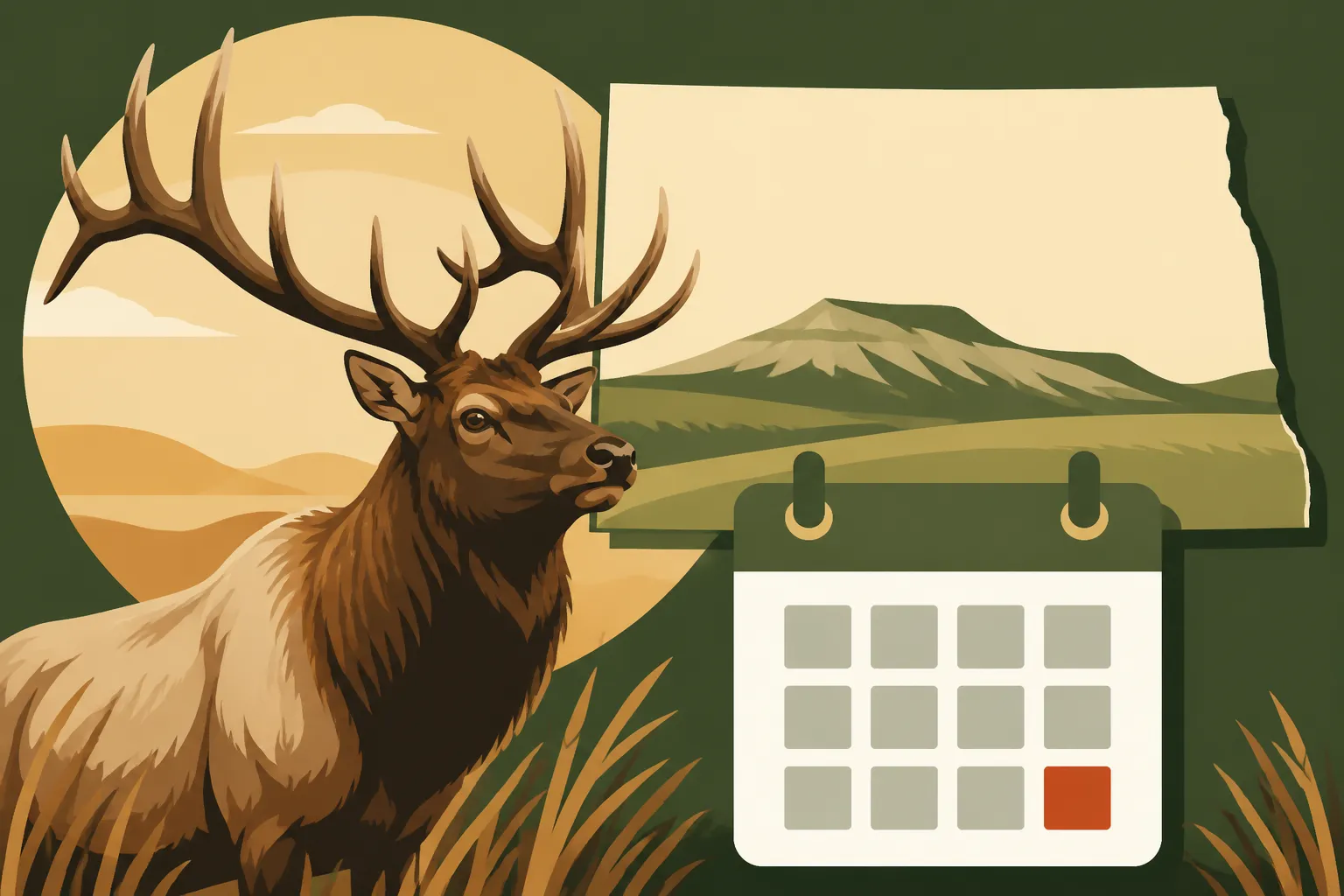
The North Dakota Elk Application Deadline is typically late March to early April.
In recent years, for instance, the application deadline for elk, moose, and bighorn sheep has consistently fallen on March 27th at 8:00 AM Central Time.
It is absolutely imperative to double-check the exact dates published by the North Dakota Game and Fish Department each year, as they are the final authority. Many hunters rely on tools like GoHunt to keep track of these fluid dates and receive timely reminders, preventing that stomach-dropping moment when you realize you’ve missed a critical window.
Application Window and Important Milestones
Understanding the broader application timeline helps ensure you don't just hit the deadline, but also give yourself ample time to research and apply without stress.
| Event | Typical Timeframe | Key Action |
|---|---|---|
| Application Opens | Early to Mid-March | Access the online application portal. |
| Application Deadline | Late March – Early April (e.g., March 27th) | Submit your complete application BEFORE this time. |
| Drawing Results Announced | Late April – Early May | Check your application status. |
| License Purchase Deadline | Typically Mid-May | If drawn, purchase your license. |
Please note: These dates are typical and subject to change by the North Dakota Game and Fish Department. Always verify current dates on the official NDGFD website.
It’s not just about the final deadline, but also about knowing when the application period opens. Give yourself enough time to consider your unit choices, confirm your eligibility, and gather any necessary information. Don't wait until the last minute, as unforeseen technical issues can arise. Submitting your application well in advance is always the wisest course of action.
Consequences of Missing the Deadline
Missing the North Dakota Elk Application Deadline has only one consequence: you don't get to hunt elk in North Dakota that year. There are no extensions, no late applications, and no second chances. Given that elk tags are a once-in-a-lifetime opportunity for many, missing the application window can feel like a significant blow.
This is why setting multiple reminders is crucial. Mark your calendar, set phone alerts, and perhaps even ask a hunting buddy to remind you. Many experienced hunters subscribe to email newsletters from the NDGFD or use comprehensive hunting apps like GoHunt to stay informed and ensure they never miss these critical dates. The effort to remember the deadline pales in comparison to the regret of letting a potential elk season slip by.
Strategies for a Successful Elk Application
While the elk lottery is ultimately a game of chance, there are definitely strategies you can employ to maximize your opportunities or at least make the most informed decision possible. It’s not just about throwing your name in the hat; it’s about understanding the nuances of the system.
One of the first things to consider is the North Dakota Elk License Odds. These odds are typically published by the NDGFD after each drawing and are an invaluable resource. They show you, unit by unit, how many applications were received versus how many tags were issued. A unit with 10 tags and 100 applicants has much better odds than a unit with 5 tags and 500 applicants, for example. Platforms like GoHunt consolidate this data, making it easy to analyze trends and choose units where your chances, however slim, might be marginally better.
Researching Unit-Specific Information
Before applying, dedicate time to researching specific elk hunting units. Look beyond just the draw odds. Consider the terrain, access, and historical "North Dakota Elk Hunt Success Rates" within each unit. Do you prefer a more rugged, challenging hunt in the heart of the Badlands, or a unit with easier access? Each unit presents its own set of challenges and opportunities.
For instance, some units might have higher elk populations but receive more applications, thus lowering draw odds. Others might be more remote, have fewer tags, but also fewer applicants. Consider which unit aligns best with your hunting style and physical capabilities if you were to draw a tag. Understanding the distribution of How Many Elk Live in the Badlands and their typical movement patterns within each unit can also influence your decision.
Antlered Versus Antlerless Tags
Often, the North Dakota Game and Fish Department will offer different types of elk tags: antlered (bull) and antlerless (cow/calf). Generally, antlerless tags tend to have slightly better draw odds due to less competition. While the dream of a big bull is enticing, if your primary goal is to simply put elk meat in the freezer and experience a North Dakota elk hunt, applying for an antlerless tag might increase your chances of drawing.
This decision requires careful thought. Are you holding out for a trophy bull, or is any elk a win? For many, the experience of "Elk Hunting North Dakota's Badlands" is the prize itself, regardless of antler size. The NDGFD often provides detailed breakdowns of antlered versus antlerless tag allocations, so be sure to factor this into your application strategy.
After You Apply: What to Expect
Once you've submitted your application and the deadline has passed, the waiting game begins. This period can be filled with anticipation, but it's important to know what happens next and how to prepare, regardless of the outcome.
Checking Drawing Results
Typically, the North Dakota Game and Fish Department announces the lottery drawing results in late April or early May. You won't usually receive a personal phone call or letter the moment results are live. Instead, you'll need to actively check your application status. This is usually done through the same online portal where you submitted your application. Keep your application confirmation number handy, as you’ll likely need it to log in and view your results.
Platforms like GoHunt often integrate with state game and fish departments, providing notifications or direct links to check your status, making the process a bit less frantic. If you've been drawn, congratulations! This is where the real planning for "Packing for an Eight-Day North Dakota Elk Hunt" begins.
If You Draw an Elk Tag
Drawing a North Dakota elk tag is a monumental achievement for a resident hunter. Once you confirm you've drawn, there will be a specific timeframe to purchase your license. Do not miss this purchase deadline! Drawing the tag doesn't automatically mean you have the license; you must complete the purchase. The NDGFD will provide instructions on how to do this, usually through their online portal.
After securing your license, it's time to dive deep into planning your hunt. This means scouting, understanding unit boundaries, reviewing regulations specific to your unit, and preparing your gear. Remember, hunting elk in the Badlands is physically demanding, so ensure you're in good shape and have appropriate equipment.
If Your Application is Unsuccessful
For the vast majority of applicants, the reality is that the North Dakota elk lottery is extremely competitive, and not drawing a tag is the most common outcome. Don't be discouraged! This is part of the game when pursuing limited-entry big game.
If you're unsuccessful, your application fee is typically non-refundable, as it covers the cost of processing your entry into the lottery. The best approach is to start looking ahead to next year. Analyze the draw odds again, consider if you want to apply for a different unit or tag type, and keep an eye on population trends and North Dakota's 1,062-License Elk Season numbers for the upcoming year. The good news is that if you didn't draw, you haven't used your once-in-a-lifetime opportunity, so you can apply again next season, giving you another shot at that elusive North Dakota elk.
Disclaimer
The information provided in this guide is for general informational purposes only and is based on typical North Dakota Game and Fish Department regulations and seasons. Hunting regulations, application deadlines, and licensing requirements can change annually. Always verify the most current and accurate information directly with the North Dakota Game and Fish Department before applying or planning any hunting trip.