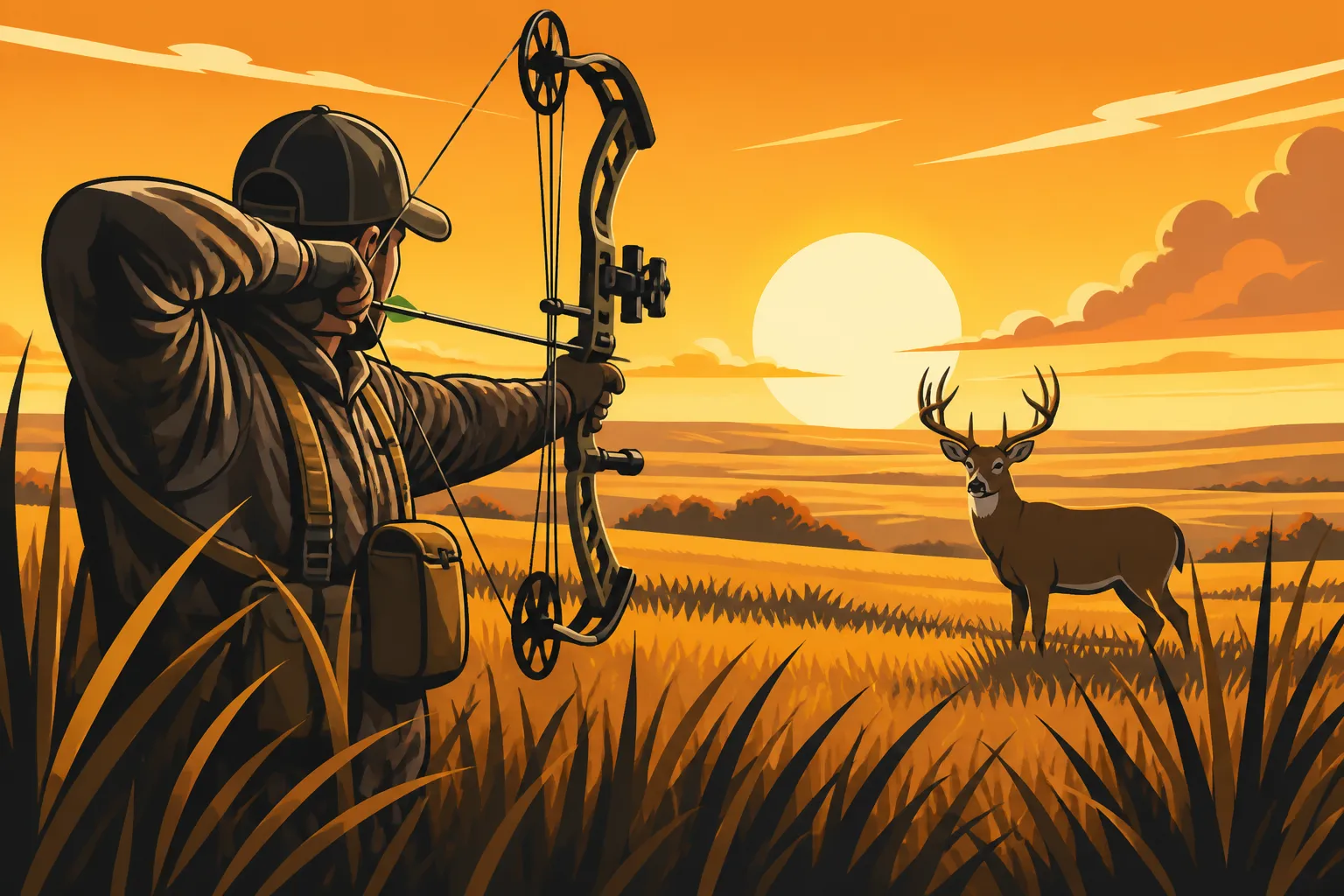
Bowhunting North Dakota’s Long Archery Season
North Dakota's archery season stretches out for what feels like an eternity to a dedicated bowhunter, offering an incredible span of opportunity from late summer all the way through the heart of winter. But let's be real, while that long season sounds fantastic on paper, actually putting a tag on a North Dakota whitetail or mule deer with a bow presents its own unique set of headaches. The vast, often open landscapes, the unpredictable weather, and the sheer diversity of terrain can make a bowhunt here feel more like a marathon than a sprint. This comprehensive guide is going to walk you through everything you need to know to not just survive, but truly thrive during North Dakota's expansive archery season, tackling the real frustrations and giving you the strategies to find success.
Understanding North Dakota's Archery Season Structure
North Dakota's archery season is impressively long, typically kicking off in late August or early September and often running all the way through the end of the calendar year, and sometimes even into the new year for late-season opportunities. This extended period is a massive draw for bowhunters, offering a chance to pursue deer across several distinct phases of their annual cycle, from early-season patterns to the frantic rut, and then into the harsh realities of late winter.
Key Dates and License Basics for Bowhunters
For any hunter, the first step is always understanding the regulatory landscape. North Dakota's archery season typically opens around September 1st, giving you a good month before many other states even consider opening their deer seasons. The season then runs continuously, usually closing on December 31st. This uninterrupted stretch is what makes it so appealing, but it also means you need to be prepared for every type of weather imaginable. When it comes to licenses, residents and nonresidents have different options and costs. Nonresidents, for instance, generally need a statewide archery deer license that allows them to hunt both whitetails and mule deer. It's crucial to check the specific opening day, which you can find detailed information on in a guide like When North Dakota's Archery Season Opens. Don't just assume; always confirm with the North Dakota Game and Fish Department (NDGFD) regulations each year.
The application process is usually straightforward, with licenses available for purchase online through the NDGFD's portal. Unlike the gun season, which is lottery-based, archery licenses are generally available over-the-counter for those who qualify. However, nonresidents do face certain restrictions on public land access during the first nine days of the archery season, designed to give residents priority. This can be a real point of frustration for out-of-state hunters eager to get out there early. Planning your trip around this restriction, or focusing solely on private land during that initial period, is key. Always keep your physical or digital proof of license with you when afield.
Navigating Unit Differences and Special Regulations
North Dakota is divided into various hunting units, and while the archery deer license is typically statewide for both whitetail and mule deer (except for specific restricted units or special draws for once-in-a-lifetime tags like elk or moose), understanding the nuances of these units is still important. Some units might have lower deer populations due to habitat or previous harsh winters, leading to fewer deer overall. Other units, particularly in the Badlands, will be mule deer country, while the eastern part of the state is predominantly whitetail habitat.
There are also specific regulations to be aware of. For example, some units might be designated as Chronic Wasting Disease (CWD) hunting units, which come with mandatory or voluntary CWD testing requirements for harvested deer. It's vital to know if the unit you plan to hunt falls into one of these zones. Failing to comply with CWD testing or carcass transportation rules can lead to fines and loss of hunting privileges. Always check the annual proclamation booklet, as these rules can change from year to year based on disease surveillance and management efforts. You'll find a lot of useful information on this topic in articles discussing North Dakota's Expanding CWD Hunting Units.
Legal Equipment for Bowhunting Success
North Dakota has clear guidelines for legal archery equipment. For deer, broadheads must have at least two sharp cutting edges and a minimum cutting width of 7/16 inch. Expandable broadheads are legal as long as they meet these cutting diameter requirements when open. There are no restrictions on draw weight for bows, but obviously, you want to be proficient with a setup that delivers sufficient kinetic energy for a clean kill. Crossbows are also legal for all hunters during the regular archery season, which is a great option for those with physical limitations or who simply prefer them.
The state emphasizes ethical hunting practices, which means knowing your equipment inside and out. Practice regularly at various distances, including those slightly beyond what you anticipate in the field, to build confidence and accuracy. Knowing your effective range and sticking to it is paramount for a clean, humane harvest. Don't push your limits in the heat of the moment; a wounded animal is a terrible outcome for everyone involved. Ensure your arrows are properly spined for your bow, and your broadheads are razor-sharp. Even the best bow and arrow combination is only as good as the hunter behind it.
Whitetail Strategies for the Prairie Pothole Region
North Dakota's Prairie Pothole Region, especially in the central and eastern parts of the state, is a whitetail haven, though it might not look like typical deer country to hunters from timbered states. This landscape is characterized by rolling hills, countless wetlands (potholes), sloughs, vast agricultural fields, and scattered shelterbelts and river bottoms. The key to bowhunting whitetails here is understanding how they utilize this seemingly open environment.
Hunting River Bottoms and Shelterbelts
River bottoms, creek drainages, and shelterbelts are absolute magnets for whitetails in North Dakota. These areas provide the crucial cover, thermal protection, and food sources that deer need to survive in an otherwise exposed landscape. The Missouri River corridor, for instance, is a prime example of where deer will concentrate, particularly as the season progresses and temperatures drop. Deer will often bed in the thickest cover along these waterways during the day, emerging at dawn and dusk to feed in adjacent fields.
When hunting these areas, scouting is critical. Look for well-worn trails, rubs, and scrapes that indicate active travel corridors. Setting up a treestand or ground blind along these funnels can be incredibly effective. Consider pinch points where deer are forced to travel through a narrow strip of cover. Wind direction is always paramount, especially in river bottoms where thermals can swirl and change. You'll want to study how deer use these areas, perhaps through e-scouting with tools like GoHunt or by getting boots on the ground long before the season. A deep dive into these tactics can be found in resources like Still-Hunting North Dakota's Missouri River Bottomland.
Utilizing Agricultural Fields and Food Sources
North Dakota is an agricultural powerhouse, and whitetails here are masters at exploiting the bounty of corn, soybeans, sunflowers, and small grains. During the early season, deer might be found in standing corn or sunflower fields, using them for both cover and food. As crops are harvested, the focus shifts to remaining grain, stubble, and newly planted winter wheat or alfalfa. Identifying these preferred food sources is crucial for consistent success throughout the long archery season.
Setting up on a field edge, either in a ground blind or a well-camouflaged treestand, can be highly productive. However, deer are incredibly wary when feeding in the open. You'll need to pay close attention to prevailing winds, entry and exit routes that minimize disturbance, and the timing of deer movement. Often, the deer will stage in adjacent cover before venturing into the open field at last light. Placing your setup between the bedding area and the food source, rather than right on the field edge, can increase your odds for a shot at a relaxed deer. Learning about Hunting Standing Corn for Late-Season Geese might even give you some insights into how animals use these fields for cover and food, which can translate to deer hunting.
Adapting to Open Country Wind and Thermals
The wind in North Dakota is legendary, and it's a factor you absolutely cannot ignore, especially for bowhunting in the prairie pothole region. Strong, consistent winds can make shot placement difficult and carry your scent for miles. Whitetails here are incredibly sensitive to wind and will often bed and travel in ways that give them a scent advantage. This means approaching your stand or blind from downwind is non-negotiable.
Thermals also play a significant role, particularly in areas with varied topography like creek drainages or even subtle prairie hills. In the mornings, cooler air sinks, causing thermals to pull scent downhill. In the evenings, as the ground warms, thermals rise, carrying scent upwards. Understanding these daily shifts is just as important as knowing the prevailing wind. You might need to adjust your approach or even your stand location based on the time of day to avoid having your scent blow into a deer's bedding or travel corridor. Ignoring wind and thermals is a surefire way to educate every deer in the county.
Badlands Mule Deer Archery Tactics
The rugged, broken country of North Dakota's Badlands offers a completely different, yet equally challenging, bowhunting experience for mule deer. This landscape of deep coulees, sheer buttes, and scattered juniper provides ideal habitat for mule deer, which often prefer these wide-open, broken areas where they can use their keen eyesight and incredible agility to evade predators.
Glassing and Spot-and-Stalk Approaches
For mule deer in the Badlands, effective glassing is your absolute most important tool. You'll spend hours, if not days, behind your optics, systematically searching every hillside, coulee, and draw for a hint of a mule deer. High-quality binoculars (10×42 or 12×50 are common choices) and a spotting scope on a sturdy tripod are essential. Find a vantage point that allows you to see into multiple draws and across vast expanses of terrain.
Once you spot a buck, the real challenge begins: the spot-and-stalk. This is a game of patience, stealth, and using the terrain to your advantage. Mule deer can be incredibly observant, and closing the distance within bow range in open country is a monumental task. You'll need to analyze the wind, the deer's bedding location, and the available cover for your approach. This often means long, circuitous routes that take hours, moving slowly and deliberately, always using the contours of the land to remain out of sight. It's a truly exhilarating form of hunting that demands mental toughness and physical endurance. Learning how to effectively Glassing Badlands Coulees for Elk can also directly apply to mule deer.
Navigating Coulees and Draws
The Badlands are a maze of coulees, draws, and small canyons, and understanding how mule deer use these features is key. Deer will often bed on the shaded side of a coulee during the heat of the day, using the elevation to their advantage to spot danger approaching from below. They'll travel along the bottoms of these draws, or use the rim for quicker movement between feeding and bedding areas.
When stalking, these topographical features become your best friend and worst enemy. They provide crucial cover for your approach but can also create unpredictable wind currents. As you descend into a draw, thermals can drop, pulling your scent downward. When you climb out, they can rise. You must be hyper-aware of these shifts and adapt your movement accordingly. Sometimes, the best approach is to wait for the deer to move naturally, rather than forcing a stalk through difficult terrain with unfavorable wind. A detailed guide on Hunting a Badlands Draw for Mule Deer could provide further insights.
Reading Mule Deer Movement in Rugged Terrain
Mule deer movements in the Badlands are often less predictable than whitetails in agricultural country. While whitetails might stick to well-defined trails, mule deer are more apt to traverse steep slopes and seemingly impossible terrain. However, they still have patterns. Look for areas where they congregate, often where food sources (like browse, forbs, or even scattered juniper berries) and water sources are present.
Understanding how they react to pressure is also vital. When jumped, a mule deer might run a considerable distance, but often they will stop and look back, giving you a chance for another assessment. The key is to not push them too hard. If you get busted, sometimes it's best to back out, give them time to calm down, and try again later or the next day. Pay attention to how they use specific formations, like isolated buttes or large rock outcroppings, for bedding or as escape routes. Their ability to seemingly disappear into the landscape is legendary, and it takes a keen eye and extensive observation to unravel their movements.
Public Land Access and Scouting for Bowhunters
North Dakota offers a significant amount of public land accessible to hunters, and for bowhunters, these areas are often less crowded than during the gun season. However, understanding the different types of public land, how to access them, and how to effectively scout them is crucial for success, especially as a nonresident navigating specific restrictions.
Maximizing PLOTS and National Grasslands
The PLOTS (Private Land Open To Sportsmen) program is a godsend for North Dakota hunters. These are private lands where landowners have enrolled their property with the NDGFD to allow public hunting access, often marked by distinctive yellow signs. The beauty of PLOTS for bowhunters is that these tracts can offer excellent habitat for both whitetails and mule deer, often adjacent to or interspersed with agricultural fields. Detailed information about this program can be found in The PLOTS Program Explained.
National Grasslands, such as the Little Missouri National Grassland in the western part of the state, offer vast expanses of open, rugged country, particularly appealing for mule deer bowhunting. While these areas are genuinely public, they are also incredibly expansive, making scouting and finding productive areas a challenge. Nonresidents should be aware that during the first nine days of the archery season, nonresidents cannot hunt on PLOTS, federal Waterfowl Production Areas (WPAs), or federal National Grasslands. This restriction lifts after September 9th (check current regulations for exact dates), so planning your trip accordingly or focusing on private land with permission during that initial period is key.
Effective E-Scouting with Modern Tools
In North Dakota's expansive landscape, e-scouting is not just a luxury; it's a necessity. Tools like the ND Hunt App, combined with advanced mapping software, allow you to analyze terrain, identify potential bedding areas, food sources, and travel corridors from the comfort of your home. You can look for contour lines that indicate draws or coulees, identify different types of vegetation, and pinpoint potential pinch points. This is where a robust mapping service can really shine. GoHunt's mapping capabilities, for example, allow you to overlay public and private land boundaries, pinpoint PLOTS tracts, and even visualize terrain in 3D, which is invaluable for understanding the Badlands.
When e-scouting, pay close attention to water sources in drier areas, as deer will often be concentrated around them. Look for shelterbelts, thickets along creek beds, or standing crops that provide cover. For mule deer, focus on areas with varied topography and sparse timber. Mark potential stand or blind locations, as well as possible access routes. Remember, e-scouting is a starting point; it tells you where to look, but boots-on-the-ground scouting confirms what's actually there.
Boots-on-the-Ground Reconnaissance
Nothing replaces putting your boots on the ground, especially for bowhunting. Even with the best e-scouting, you need to verify your findings and discover the nuances of deer movement that satellite imagery can't show. This means walking potential areas, looking for fresh sign like tracks, droppings, rubs, and scrapes. Identify bedding areas, understand how deer enter and exit feeding locations, and find natural funnels.
The challenge in North Dakota is often covering enough ground. Consider using a mountain bike or e-bike for faster access to remote areas, especially on National Grasslands where vehicle access might be limited to established trails. When scouting, be mindful of your impact; try not to disturb areas you plan to hunt too heavily. If possible, scout during non-hunting hours or days, using binoculars from a distance to observe deer patterns without alerting them. Early season scouting, before the deer are pressured, gives you the best chance to understand their natural movements.
Essential Gear and Preparation for a North Dakota Archery Hunt
North Dakota's long archery season spans late summer heat to deep winter cold, demanding versatile gear and thorough preparation. You can't just pack for one type of weather; you need to be ready for anything the prairie throws at you.
Bowhunting Specific Equipment
Beyond your bow and arrows, there are several pieces of equipment that are non-negotiable for a successful North Dakota archery hunt. A rangefinder is paramount, especially in open country where judging distance can be deceiving. Don't guess; confirm your yardage. A good pair of binoculars, as mentioned, is essential for both whitetail and mule deer, allowing you to scan vast areas efficiently. For ground blind hunting, a sturdy, comfortable blind that blends seamlessly into the environment is key. Ensure it's brushed in well, particularly in the open prairie.
Scent control is always important, but perhaps even more so in North Dakota's often windy conditions. High-quality carbon clothing, ozone generators, and careful attention to showering and laundry routines can help minimize your scent footprint. A reliable treestand or saddle setup, if you plan to hunt timbered areas, should be lightweight and quiet for easy setup and adjustment. Don't forget an extra release aid, string wax, and a small field repair kit – little things can go wrong far from civilization. For those considering the diverse opportunities, including other species, it's worth checking out comprehensive resources like Bowhunting North Dakota's Long Archery Season to gather more insights.
Weather Preparedness for North Dakota Extremes
North Dakota's weather during archery season is anything but predictable. You can start in early September with temperatures soaring into the 80s or 90s, requiring lightweight, breathable clothing and plenty of hydration. By late October and November, you'll likely encounter freezing temperatures, snow, and brutal winds. Layers are your best friend. Invest in quality base layers, insulating mid-layers, and a waterproof, windproof outer shell.
For late-season hunts, hand warmers, foot warmers, and even a portable propane heater for your ground blind can be game-changers, allowing you to sit longer and stay focused. Don't underestimate the cold; frostbite is a real risk. A quality pair of insulated, waterproof boots is also non-negotiable. Always pack more water than you think you'll need, especially during warmer parts of the season, and emergency food supplies. A small survival kit, including a fire starter, first aid, and emergency blanket, is prudent no matter the season phase.
Physical and Mental Conditioning
North Dakota bowhunting, especially for mule deer in the Badlands, can be physically demanding. Long hikes, steep climbs, and packing out a deer over rugged terrain require a good level of fitness. Start a conditioning program well before the season, focusing on cardio, leg strength, and endurance. Simulating hunting conditions with a loaded pack can be particularly beneficial. Don't forget stretching and flexibility to prevent injuries.
Mental toughness is just as important. The long hours of glassing, the frustration of busted stalks, and the patience required to sit in a cold stand demand significant mental fortitude. Cultivate patience, practice positive self-talk, and learn to enjoy the process, even when deer aren't cooperating. Being prepared for setbacks and maintaining a positive attitude will significantly impact your overall hunting experience and ultimate success.
Overcoming Challenges and Common Bowhunting Mistakes
Even with the best preparation, North Dakota bowhunting presents its own unique set of challenges. Recognizing these and knowing how to adapt can be the difference between a tagged deer and an empty freezer.
Dealing with Hunting Pressure
While bow season generally sees less pressure than rifle season, certain public land areas, especially those near population centers or easily accessible PLOTS tracts, can experience significant hunting pressure, particularly on weekends. Deer on pressured land become incredibly wary and can quickly alter their patterns, often becoming nocturnal or moving into the thickest, nastiest cover during daylight hours.
To combat this, try to find areas that are harder to access. Often, just walking an extra half-mile or mile from a road can put you into deer that see significantly less pressure. Use GoHunt and other mapping tools to identify remote pockets of public land, or areas with difficult terrain that deters other hunters. Hunting during weekdays when pressure is lower, or during inclement weather (within safe limits), can also increase your odds. Sometimes, changing your approach from morning to evening hunts, or vice-versa, can exploit brief windows when deer are less cautious.
Overcoming Long Shots and Ethical Considerations
In North Dakota's often open environment, especially for mule deer, shots can be long. While it's tempting to push your limits, ethical bowhunting demands that you stick to your effective range. For most bowhunters, this means limiting shots to 40-50 yards, and often less, to ensure a clean kill. Practicing at these distances, and even beyond, builds confidence and muscle memory. Use a rangefinder religiously.
One common mistake is underestimating how an animal might react to the shot. A deer can "jump the string," dropping and sometimes moving significantly before the arrow arrives. This reaction can lead to a less-than-ideal hit. Focus on a specific spot on the deer, rather than the whole animal, and execute a smooth, clean release. If you have any doubt about the shot opportunity – whether it's distance, angle, or an obscured vitals – it's always better to let the animal walk. There will be other opportunities during North Dakota's long season.
Meat Care and CWD Protocols
After a successful harvest, proper meat care is paramount, especially given North Dakota's variable temperatures. In early season heat, field dressing immediately and getting the carcass cooled as quickly as possible is critical to prevent spoilage. Consider bringing ice chests and plenty of ice, or even quartering the animal in the field. In colder weather, cooling is less of an issue, but protecting the meat from freezing solid before processing can be.
If you are hunting in a CWD-positive unit, you might be required to submit samples for testing or adhere to specific carcass transportation restrictions. This means you can't always just load up the whole deer and drive home. Familiarize yourself with these rules before you hunt. There are often designated CWD sampling stations, and understanding Mandatory Testing Inside a CWD Hunting Unit is crucial. Proper labeling and submission of samples ensure you comply with regulations and contribute to wildlife management efforts.
Advanced Archery Tactics for Pressured Deer
When deer are pressured, they become incredibly smart and elusive. Relying on basic tactics might not cut it. Employing advanced strategies can give you an edge, especially during the middle and late portions of North Dakota's archery season.
Employing Decoys and Calling
Decoys can be incredibly effective for both whitetails and mule deer, particularly during the rut or in areas where deer are visible from a distance. A standing buck decoy, or even a doe decoy, can draw a curious or aggressive buck into bow range. Position the decoy so that the approaching deer presents a quartering-away shot. Always be mindful of other hunters when using decoys, especially on public land.
Calling, too, can be highly effective. For whitetails, grunts, bleats, and rattling can mimic deer activity and draw in curious bucks. Grunt Calls in River Bottom Timber can be particularly effective during the rut. For mule deer, a snort-wheeze or a soft fawn bleat might pique their interest. The key to calling is subtlety and realism. Don't overcall, especially in open country, and pay attention to how deer react. If they come in, they're often looking for the source, so be ready for a shot. Practice your calls beforehand to ensure they sound natural.
Understanding the Rut's Impact
The whitetail rut in North Dakota typically peaks in early to mid-November, offering some of the best bowhunting opportunities of the season. Bucks are less cautious, actively seeking does, and are more susceptible to calling and decoys. This is when those larger, more mature bucks start showing up during daylight hours, often cruising through areas they wouldn't normally frequent. Knowing Hunting the Rut in Early-to-Mid November is a game-changer.
Mule deer also experience a rut, usually a bit later than whitetails, often into December. While mule deer bucks don't create the same extensive rub and scrape lines as whitetails, their focus shifts heavily to does. This can make them more predictable around known doe groups, and more responsive to a spot-and-stalk approach as they are less concerned with human presence. During the rut, focus on high-traffic areas where does congregate, or corridors where bucks will travel between doe groups.
Mid-Season Adaptations
As the season progresses past the early weeks and before the rut kicks in, deer can become a bit more patterned but also more wary. This mid-season period (late September through October) requires adaptation. Deer might be transitioning from summer browse to agricultural food sources, or moving to thicker cover as leaves drop and temperatures cool.
This is a great time to focus on transition zones between feeding and bedding. Look for secondary rut activity, where younger bucks might be active, or dominant bucks checking scrape lines. Adjust your hunting times: deer might be moving more at midday during cooler periods, especially if they've been pressured during prime morning and evening hours. Don't be afraid to change your stand locations or try different areas if your initial spots aren't producing. Flexibility and observation are your allies during the mid-season grind.
North Dakota's Diverse Deer Species: Whitetails vs. Mule Deer
Bowhunting in North Dakota offers the unique opportunity to pursue two distinct deer species: white-tailed deer and mule deer. While they share some similarities, their preferred habitats, behaviors, and the tactics required to hunt them effectively are quite different. Understanding these differences is key to tailoring your bowhunting approach.
Distinguishing Habitat and Behavior
Whitetails: North Dakota's whitetails are found throughout the state, but are particularly dense in the eastern and central regions, including the Prairie Pothole Region, river bottoms, and agricultural areas. They are masters of cover, often utilizing dense shelterbelts, thick creek bottoms, and standing crops for security. Their typical behavior includes sticking to well-defined trails, using rub lines and scrape lines extensively to mark territory and communicate, and being more nocturnal under pressure. When spooked, whitetails tend to bolt and run a short distance, often stopping to look back, or they might "flag" their tail repeatedly as they bound away.
Mule Deer: Primarily found in the western part of the state, especially within the rugged terrain of the Badlands and along the Little Missouri River Breaks. Mule deer thrive in open, broken country with sparse cover like juniper and sagebrush. They are known for their distinctive "stotting" gait (all four feet pushing off simultaneously), which allows them to cover rough ground quickly. Unlike whitetails, mule deer don't typically use extensive rub or scrape lines. Their primary defense is their keen eyesight and hearing, often bedding on hillsides where they can observe their surroundings. When spooked, they tend to move to higher ground or disappear into coulees, often running for longer distances before stopping.
Tactics for Each Species
Given their behavioral differences, your bowhunting tactics will vary significantly:
| Feature | White-Tailed Deer | Mule Deer |
|---|---|---|
| Primary Habitat | River bottoms, shelterbelts, dense woods, ag fields | Badlands, coulees, open sagebrush, broken country |
| Movement | Defined trails, rub/scrape lines, nocturnal when pressured | Less defined trails, often traverse rough terrain |
| Primary Tactic | Stand hunting (treestand/ground blind), still hunting, calling | Spot-and-stalk, extensive glassing, ambush points |
| Cover Use | Relies heavily on thick cover | Relies on topography for concealment and vantage |
| Reaction to Spooking | Flags tail, often stops to look back, short burst | "Stotts" away, runs longer distances, uses terrain |
| Calling | Grunts, bleats, rattling effective | Limited calling, snort-wheeze or fawn bleats can work |
For whitetails, especially during the rut, stand hunting over active scrape lines or pinch points between bedding and feeding areas is highly effective. Decoys can work well, particularly if you have good cover for setup. Understanding the subtle shifts in wind and thermals in dense cover is paramount. For more on North Dakota's whitetail population, check out White-Tailed Deer Across North Dakota.
For mule deer, it's largely a spot-and-stalk game. You'll spend hours glassing vast landscapes, identifying bucks, and then meticulously planning an approach that utilizes the terrain for concealment while constantly monitoring wind direction. Physical conditioning is crucial for these demanding hunts. You'll find a lot of additional insights for mule deer hunting in Mule Deer in North Dakota's Badlands.
Combining Strategies for a Multi-Species Hunt
One of the great appeals of North Dakota's archery season is the possibility of hunting both species on the same trip, particularly if you're exploring the western edge of the whitetail range where it overlaps with mule deer country. This means being adaptable. You might spend a morning glassing coulees for a mule deer buck, and then set up a ground blind in a river bottom for an evening whitetail hunt.
Carrying versatile gear, like lightweight binos and a rangefinder, is beneficial for both. Having the ability to quickly set up a ground blind or utilize natural cover for a stalk is also important. The long season allows you to dedicate time to each species, shifting your focus based on conditions, deer activity, and your personal preferences. Just make sure you understand the regulations for each specific unit, as some tags might be species-specific, although the general archery tag usually covers both.
Post-Harvest Care and Regulatory Compliance
Congratulations, you've punched your tag! But the hunt isn't over yet. Proper post-harvest care and adherence to North Dakota's regulations are just as critical as the hunt itself. Neglecting these steps can lead to spoiled meat, legal issues, or contribute to wildlife disease spread.
Field Dressing and Meat Preservation
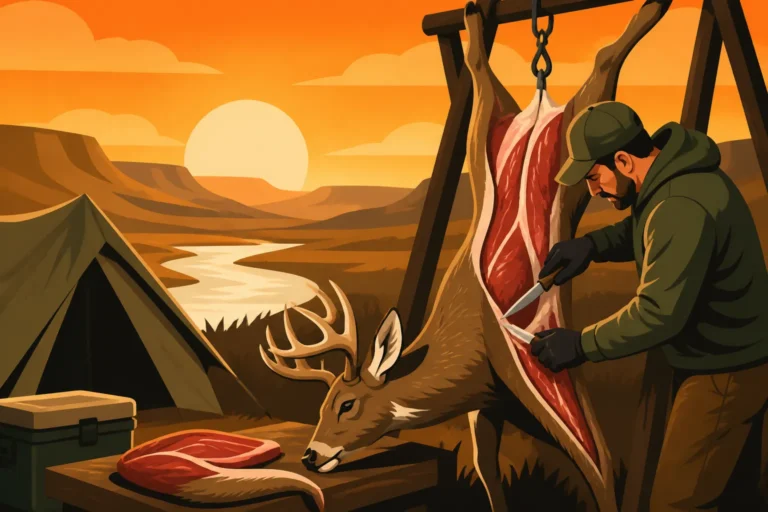
The moment your deer is down, time is of the essence, especially if temperatures are warm. Immediately field dress the animal to begin the cooling process. Remove the entrails carefully to avoid puncturing anything that could contaminate the meat. If you're hunting alone, consider bringing a game gambrel or a rope and pulley system to hang the deer for easier field dressing.
Once field dressed, the goal is to get the carcass cooled down as quickly as possible. In early season, this means packing the cavity with ice or getting the deer to a processor promptly. If you're in a remote area, quartering the animal in the field can make it easier to pack out and cool the meat faster. For mule deer in the Badlands, quartering and backpacking out is often the only viable option. During colder late-season hunts, cooling is less urgent, but you'll want to protect the meat from freezing solid before it can be processed. Transport the deer to your vehicle in a clean, covered manner, away from direct sun.
Tagging, Registration, and CWD Testing
North Dakota has clear requirements for tagging and reporting your harvest. Immediately after the kill, you must validate and attach your tag to the deer as specified by NDGFD regulations. This typically involves notching the date and time of kill and attaching it to the leg or antler. Failure to properly tag your deer can result in fines.
Within a certain timeframe (usually within 24-48 hours, but check current regulations), you are required to register your deer with the NDGFD. This can often be done online through their website or via a dedicated mobile app. This data is vital for wildlife management, helping the department track harvest numbers and population trends. For more detail on this, look up North Dakota Deer Reporting Requirements.
As mentioned earlier, if you harvested a deer in a CWD hunting unit, you may have mandatory testing requirements. This usually involves dropping off the head at a designated sampling station. Be sure to follow all instructions carefully, including how to properly label your sample. If you're a nonresident, understand the carcass transportation rules for CWD units; often, you can only transport the skull cap, boned-out meat, and hide out of a CWD zone. Planning ahead for these requirements, especially if you're far from home, is crucial.
Ethical Retrieval and Respect for the Game
After the shot, give the deer time. A gut-shot deer needs many hours, sometimes overnight, to expire. A heart/lung shot deer might run 50-100 yards and expire quickly. If you're unsure of the hit, wait at least 30-60 minutes before tracking, especially if it's a cold trail. Pushing a wounded deer too soon can cause it to run further, making retrieval more difficult.
Respect for the animal extends to its retrieval. Do your absolute best to recover every deer you shoot. Utilizing tracking dogs (where legal) or enlisting friends to help grid-search can be invaluable for finding a deer in thick cover or after dark. Leaving a wounded animal to suffer is every hunter's nightmare. North Dakota's landscapes can make tracking challenging, so be prepared with good flashlights, blood-trailing techniques, and the patience to follow a faint trail.
Disclaimer
Please note: Hunting regulations and seasons are subject to change. Always consult the most current North Dakota Game and Fish Department (NDGFD) hunting proclamation and regulations prior to your hunt. This guide is for informational purposes only and should not be considered legal advice. It is your responsibility to know and follow all applicable laws and regulations.