North Dakota Deer Population Estimate
For anyone who’s spent time hunting North Dakota, you know the conversations around deer numbers can swing wildly from year to year. One season, you’re seeing deer everywhere, making you optimistic about the herd's health. The next, after a brutal winter or a localized disease outbreak, you might be scratching your head, wondering where all the deer went. It’s a real frustration for hunters, trying to gauge the health of the herd and what that means for future hunting opportunities. This guide is dedicated to pulling back the curtain on how North Dakota’s deer population is estimated, the factors that cause these fluctuations, and what it all means for you, the hunter.
Understanding How North Dakota Estimates Its Deer Population
Getting an accurate count of deer across an entire state like North Dakota, with its vast and varied landscapes, is a monumental task. It’s not like counting cattle in a feedlot. Deer are wild, constantly moving, and masters of camouflage. The North Dakota Game and Fish Department (NDGFD) employs a multi-faceted approach, combining high-tech methods with boots-on-the-ground data to try and paint the clearest picture possible of our deer herds. This isn’t just a formality; these estimates directly influence how many licenses are issued and where, profoundly impacting every hunter's season.
The Science Behind Aerial Surveys and Data Collection
One of the most critical tools in the NDGFD's arsenal for deer population estimation is the aerial survey. Imagine flying low and slow over designated survey units in late winter, often after a fresh snowfall has blanketed the landscape. The white snow provides a contrasting backdrop, making deer much easier to spot from above. These surveys are typically conducted from helicopters or fixed-wing aircraft, with experienced observers counting deer in specific transects or predefined blocks. They look for both individual deer and groups, noting their location and often categorizing them if possible (e.g., buck, doe, fawn). This method gives wildlife biologists a snapshot of deer density in various areas. Of course, ideal conditions—sufficient snow cover, minimal wind, and good visibility—are crucial for these surveys to be effective, and sometimes Mother Nature doesn't cooperate, adding another layer of challenge to the process.
Interpreting Hunter Harvest Data and Mandatory Reporting
While aerial surveys provide a direct count, another invaluable piece of the puzzle comes from us, the hunters. North Dakota has mandatory deer reporting, which means every hunter who harvests a deer must report it to the NDGFD, either online or through their mobile app. This harvest data is gold. It tells biologists not just how many deer were taken, but also where, what sex they were, and sometimes even the age class through tooth analysis from check stations. When you combine this harvest data with the number of licenses issued, hunter success rates, and even the ratio of bucks to does taken, a clearer picture of the population emerges. For example, a sudden drop in hunter success in a unit might indicate a declining population, prompting biologists to reduce future license allocations. Tools like GoHunt can help hunters research historical harvest data and draw odds, providing insight into past season performance and what to expect from specific units. This allows hunters to make more informed decisions when applying for tags or planning their hunts.
The Inherent Challenges of Counting Wild Deer
Even with sophisticated aerial surveys and robust hunter reporting, accurately counting wild deer populations is incredibly challenging. Deer are not uniformly distributed; they congregate in certain habitats, especially during harsh winters, and their movements can be influenced by weather, food sources, and hunting pressure. The visibility during aerial surveys can be impacted by heavy timber, lack of snow, or adverse weather, leading to undercounts. Furthermore, deer are highly mobile. A count in one unit might not account for deer that move between units, especially along natural corridors like the Missouri River. Disease outbreaks can also decimate localized populations quickly and unexpectedly. These variables mean that population estimates are exactly that—estimates—and biologists are constantly refining their methods and cross-referencing data points to improve accuracy, always striving to understand the true health of White-Tailed Deer Across North Dakota and Mule Deer in North Dakota's Badlands.
A Look at North Dakota's Deer Population Trends Over Time
North Dakota's deer population is anything but static. It ebbs and flows, sometimes dramatically, influenced by a complex interplay of natural forces and human activity. As hunters, we feel these shifts acutely. One year, we might be lamenting the low tag numbers, only to see them rebound a few seasons later. Understanding these historical trends and the factors driving them is key to appreciating the resilience of our deer herds and the challenges wildlife managers face.
The Cyclical Impact of Harsh Winters
If there's one factor that truly dictates the boom and bust cycles of North Dakota's deer population, it's winter severity. A mild winter, with less snow and prolonged periods of above-freezing temperatures, means deer expend less energy, suffer less mortality, and fawns have a higher survival rate into spring. This leads to population growth. Conversely, a harsh winter—think deep, persistent snow that makes forage inaccessible for months, coupled with sustained sub-zero temperatures—can decimate a herd. Deer enter winter already stressed, and the relentless cold and hunger lead to significant mortality, especially among fawns and older animals. The winter of 2022-2023, for instance, had a noticeable impact on some areas, pushing local deer populations down and resulting in reduced tag allocations for the following season. This cyclical nature of winter weather means that even with good management, there will always be years where the deer numbers take a hit.
Habitat Loss and Agricultural Influence on Deer Numbers
Beyond winter weather, habitat is a critical component of deer survival and population health. North Dakota is a largely agricultural state, and as farming practices evolve, so too does the landscape available to deer. While certain crops can provide excellent late-season forage, the ongoing conversion of native grasslands, wetlands, and shelterbelts into agricultural production can fragment or eliminate crucial deer habitat. Shelterbelts and brushy draws are vital for cover, especially during harsh winters and fawning season. When these disappear, deer become more exposed to predators and the elements. However, agricultural fields, particularly standing corn or sunflower, can also offer significant cover and food, drawing deer in. The challenge for wildlife managers is to balance these agricultural realities with the need to maintain sufficient natural habitat to support a healthy deer population, ensuring areas like those described in Hunting a Shelterbelt Edge for Deer remain viable.
The Localized Threat of EHD and Other Diseases
While chronic diseases like Chronic Wasting Disease (CWD) are a long-term concern, acute diseases such as Epizootic Hemorrhagic Disease (EHD) can cause dramatic, localized deer die-offs in a very short period. EHD is a viral disease transmitted by biting midges, often peaking in late summer and early fall, particularly during drought conditions that concentrate deer near limited water sources where these midges breed. Deer infected with EHD typically develop a high fever, become lethargic, lose their appetite, and often seek water, which is why many EHD-related deaths occur near ponds or streams. The disease isn't always fatal, but it can be, especially for whitetails. While EHD typically doesn't wipe out an entire state's deer population, it can severely impact specific localized herds for a season or two. This adds another layer of unpredictability to North Dakota Deer Population Estimate, making it crucial for the NDGFD to monitor outbreaks and adjust management strategies accordingly.
Regional Differences in Deer Density Across North Dakota
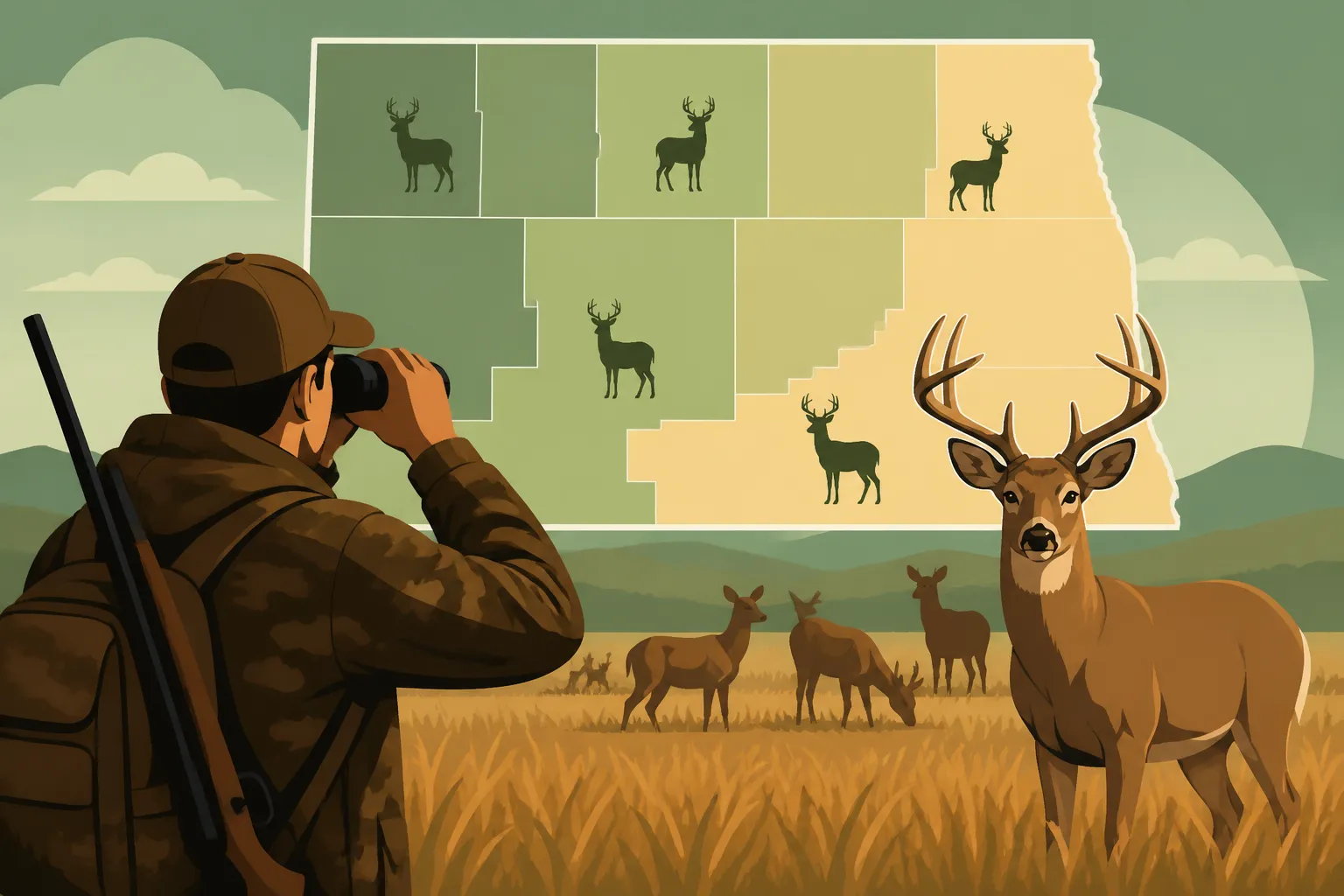
North Dakota is a state of diverse landscapes, from the rolling badlands of the west to the flat, fertile Red River Valley in the east, and this geographical variation profoundly impacts where deer thrive and what species you're likely to encounter. A hunter in southwestern North Dakota might be focused on mule deer in rugged coulees, while someone in the central part of the state is looking for whitetails along a river bottom. Understanding these regional distinctions is fundamental to predicting where deer densities will be highest and tailoring your hunting approach.
Whitetail Strongholds in the Prairie Pothole Region
The Prairie Pothole Region, covering much of central and eastern North Dakota, is truly a whitetail stronghold. This landscape is characterized by its abundant wetlands (potholes), interspersed with agricultural fields, grasslands, and riparian areas along rivers and creeks. Whitetails here flourish because of the patchwork of diverse habitats that provide both cover and ample food sources. They utilize shelterbelts, brushy draws, and river bottoms for bedding and escape cover, venturing into agricultural fields of corn, soybeans, or wheat for foraging, especially during the colder months. Counties in this region, like Stutsman, Barnes, and Ransom, consistently show higher whitetail densities due to this ideal mix of habitat. The interconnectedness of sloughs and tree lines also provides excellent travel corridors, making it a productive area for White-Tailed Deer Across North Dakota. When planning a hunt here, a hunter might use GoHunt to pinpoint parcels with a good mix of cover and feed, increasing their chances of success.
The Unique Dynamics of Badlands Mule Deer Herds
Head west to the rugged, broken terrain of the North Dakota Badlands, and the hunting dynamic shifts dramatically. This is the domain of the mule deer, an iconic species perfectly adapted to the steep coulees, buttes, and scattered juniper and ponderosa pine of this unique landscape. While whitetails also inhabit the river bottoms and more timbered draws of the Badlands, mule deer prefer the wide-open, broken country. Their population density here can be lower than whitetails in the eastern part of the state, but the opportunity to spot-and-stalk a big Badlands buck is a draw for many. The challenges in this region are different; finding water sources, understanding thermals in the undulating terrain, and covering vast distances are key. Historically, mule deer populations have fluctuated more acutely here due to severe winters and habitat changes, making the focus on Mule Deer in North Dakota's Badlands crucial for their long-term health. The Little Missouri National Grassland, covering large parts of the Badlands, provides extensive public hunting access for those willing to put in the effort.
High Concentrations Along the Missouri River Corridor
The Missouri River Corridor, stretching from the Montana border down through Lake Sakakawea and Lake Oahe, acts as a superhighway for deer and a magnet for high deer densities. The river bottomlands, with their mix of timber, brush, and agricultural fields, provide year-round ideal habitat, especially for whitetails. These areas offer thermal cover, abundant food, and crucial escape routes. This concentration of deer makes the corridor a popular hunting destination, but it also presents its own set of challenges. Higher hunter pressure is common, and unfortunately, this corridor has also been a focal point for the spread of Chronic Wasting Disease (CWD). The NDGFD closely monitors deer populations in this region, often implementing specific regulations, such as mandatory CWD testing in certain units, to manage both population health and disease spread. For hunters, knowing how to approach Hunting North Dakota's Missouri River Corridor often means adapting to these unique dynamics and regulations.
How Management Strategies Shape Deer Populations
The health and number of North Dakota's deer populations aren't left solely to the whims of nature. The North Dakota Game and Fish Department (NDGFD) actively manages deer through a range of strategies, from setting license quotas to monitoring disease, all aimed at ensuring sustainable hunting opportunities and robust deer herds for future generations. These management decisions are often complex, balancing biological data with social factors, and they directly impact every hunter's chances of drawing a tag.
License Allocations and Unit-Specific Quotas
The most direct way the NDGFD manages deer populations is through its annual license allocation process. Each year, based on aerial survey data, hunter harvest reports, winter severity assessments, and disease monitoring, biologists determine the number of deer licenses to issue for each of North Dakota's numerous hunting units. This often involves detailed analysis of North Dakota Deer Population Estimate and North Dakota Deer Harvest Records. If deer numbers are down in a particular unit due to a harsh winter or EHD outbreak, the NDGFD will likely reduce the number of licenses available, especially antlerless tags, to allow the population to recover. Conversely, in areas with robust populations or where there's a need to reduce deer numbers to mitigate agricultural damage, more antlerless licenses might be offered. This unit-specific approach, part of North Dakota's Lottery-Based Deer Gun Season, is designed to manage deer at a local level, reflecting the actual conditions on the ground rather than a one-size-fits-all state mandate. Hunters often use tools like GoHunt to analyze draw odds and historical license numbers for specific units, helping them strategize their applications for the best chance at success.
Addressing Chronic Wasting Disease in Key Zones
Chronic Wasting Disease (CWD) is a persistent and growing concern for deer managers across North Dakota, and it significantly influences how populations are managed in affected areas. CWD is a fatal neurological disease that affects deer, elk, and moose. Once an area is identified as having CWD, the NDGFD implements specific management strategies to slow its spread and monitor its prevalence. These can include mandatory CWD testing of harvested deer in designated North Dakota's Expanding CWD Hunting Units, restrictions on transporting deer carcasses out of these zones, and sometimes increased antlerless harvest opportunities to reduce overall deer density, which can help limit disease transmission. The goal is to keep prevalence rates low and prevent the disease from becoming established at high levels. This requires ongoing research and cooperation from hunters, who play a vital role in providing samples and adhering to regulations to protect the long-term health of the herd.
The Role of Hunter Participation and Ethical Harvest
Hunters are not just recipients of tags; they are crucial partners in deer management. Every reported harvest contributes valuable data that informs future license allocations. Adhering to bag limits, season dates, and unit-specific regulations ensures a responsible and ethical harvest. Furthermore, hunter education and responsible practices help maintain a positive public perception of hunting and wildlife management. The NDGFD relies on hunters to be its eyes and ears in the field, reporting unusual deer behavior or potential disease outbreaks. The collective actions of North Dakota's hunting community directly contribute to the sustainability of the deer population, proving that hunting is indeed a conservation tool. Understanding guidelines, such as those found in North Dakota Hunter Education Requirements, helps ensure everyone is contributing positively.
Conservation Efforts and the Future of Deer Hunting
Looking ahead, the future of deer hunting in North Dakota hinges on continued conservation efforts and the ability to adapt to new challenges. From preserving and enhancing critical habitats to leveraging scientific research and embracing evolving land use, a multifaceted approach is essential to ensure that healthy deer populations continue to thrive for generations to come. This ongoing commitment is what ensures we'll continue to have vibrant wildlife and robust hunting opportunities.
Habitat Improvement Through Programs Like PLOTS
Habitat is the foundation of any healthy wildlife population, and for deer in North Dakota, programs like Private Land Open To Sportsmen (PLOTS) are invaluable. The PLOTS program incentivizes private landowners to open their land to public hunting, often requiring them to maintain or enhance wildlife habitat in exchange for payments. This might involve planting food plots, establishing native grass cover, or protecting wetlands and riparian areas, all of which directly benefit deer by providing essential forage, cover, and fawning grounds. These efforts not only create more hunting access but also contribute significantly to the overall carrying capacity of the land, helping deer populations rebound after tough winters or other setbacks. Details on how to find and use these areas can be found in resources like The PLOTS Program Explained. Similarly, federal programs aimed at conserving grasslands and wetlands, like the Conservation Reserve Program (CRP), also provide vital habitat for deer and other wildlife.
Ongoing Research and Monitoring Initiatives
Science drives sound wildlife management. The NDGFD, often in collaboration with universities and federal agencies, continuously conducts research and monitoring initiatives to better understand North Dakota's deer populations. This includes studying fawn recruitment rates, deer survival in various habitat types, migration patterns, and the long-term impacts of diseases like CWD and EHD. Researchers might use GPS collars to track deer movements, analyze genetic samples, or conduct necropsies on deceased animals to determine causes of death. This ongoing scientific inquiry provides critical data that allows biologists to make informed decisions, adapt management strategies, and project future population trends. For instance, understanding North Dakota Buck Age Structure can help managers set appropriate harvest goals to ensure a healthy age distribution in the herd.
Adapting to a Changing Landscape
North Dakota's landscape is constantly evolving, influenced by climate shifts, changing agricultural practices, and urban expansion. Effective deer conservation requires a flexible and adaptive approach from wildlife managers. This means being prepared for more frequent extreme weather events, understanding how changes in crop types or land conversion affect deer movements and survival, and finding innovative ways to ensure deer have access to necessary resources. It also means engaging with landowners, policymakers, and hunters to foster a shared understanding of the challenges and collaborative solutions. Ultimately, the future of North Dakota Deer Population Estimate and deer hunting will depend on our collective ability to be proactive, informed, and committed to stewardship of this invaluable natural resource.
| Deer Population Factor | Impact on Deer Numbers | Management Response (Example) | Key Regions Affected |
|---|---|---|---|
| Harsh Winter | Significant mortality, especially fawns & old deer | Reduce antlerless tags in affected units | Statewide, but worst in open prairie |
| Mild Winter | High survival, increased fawn recruitment | Maintain or increase antlerless tags | Statewide |
| EHD Outbreak | Acute localized die-offs | Close monitoring, no immediate license changes unless severe | Localized areas, often near water sources |
| Habitat Loss | Reduced carrying capacity, increased stress | Promote PLOTS enrollment, habitat restoration | Agricultural areas |
| CWD Presence | Long-term population health threat | Mandatory testing, carcass movement restrictions | North Dakota's Fourteen-Unit CWD Zone |
| Increased Hunter Numbers | Can lead to overharvest if unchecked | Adjust license quotas to maintain balance | Popular public land units |
| Habitat Improvement | Increased carrying capacity, better survival | Expand PLOTS, collaborate with landowners | All regions with enrolled lands |
Disclaimer
Please note that hunting regulations, license availability, and deer population estimates can change frequently. This guide provides general information based on current understanding. Always consult the official North Dakota Game and Fish Department (NDGFD) regulations and website for the most accurate and up-to-date information before planning any hunting activity.