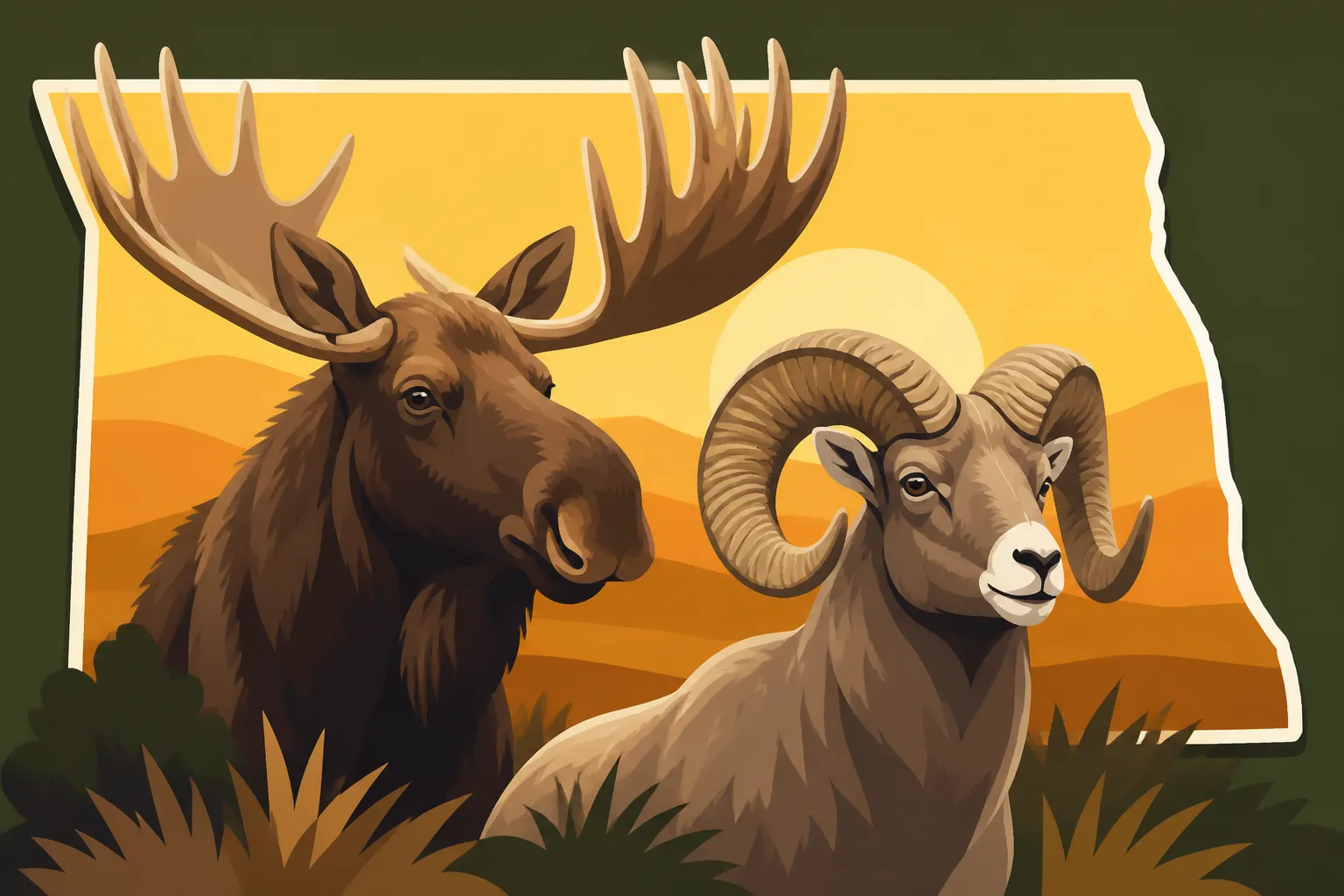
Moose and Bighorn Sheep in North Dakota
Hunting for North Dakota's big game offers a unique blend of challenge and reward, but for most, the pursuit of moose and bighorn sheep remains a distant dream. The sheer rarity of drawing one of these coveted tags, combined with the often-rugged terrain and the elusive nature of these magnificent animals, can feel almost insurmountable. This comprehensive guide will pull back the curtain on what it truly takes to chase North Dakota's most exclusive big game, from understanding their populations to the rigorous preparation required for a once-in-a-lifetime hunt.
The Allure of North Dakota's Rarest Big Game
There’s a special kind of magic that surrounds moose and bighorn sheep in North Dakota. Unlike the more common deer or even the challenging antelope, these two species represent the pinnacle of big game hunting in the state, largely because of their scarcity and the incredible difficulty of drawing a tag. For many hunters, just applying year after year becomes a tradition, a hopeful gesture toward a dream that might only come true once in a lifetime – if at all. It’s not just about the trophy; it’s about the profound experience of pursuing an animal that few others ever get the chance to chase in this unexpected landscape.
Why These Tags Are So Highly Coveted
The allure isn't just in the size or majesty of the animals themselves, but in the exclusivity. North Dakota only issues a handful of moose and bighorn sheep tags each year, making the odds of drawing one incredibly slim. We're talking about numbers so low that many hunters will spend their entire lives applying without ever seeing their name on the permit list. This scarcity naturally elevates their status, transforming a mere hunting license into a lottery-winning ticket for an unparalleled adventure. It creates a sense of profound appreciation for those fortunate enough to draw, knowing they're part of a very select club.
The dream of a North Dakota's Once-in-a-Lifetime Big Game Licenses is a powerful motivator, driving hunters to meticulously submit their applications, often for decades. It's a testament to the dedication of North Dakota's hunting community, where patience and persistence are as much a part of the hunt as the skills applied in the field. This commitment to the draw process highlights the deep respect and passion hunters have for these truly special animals and the rare opportunity to pursue them.
The Resident-Only Privilege
One significant aspect that adds to the unique status of moose and bighorn sheep hunting in North Dakota is that these hunts are exclusively for residents. This is a topic that often sparks debate and a bit of heartache for nonresident hunters who dream of a North Dakota hunt. But the decision to keep these tags resident-only is rooted in management philosophy, aiming to provide unique opportunities for the state's own citizens while helping to manage very small, often fragile, populations.
This resident-only rule means that the competition, while still fierce, is contained within the state's population. It’s part of a broader strategy that also extends to elk and pronghorn, reflecting the state's dedication to its local hunting heritage. Understanding Why Elk, Moose and Pronghorn Stay Resident-Only helps clarify the North Dakota Game and Fish Department's approach to managing these prized big game species, ensuring that opportunities remain for those who call North Dakota home.
Understanding North Dakota's Moose Population
When most people picture moose, they might think of the vast wilderness of Alaska or the deep forests of Maine. North Dakota, with its wide-open prairies, often isn't the first place that comes to mind. Yet, we have a thriving, albeit geographically specific, moose population that offers truly unique hunting experiences. It's a testament to the adaptability of these incredible animals and the diverse habitats North Dakota actually holds.
Historical Presence and Current Numbers
Moose were once more widespread across North Dakota, particularly in forested river bottoms. However, habitat loss and unregulated hunting led to their disappearance from much of the state by the early 20th century. Thankfully, with improved land management and natural re-colonization from neighboring states and provinces, moose began to re-establish themselves, primarily in the northern and eastern parts of the state. Today, the population is stable, though closely monitored, and offers limited hunting opportunities.
The North Dakota Game and Fish Department (NDGFD) carefully tracks these populations, conducting aerial surveys and relying on hunter observations to estimate How Many Moose Live in North Dakota. These numbers are crucial for setting harvest quotas and ensuring the long-term health of the herd. While not as numerous as deer, our moose population provides a rare opportunity to pursue one of North America's largest big game animals right here in the Peace Garden State.
Primary Ranges and Habitat Preferences
North Dakota's moose populations are not evenly distributed across the state. They tend to concentrate in areas with specific habitat characteristics that offer both food and cover. The most prominent moose ranges include the Pembina Hills in the northeast, the Turtle Mountains along the Canadian border, and the timbered river bottoms of the Red River, Souris River, and other drainages. These areas provide the dense willow thickets, aspen stands, and wetlands that moose favor.
For those fortunate enough to draw a tag, understanding Where North Dakota Moose Concentrate is paramount for successful scouting and hunting. These habitats, characterized by thick cover and often wet, swampy ground, are a stark contrast to the open prairies many associate with North Dakota. They require hunters to be prepared for challenging conditions, navigating dense vegetation and often encountering standing water, making for a truly immersive and physically demanding experience.
Challenges to the Moose Herd
Even with successful re-establishment, North Dakota's moose herd faces several challenges. One of the most significant concerns is the impact of winter ticks. These parasites can heavily infest moose, especially calves, leading to hair loss, anemia, and even death, particularly during harsh winters. The NDGFD actively monitors tick loads and their effect on the population, as warmer winters can sometimes exacerbate the issue.
Another challenge is habitat fragmentation and disease. While many areas offer suitable moose habitat, human development and agricultural expansion can limit connectivity between suitable blocks, making dispersal difficult. Additionally, diseases like chronic wasting disease (CWD), while not yet a major issue for moose in North Dakota, remain a concern for all cervid populations and are closely monitored. These ongoing challenges underscore the importance of careful management and the precious nature of our moose resource.
Hunting North Dakota Moose: The Lottery and the Legend
Drawing a North Dakota moose tag is, for many, the ultimate hunting dream, a testament to years of patience and a sprinkle of luck. The hunt itself is a unique blend of physical challenge and strategic pursuit in some of the state's most overlooked, yet beautiful, landscapes. It's an experience that truly epitomizes the "once-in-a-lifetime" opportunity.
The Rigors of the Lottery Application Process
Securing a moose tag in North Dakota is entirely dependent on a lottery system, and the odds are notoriously long. This is why many hunters apply for decades, often without success. The North Dakota Moose Lottery Application Process typically involves applying through the state's Game and Fish Department portal, usually in the spring. There are various unit options, each with its own allocation of antlered or antlerless tags, further complicating the decision-making process.
What makes the North Dakota system particularly frustrating for some, yet fair in its own right, is the lack of a traditional preference point system for moose. While some other states allow applicants to accumulate points over years to increase their odds, North Dakota's moose lottery is largely a true random draw each year. This means that a first-time applicant theoretically has the same chance as someone who has applied for twenty years, leading to both hopeful anticipation and sometimes bitter disappointment. It underscores the pure luck involved in becoming one of the fortunate few.
Tag Numbers and Success Rates
The number of moose tags issued annually is incredibly low, reflecting the state's conservative management approach for a relatively small population. In a given year, only a few hundred tags, if that, are typically available statewide, divided among antlered, antlerless, and calf permits across the designated hunting units. This scarcity directly contributes to the incredibly challenging draw odds.
For those who do draw, the success rates for harvesting a moose are surprisingly high, often exceeding 70-80%. This isn't because moose are easy to hunt, but rather because the individuals who draw these tags are typically seasoned hunters who invest significant time and effort into pre-season scouting and dedicated hunting once the season opens. North Dakota Moose Hunt Success Rates are a testament to the commitment of these hunters, who understand the immense value of their tag and prepare accordingly for what will likely be their only shot at a North Dakota moose.
Typical Hunting Methods and Season Dates
Moose hunting in North Dakota typically takes place in dense, brushy habitats, making classic spot-and-stalk tactics difficult in many areas. Instead, still-hunting through thick cover, slowly working creek bottoms, and utilizing calling strategies are common. Hunters often target the peak of the rut in October, using cow calls and bull grunts to entice a bull. Another effective method is to find fresh sign, like rubs and tracks, and patiently wait or slowly track through known moose areas.
The season dates for moose vary slightly by unit and year but generally run from early October through late November, sometimes extending into early December for specific units. This timeframe allows hunters to capitalize on the rut and later, when colder temperatures might push moose to more predictable feeding areas. While the thick cover can be challenging, it also provides an incredible sense of immersion, making each rustle of leaves or snap of a twig electrifying as you attempt to Glassing for Moose in River Bottom Willows or patiently try Picking Out a Bedded Moose in Willow Cover.
North Dakota's Majestic Bighorn Sheep Herd
Like moose, North Dakota's bighorn sheep are another unexpected gem in the state's big game crown. These majestic animals are a symbol of the rugged Badlands, their iconic curled horns and agility on steep slopes making them a truly breathtaking sight. Their presence is a testament to dedicated conservation efforts that brought them back from the brink of extirpation.
The History of Bighorn Reintroduction
Bighorn sheep were native to North Dakota's Badlands but were wiped out by the early 20th century due to overhunting and disease. The effort to reintroduce them began in 1956 when 18 California bighorns were brought from British Columbia and released into the Magpie Creek area of the Badlands. This initial transplant was successful, and over the decades, further reintroductions and careful management have allowed the herd to grow, albeit slowly and with significant challenges.
The North Dakota's Small Bighorn Sheep Herd is a fragile one, constantly monitored for health and population trends. Each animal is incredibly valuable to the overall health and genetic diversity of the herd. This deep history of reintroduction underscores the profound responsibility hunters have when pursuing these animals, recognizing their role in conservation and careful stewardship.
Current Population Numbers and Specific Range
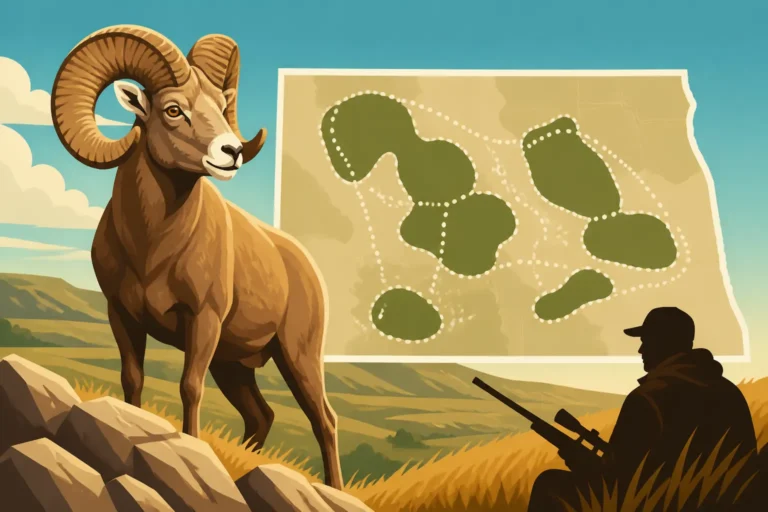
North Dakota's bighorn sheep population hovers around 300 animals, a testament to the challenges of managing such a specialized species. These numbers fluctuate based on winter severity, disease outbreaks, and lamb survival rates. The primary range for bighorn sheep is exclusively within the rugged, broken terrain of the Badlands, particularly in the units south of the Little Missouri River. They thrive in the steep, rocky coulees and rimrock country that offer both escape terrain from predators and access to various forage.
For any hunter dreaming of a bighorn tag, understanding Where North Dakota's Bighorn Herd Ranges is fundamental. This specific habitat, characterized by its dramatic geological formations, offers stunning scenery but also presents an incredibly physically demanding hunting environment. It’s a landscape that requires both patience and agility, where a keen eye and strong legs are just as important as marksmanship.
Challenges to the Bighorn Herd
The North Dakota bighorn sheep herd, despite successful reintroduction, faces persistent challenges that keep its numbers relatively low. Disease, particularly pneumonia spread from domestic sheep, is a constant threat and has historically caused significant die-offs. The NDGFD works tirelessly to manage disease risks, including maintaining buffer zones between wild and domestic sheep.
Habitat limitations and severe winters also play a role. While the Badlands offer suitable escape terrain, the availability of quality forage and water can be restrictive. Hard winters can impact lamb survival and overall herd health. These challenges mean that every bighorn sheep in the Badlands is a precious resource, and their management is a delicate balance of science, conservation, and careful monitoring.
Bighorn Sheep Hunting: A Once-in-a-Lifetime Dream
For the truly dedicated, a North Dakota bighorn sheep tag represents the pinnacle of hunting achievement, a once-in-a-lifetime opportunity that few hunters ever realize. The hunt itself is as demanding as the terrain these animals inhabit, requiring exceptional physical fitness, keen glassing skills, and mental fortitude.
The Ultra-Exclusive Lottery Application Process
If moose tags are hard to draw, bighorn sheep tags are virtually impossible for most. North Dakota issues only a handful of bighorn tags each year—sometimes as few as four or five, and sometimes none at all for public draw, depending on population status and management goals. The North Dakota Bighorn Sheep Lottery Application Process follows a similar timeline to other big game, typically opening in spring, but the sheer scarcity of tags makes the odds astronomical.
Like moose, there's no preference point system for bighorns, meaning pure luck is the deciding factor. This brutal reality means a hunter could apply for 50 years and still never draw. Yet, the dream persists, fueled by the sheer majesty of the animal and the unparalleled adventure it promises. The application fee, while minimal, represents a hopeful investment in a dream that might never materialize, but for many, it’s a small price to pay for the chance.
Tag Numbers and Hunt Success Rates
The number of bighorn sheep tags issued by the North Dakota Game and Fish Department is incredibly low, usually in the single digits, and often reserved for specific units within the Badlands. This means that year after year, only a very select few hunters will get the opportunity to pursue a North Dakota bighorn. This extreme exclusivity is what truly defines this hunt.
For those who are lucky enough to draw, the hunt success rates are remarkably high, often approaching 100%. This high success rate isn't due to easy hunting; rather, it’s a reflection of the intense preparation, financial investment (many hire guides despite the tag being self-guided), and sheer dedication of the tag holders. These hunters often spend weeks, if not months, Physical Prep for Badlands Elk Terrain which is very applicable to sheep, scouting and preparing for their once-in-a-lifetime hunt, leaving no stone unturned in their pursuit of a bighorn ram.
Glassing and Stalking in Rugged Badlands Terrain
Bighorn sheep hunting in North Dakota's Badlands is primarily a glassing and stalking game. The open nature of the terrain, combined with the sheep's preference for steep, exposed slopes, makes long-range optics absolutely essential. Hunters spend countless hours behind binoculars and spotting scopes, systematically picking apart the vast, broken landscape for the tell-tale white patch of a bighorn's rump or the distinctive curl of a ram's horn.
Once a ram is spotted, the real challenge begins: a strategic, often grueling stalk across incredibly rugged and unforgiving terrain. This might involve navigating deep coulees, scaling steep buttes, and carefully using every piece of cover to close the distance. Wind direction, thermals, and the sheep's keen eyesight are all factors that must be meticulously considered. This isn't a hunt for the faint of heart or the out of shape; it demands peak physical condition and an unwavering resolve.
Preparing for a North Dakota Moose or Bighorn Hunt
Drawing a moose or bighorn tag in North Dakota is just the beginning of a truly monumental undertaking. Unlike a quick pheasant hunt or a local deer excursion, these once-in-a-lifetime opportunities demand rigorous preparation. Without it, even the luckiest draw could lead to a less-than-fulfilling experience. This isn't just about showing up; it's about optimizing every factor to maximize your chances of success and ensure a safe, memorable hunt.
Physical Conditioning and Mental Fortitude
Let's be real: North Dakota, while often flat, can throw some incredibly challenging terrain at you, especially in the moose and bighorn country. For a bighorn hunt in the Badlands, you’ll be doing serious vertical climbs and descents, often off-trail, carrying heavy optics and gear. Moose hunting in the dense timber and swamps of the Turtle Mountains or Pembina Hills will test your endurance as you push through thick brush and navigate wet, uneven ground.
This means physical conditioning is non-negotiable. Start months in advance. Hiking with a loaded pack, incorporating strength training for your legs and core, and focusing on cardiovascular fitness will pay dividends. Beyond the physical, mental fortitude is key. These hunts can be long, grueling, and require patience. The ability to stay positive, focused, and persistent through tough conditions—whether it’s pouring rain, bitter cold, or endless days without seeing your target—is just as crucial as your physical readiness. Think about it like Packing for an Eight-Day North Dakota Elk Hunt; the principles of preparation are very similar, demanding a robust physical and mental state.
Essential Gear and Optics
Your gear needs to be top-notch for these hunts. For optics, invest in the best binoculars and spotting scope you can afford. For bighorns, a 10×42 or 12×50 binocular paired with a 60-80mm spotting scope is standard, allowing you to pick apart distant hillsides. For moose, good binoculars (8x or 10x) are excellent for dissecting dense cover. A reliable rangefinder is also critical for ethical shots.
Clothing should be layered, scent-controlled, and appropriate for extreme weather fluctuations. Quality hiking boots, broken in well before the hunt, are paramount for comfort and safety in rough terrain. A sturdy pack capable of carrying emergency supplies, water, food, and then quartered game, is another must-have. Don't forget a first-aid kit, navigation tools (GPS and physical map/compass), headlamp, and game bags. Brands like Kuiu, Sitka, and First Lite are popular for their durable, performance-oriented hunting apparel, and a platform like GoHunt can help you research gear lists specific to these challenging hunts.
Pre-Season Scouting and Digital Tools
Pre-season scouting is absolutely vital for both moose and bighorn hunts. For bighorns, this often involves multiple trips to the Badlands to physically glass and learn the terrain, identifying potential sheep hangouts, water sources, and escape routes. For moose, it might mean walking river bottoms, looking for fresh sign, and identifying dense cover areas. This groundwork is invaluable for understanding animal movements and preferred habitats before the season even opens.
Digital tools have revolutionized this process. Applications like GoHunt's mapping system, OnX Hunt, or BaseMap allow you to study satellite imagery, identify public land boundaries, mark potential bedding and feeding areas, and plan your approach routes without ever stepping foot in the field initially. You can use these to understand contour lines, vegetation density, and access points. Combining this digital scouting with real-world boots-on-the-ground reconnaissance is the most effective strategy for gaining a crucial advantage.
Conservation Efforts and Future Outlook for These Species
The presence of moose and bighorn sheep in North Dakota is not an accident; it's the direct result of deliberate and ongoing conservation efforts. These species represent both a success story and a continuous challenge for wildlife managers, who work tirelessly to ensure their survival and provide limited, sustainable hunting opportunities. Understanding these efforts sheds light on the true value of these magnificent animals and the hunting heritage they support.
The Role of the North Dakota Game and Fish Department
The North Dakota Game and Fish Department (NDGFD) plays a pivotal role in managing both moose and bighorn sheep populations. Their responsibilities include conducting aerial surveys to estimate populations, monitoring health and disease (especially CWD in cervids and pneumonia in bighorns), conducting research into habitat use and genetics, and setting conservative hunting quotas. The NDGFD also manages specific habitat enhancement projects aimed at improving conditions for these species.
Their work is funded primarily through hunting and fishing license sales, illustrating the direct link between hunters and conservation. Every license fee contributes to the scientific management and protection of North Dakota's wildlife, allowing the NDGFD to make informed decisions that balance conservation needs with limited public recreation. This careful stewardship ensures that future generations may also have the opportunity to marvel at, and perhaps even pursue, these rare species.
Habitat Management and Disease Monitoring
Habitat is king for any wildlife species, and for moose and bighorn sheep, specific habitat needs dictate where they can thrive. For moose, this means preserving and enhancing riparian zones, dense willow thickets, and aspen stands that provide both food and cover. For bighorns, it’s about maintaining the rugged Badlands terrain and ensuring access to diverse forage on those steep slopes, while also preventing encroachment that might compromise their habitat.
Disease monitoring is a constant, critical task. As mentioned, winter ticks are a concern for moose, and pneumonia from domestic sheep is a perennial threat to bighorns. The NDGFD implements strict protocols for monitoring herd health, testing harvested animals, and responding to disease outbreaks to minimize impact. This proactive approach is essential for preventing catastrophic population declines and underscores the fragility of these small herds.
Funding Conservation Through Hunting
It's a common misconception that hunting depletes wildlife. In reality, hunters are the primary funders of wildlife conservation in North America. The revenue generated from the purchase of hunting licenses, stamps, and permits—including the fees paid by those applying for moose and bighorn tags—directly supports the salaries of wildlife biologists, game wardens, and habitat managers. This funding also goes towards land acquisition, habitat restoration projects, and crucial research that benefits not just game species but all wildlife.
This system, often called the "user pays, beneficiary benefits" model, is a cornerstone of wildlife management. Without the financial contributions of hunters, many of the conservation programs that protect and sustain North Dakota's moose and bighorn sheep—and countless other species—simply wouldn't exist. It's a powerful reminder that every application, even if unsuccessful, plays a part in securing the future of these iconic animals.
Essential Gear and Tactics for Success
When you finally draw that elusive North Dakota moose or bighorn tag, the magnitude of the opportunity hits. This isn't just any hunt; it's potentially your one shot. Maximizing your chances means more than just a good shot; it requires meticulous planning, the right gear, and a deep understanding of hunting tactics tailored to these unique animals and their environments.
Optics: Your Most Important Tool
For both moose and bighorn sheep, high-quality optics are arguably your most important piece of gear. For bighorns, you’ll spend 90% of your hunt behind glass, systematically scanning the vast, broken landscape of the Badlands. A powerful spotting scope (60-80mm objective, 20-60x magnification) is crucial for identifying rams at extreme distances and judging their trophy quality. Pair this with a high-end pair of binoculars (10x or 12x) on a sturdy tripod for extended glassing. The tripod is non-negotiable for stability and reducing fatigue during hours of scanning.
For moose, while less about long-range glassing, good binoculars (8x or 10x) are essential for picking apart dense cover in the river bottoms or Turtle Mountains. Being able to discern a moose antler from a dead tree limb, or a moose's hide from shadows in thick brush, is critical. Investing in top-tier glass from brands like Zeiss, Swarovski, or Vortex will pay dividends in clarity, light gathering, and durability in challenging North Dakota conditions.
Weapon Choice and Ballistics
The choice of weapon depends on your preference (rifle or archery) and the specific regulations for your tag. For rifles, ethical hunting demands a caliber capable of delivering sufficient energy at various ranges. For moose, larger calibers like .30-06, .300 Win Mag, .338 Win Mag, or 9.3×62 are popular choices, providing ample stopping power for a large animal. For bighorns, while they are not as large as moose, shots can be long, often in windy conditions and at steep angles. Calibers like .270 Win, 7mm Rem Mag, .300 Win Mag, or 6.5 PRC are excellent options, known for their flat trajectory and energy retention. Always practice extensively with your chosen rifle, especially at extended ranges and from field positions.
Archery hunters for moose will need a powerful bow with a heavy arrow setup to ensure deep penetration. For bighorns, the challenge of getting within bow range in open, rugged country is immense, making it one of the toughest archery hunts possible. Regardless of weapon, understanding trajectory, wind drift, and shooting dynamics is critical for a clean, ethical harvest.
Field Dressing and Packing Out
Harvesting a moose or bighorn is only half the battle; getting the animal out of the field is often the most physically demanding part of the hunt. Moose are massive animals, weighing upwards of 1,000 pounds, and must be quartered in the field. This requires strong game bags, a sharp knife, a saw, and a plan for packing out hundreds of pounds of meat over difficult terrain. You’ll likely need a team of strong individuals, or multiple trips, and possibly a cart or pack frame, even with an ATV access in some areas.
Bighorn sheep, while smaller, often fall in extremely steep, remote, and treacherous locations. Getting to them, field dressing, and then packing out an entire sheep (often required for full skull cap and cape for taxidermy) requires careful negotiation of dangerous terrain. This is where your physical conditioning truly pays off. Planning for Recovering a Deer From a Coulee is a good practice run, but be prepared for a significantly more arduous task with a bighorn in similar, if not worse, locations. Don't underestimate the effort involved, and always prioritize safety over speed.
Comparing North Dakota Moose and Bighorn Hunting
To truly understand the unique aspects of hunting moose and bighorn sheep in North Dakota, it's helpful to look at them side-by-side. While both are once-in-a-lifetime resident-only opportunities, their populations, habitats, and the challenges they present are quite distinct.
| Feature | North Dakota Moose Hunting | North Dakota Bighorn Sheep Hunting |
|---|---|---|
| Population Size | Stable, estimated a few hundred to ~1,000+ | Small, ~300 animals, highly sensitive to disease |
| Draw Odds | Extremely low (e.g., <5%), no preference points | Astronomically low (e.g., <1%), no preference points |
| Primary Habitat | Pembina Hills, Turtle Mountains, river bottomlands | Badlands: rugged, steep, rocky coulees and rimrock |
| Physical Demand | High: Navigating dense brush, swamps, uneven ground, packing out very heavy animal | Very High: Steep climbs, descents, rugged terrain, often at altitude, packing out over treacherous ground |
| Hunting Style | Still-hunting, calling, tracking in thick cover | Primarily long-range glassing and strategic spot-and-stalk |
| Typical Harvest | Large antlered bull (antlerless tags also issued) | Mature ram (identifying horn curl and age is critical) |
| Success Rates | High for drawn tags (70-80%+) due to hunter dedication | Very high for drawn tags (often 100%) due to extreme preparation |
| Challenges | Winter ticks, habitat fragmentation, dense cover | Pneumonia, limited habitat, extreme terrain, low numbers |
Disclaimer
Please note: Hunting regulations, season dates, and license requirements can change frequently. Always consult the official North Dakota Game and Fish Department website or their most current regulations guide before planning any hunt. This article provides general information and should not be used as a substitute for official sources.