Hunting the North Dakota Badlands
The North Dakota Badlands—just the name conjures images of rugged, unforgiving terrain. For many hunters, this vast expanse can feel utterly overwhelming. You see those incredible landscapes on postcards and in hunting videos, but when you're standing at a trailhead, staring out at an endless sea of buttes, coulees, and draws, the question quickly becomes: Where do I even begin? This guide is designed to cut through that intimidation, offering practical, in-depth strategies for anyone looking to unlock the incredible hunting opportunities hidden within North Dakota's iconic Badlands. We’ll cover everything from deciphering the unique landscape to targeting its prized game, ensuring you can approach your next Badlands hunt with confidence and a clear plan.
Understanding the Unique Badlands Ecosystem
Hunting the North Dakota Badlands isn't just about finding game; it's about understanding and respecting an ecosystem unlike almost any other. This is a landscape sculpted by time and elemental forces, and its unique characteristics dictate everything from where animals live to how you'll move through it. Without a grasp of these fundamentals, you’ll be constantly battling the terrain rather than using it to your advantage.
Geology and Topography: What Makes the Badlands "Bad"?
The name "Badlands" itself is a translation from the Lakota phrase makhóšiča, meaning "bad lands," a descriptor early travelers and trappers surely echoed. This isn't flat prairie. This is a land of dramatic erosion, where soft sedimentary rock has been carved by wind and water into an intricate maze of buttes, steep ravines, and countless coulees. Every turn presents a new, often challenging, topographical feature.
Imagine standing on a scoria-capped ridge, overlooking a mosaic of deep draws that twist and turn for miles. These draws can be incredibly steep-sided, making direct travel a lung-burning, calf-straining ordeal. You might spot a promising-looking basin a mile away, but getting there could involve dropping into a 300-foot coulee, only to climb another equally steep face. What looks like a short distance on a map can easily become a multi-hour trek. The ground itself varies wildly, from gumbo mud after a rain, which can cling to your boots like concrete, to loose shale that crumbles underfoot, making descents tricky. Understanding this helps you plan routes, assess your physical limits, and most importantly, anticipate where game will seek refuge from the elements and predators. This isn't a place for casual strolls; it demands careful route planning and respect for its formidable character.
Vegetation and Habitat Pockets
Despite its seemingly harsh appearance, the Badlands are surprisingly rich in diverse vegetation, creating crucial habitat pockets that game animals rely on. You'll find a mosaic of plant life that directly influences where you'll find deer, elk, and other species.
The upper plateaus and gentler slopes are often covered in mixed-grass prairie, interspersed with patches of sagebrush, which mule deer particularly favor for both browse and cover. As you descend into the coulees and draws, the vegetation changes. North-facing slopes often hold dense stands of juniper and scattered ponderosa pine, providing critical thermal cover in winter and shade in summer. These dense pockets are prime bedding areas for mule deer, offering concealment and protection from the wind. In the deeper drainage bottoms, especially those with more consistent moisture, you'll find cottonwoods and other deciduous trees, creating vital riparian corridors. These wooded areas are often preferred by whitetail deer, and they can also be funnel points for all game moving between plateaus. You might hike for hours through open sage only to drop into a hidden draw that's a lush, green oasis with a tiny seep or spring, holding fresh tracks. Recognizing these transitions and understanding what kind of cover and food each provides is key to patterning animals in this complex environment. It’s like a giant puzzle, and each type of vegetation is a piece that tells you something about where to look next.
Climate Challenges and Weather Variability
The Badlands are a land of extremes when it comes to weather. What starts as a mild, pleasant morning can quickly turn into a raging blizzard in late fall, or a scorching afternoon can give way to a violent thunderstorm. Being prepared for rapid, drastic changes is not just advisable, it's essential for safety and success.
Summers can see temperatures soar well into the 90s or even triple digits, making early morning and late evening hunts the only realistic options, especially if you're chasing coyotes or prairie dogs. Dehydration is a very real threat, and carrying ample water is non-negotiable. Conversely, fall hunting, which is prime time for deer, can present a wild swing. You might start a November morning with temperatures below freezing, then shed layers as the sun climbs, only to have a sudden cold front sweep in, dropping temperatures by 30 degrees in an hour and bringing heavy snow. Getting caught unprepared for these shifts can be dangerous, turning a hunt into a survival situation. I’ve seen hunters caught off guard by unexpected blizzards that made navigation nearly impossible and turned simple walks into brutal slogs. Always pack layers, quality rain gear, and a solid emergency kit, no matter how clear the forecast seems when you leave camp. The Badlands have a way of reminding you who's really in charge.
Target Species in the North Dakota Badlands
The Badlands of North Dakota offer a truly unique hunting experience, primarily known for its remarkable mule deer, but also home to other highly sought-after species that thrive in this rugged environment. Understanding the habits and preferred habitats of each species is crucial for tailoring your strategy and increasing your odds of success.
Mule Deer: The Icon of the Badlands
When most people think of hunting the North Dakota Badlands, they picture a big mule deer buck silhouetted against a dramatic sunset. And for good reason – this is prime mule deer country, home to some truly impressive animals. Mule deer are perfectly adapted to this broken terrain, using the coulees and draws for cover and the diverse vegetation for food.
They are primarily browsers, and you’ll often find them munching on sagebrush, juniper, and various forbs. Unlike whitetails, mule deer tend to be more open-country animals, preferring to bed on north-facing slopes in pockets of juniper or pines, or even on open benches where they can survey their surroundings. Their large ears, characteristic bounding gait (the "muley jump"), and their tendency to not sneak off like a whitetail, but rather to hold tight or just run a short distance and stop to look back, are all adaptations to this open, broken terrain. The key to hunting mule deer here is often patience and powerful optics. You'll spend hours glassing vast expanses, systematically picking apart every shadow and juniper bush on a distant hillside, searching for an antler tip or the flicker of an ear. When you do spot them, a successful stalk involves using the intricate topography – the folds and dips of the land – to close the distance undetected. If you want to dive deeper into pursuing these majestic animals, check out Mule Deer in North Dakota's Badlands. For tips on where they like to lay up, Where Badlands Bucks Bed offers great insights, and if you’re looking for practical hunting methods, Hunting a Badlands Draw for Mule Deer is a valuable resource.
Whitetail Deer: Adaptable River Bottom Dwellers
While mule deer are the poster child, whitetail deer are also present in the Badlands, though typically in different types of habitat. They are the more adaptable of the two species and tend to congregate in the thicker, more riparian areas, especially along the Little Missouri River and its major tributaries.
You’ll find whitetails in the denser timber pockets, cottonwood bottoms, and brushy drainages that offer more concealment than the open sage flats preferred by mule deer. Their behavior also differs significantly. Whitetails are notorious for their evasiveness, often sneaking through thick cover when spooked, using every available bush and tree to disappear without a trace. This means different hunting tactics are required. Instead of expansive glassing, you might focus more on still-hunting through thickets, checking scrape lines along creek beds, or setting up ambush points at pinch points where dense cover funnels movement. In areas where both species coexist, it’s not uncommon to jump a whitetail out of a small, brushy coulee while you’re primarily looking for a mule deer on the open slopes above. Understanding these habitat preferences is vital; if you’re primarily after a whitetail, you’ll want to concentrate your efforts near water and denser cover. For a broader understanding of this species, consider White-Tailed Deer Across North Dakota.
Elk: A Rare and Coveted Prize
Elk hunting in the North Dakota Badlands is truly a once-in-a-lifetime opportunity for residents, making it one of the most coveted tags in the state. The Badlands elk herd, while relatively small compared to other Western states, is a testament to successful reintroduction efforts and a true big-game spectacle.
These majestic animals inhabit the most remote and rugged areas of the Little Missouri National Grassland, often preferring the highest, most inaccessible plateaus and the deepest, timbered coulees. Drawing an elk tag requires immense patience, often taking many years in the lottery system. If you're fortunate enough to draw one, the real work begins. Scouting becomes paramount, focusing on areas with good cover, water, and forage. Elk are large animals and require substantial food and water, often leaving distinct trails, rubs, and wallows. Early season hunts might involve listening for bugles and trying to locate herds, while later seasons might require extensive tracking and glassing of known bedding areas. The physical demands of an elk hunt in this terrain cannot be overstated; it requires incredible stamina to navigate the steep climbs and descents while potentially packing out hundreds of pounds of meat. The experience, however, is unparalleled. To learn more about this incredible opportunity, refer to Elk in North Dakota's Little Missouri Badlands, and if you're lucky enough to draw a tag, Spot-and-Stalk Elk in the Little Missouri Badlands will be an invaluable resource.
Pronghorn Antelope: Masters of the Open Prairie Edges
While not strictly a Badlands resident, pronghorn antelope often inhabit the more open, rolling prairie edges that border the Badlands proper, particularly in the western regions of the state. These incredible animals are built for speed and thrive in wide-open spaces, making for a challenging and exhilarating hunt.
Pronghorn have exceptional eyesight, often spotting hunters from a mile or more away. This necessitates a well-executed spot-and-stalk approach, using every undulation of the terrain, every low rise, and every patch of sagebrush for concealment. They are typically found in herds, so if you spot one, there are usually more nearby. The fringes of the Badlands, where the broken country begins to give way to flatter, expansive grasslands, are good places to look. They utilize the deeper, wider coulees for escape and sometimes for bedding, especially if there's sufficient cover. The challenge lies in getting within rifle or bow range in an environment that offers so few natural hiding spots. Patience, excellent optics, and a willingness to crawl long distances are prerequisites for a successful pronghorn hunt. For a deeper dive into their habitat and hunting strategies, Pronghorn Antelope in Western North Dakota offers excellent information, and Spotting Pronghorn From a Section Road can help you get started on your scouting.
Predator and Small Game Opportunities
Beyond the big game species, the North Dakota Badlands offer abundant opportunities for predator and small game hunting, providing exciting action throughout the year, especially in the off-season. These hunts can be incredibly fun and are a great way to experience the Badlands when big game seasons are closed.
Coyotes are ubiquitous throughout the Badlands, their mournful howls often echoing through the coulees at dusk. Calling coyotes here can be very effective, using the broken terrain to set up ambushes in draws or on ridges overlooking likely travel corridors. You might also encounter fox or even bobcats, though the latter are much more elusive. These hunts are about stealth, patience, and understanding predator behavior. For small game, prairie dog towns are common in many areas, offering excellent target practice and a unique hunting experience. Rabbits and various ground squirrels also inhabit the sagebrush flats and coulee bottoms. These hunts often require less intense physical exertion than big game but still demand keen observation skills and good marksmanship. Exploring Coyote Calling North Dakota Farm Country or Predator Calling North Dakota's Badlands Draws can provide excellent strategies for targeting these wily predators. And don't forget the year-round opportunities for small game; Small Game and Predator Hunting in North Dakota provides a broader overview.
Accessing and Navigating Badlands Public Land
One of the biggest hurdles for any hunter new to the North Dakota Badlands is simply understanding where you can hunt and how to navigate the vast public land mosaic. It’s not a single contiguous block; rather, it’s a mix of different land ownerships, each with its own rules and access considerations.
Understanding National Grasslands and BLM Land
The vast majority of public hunting opportunity in the North Dakota Badlands lies within the Little Missouri National Grassland. This federal land, managed by the U.S. Forest Service, comprises millions of acres and is interspersed with private land, creating a checkerboard pattern. Additionally, there are scattered parcels of Bureau of Land Management (BLM) land that offer similar access.
These lands are generally open to hunting, and you'll find ample room to roam, especially if you're willing to hike away from easy road access. However, understanding the specific regulations is crucial. For instance, while dispersed camping is generally allowed, there might be restrictions on vehicle use in certain areas or during certain times of the year. Some areas might have specific rules regarding target shooting or fire restrictions. The key is to be aware of what kind of public land you're on and to respect the rules governing it. These lands are a national treasure, providing incredible opportunities for those who know how to utilize them responsibly. Delving into Hunting North Dakota's Little Missouri National Grassland will give you a detailed breakdown of what to expect when hunting these expansive federal lands.
The Importance of Digital Mapping Tools
In a landscape as intricate and fragmented as the North Dakota Badlands, digital mapping tools are not just helpful; they are absolutely essential. Without them, you’re almost guaranteed to trespass unintentionally or waste valuable hunting time trying to figure out land ownership boundaries.
Applications like onX Hunt and GoHunt have revolutionized how hunters navigate this terrain. These apps allow you to view detailed property boundaries, showing public land (like National Grassland or BLM), private land, and even PLOTS (Private Land Open To Sportsmen) in different colors. This immediately clarifies where you can and cannot hunt. Beyond boundaries, these tools offer invaluable topographic maps, satellite imagery, and aerial photos, allowing you to identify drainages, steep slopes, hidden springs, and potential bedding areas from the comfort of your home or truck. Crucially, they allow you to download maps for offline use, which is absolutely vital given the spotty to non-existent cell service in many parts of the Badlands. I can't count how many times I've used onX Hunt to verify I was on public ground, or to find a subtle rise that offered a crucial vantage point for glassing. When you're glassing a distant ridge and spot a deer, these apps can instantly tell you if that animal is on land you can legally access and help you plot a safe, legal approach route. For a comprehensive overview of how these tools can assist you, check out onX Layers for North Dakota Land Status.
Hiking and Horseback Access Strategies
To truly experience and successfully hunt the Badlands, you have to be willing to get away from the roads. While there are plenty of two-track trails and gravel roads, the further you get from them, the better your chances of finding undisturbed animals. This often means embracing hiking or, for some, using horses.
Hiking in the Badlands is physically demanding. The constant up and down, combined with challenging footing on loose shale or gumbo, will test your stamina. You need to be in good physical condition and wear sturdy, well-broken-in boots. Plan your routes carefully, identifying potential water sources (often sparse) and bail-out points. Carrying a sufficient amount of water, electrolyte supplements, and high-energy snacks is crucial. For those with the means and experience, horses can be a game-changer. They allow you to cover vast distances much more efficiently, carry more gear, and, crucially, pack out game from remote locations that would be an arduous, multi-trip pack-out on foot. If you don't own horses, some outfitters in the area offer drop camp services or pack support. Whether on foot or horseback, the principle remains the same: the effort you put into accessing remote country will almost always directly correlate with the quality of your hunting experience and your chances of success.
Hunting Strategies for the Badlands
Hunting the North Dakota Badlands requires a distinct set of strategies that leverage the unique terrain and animal behaviors. This isn't your typical whitetail woods hunt; it's a game of long distances, vast landscapes, and often, incredible patience.
Glassing: Your Most Powerful Tool
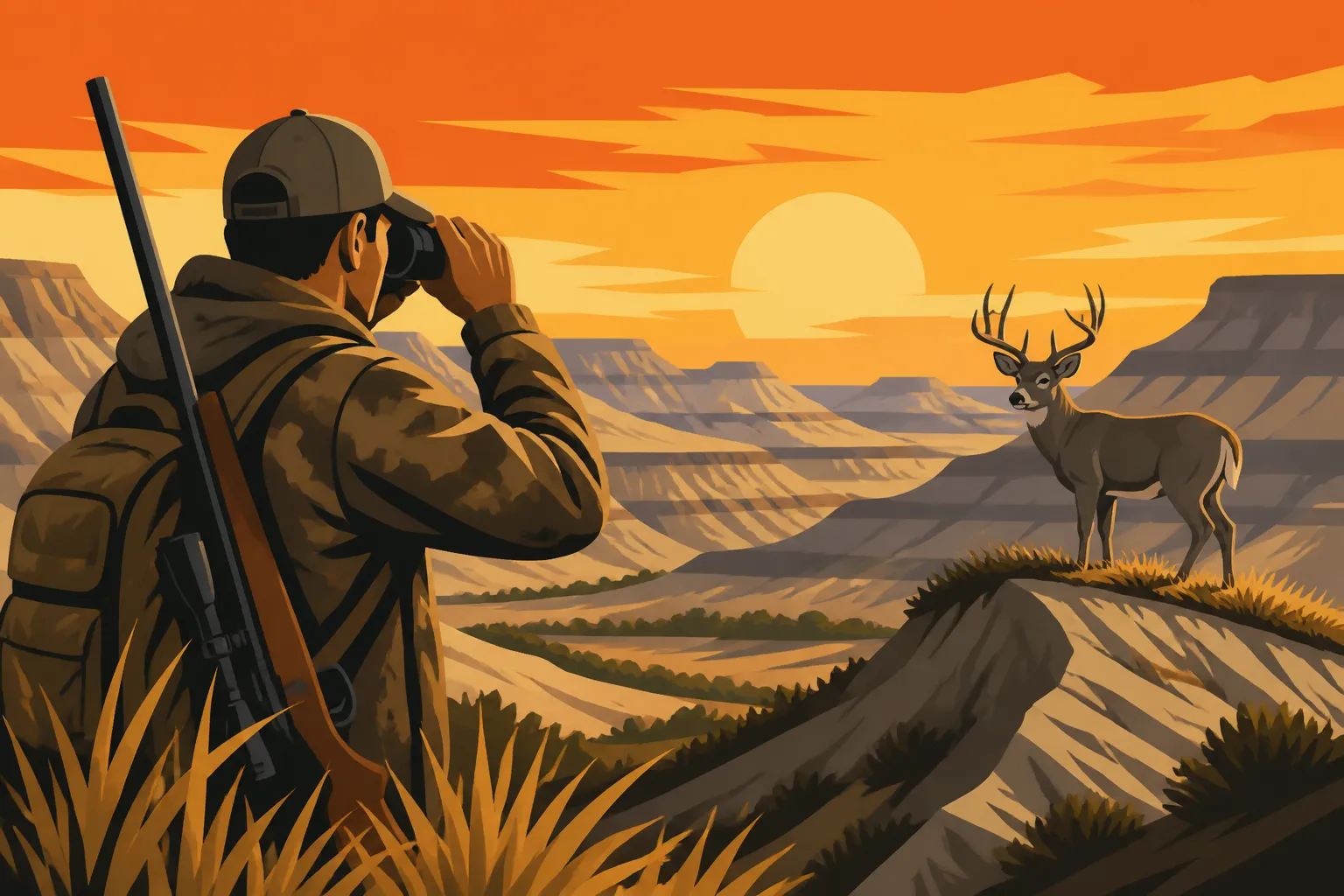
In the expansive and open nature of the Badlands, your binoculars and spotting scope will be your absolute best friends. Forget still-hunting through thick timber for hours; this is a place for sitting, scanning, and dissecting distant landscapes. Glassing allows you to cover vast amounts of territory visually, identifying game animals from hundreds of yards, or even miles, away, long before they ever know you’re there.
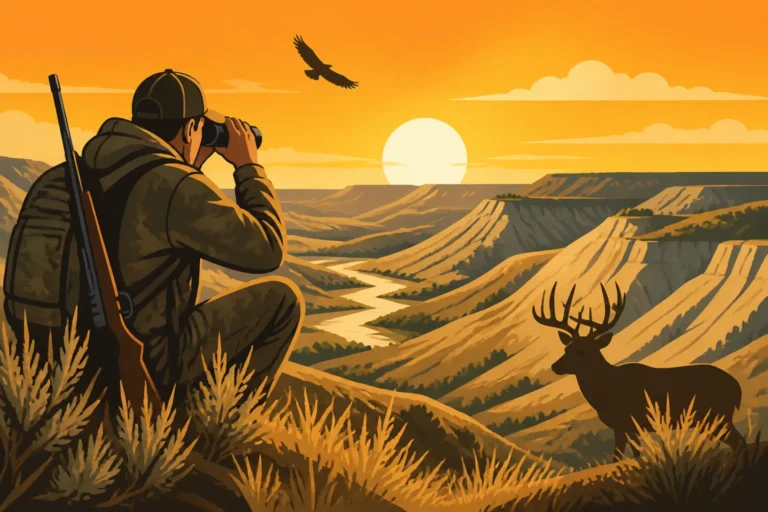
The strategy is to find a good vantage point, ideally a high butte or ridge that offers a panoramic view of several draws, basins, and plateaus. Use a sturdy tripod for your binoculars or spotting scope, as stability is key to spotting subtle movements or distinguishing an antler from a juniper branch. Systematically grid out the landscape, slowly scanning every shadow, every pocket of trees, and every slope. Don't just look for an entire animal; often, you'll spot a flick of an ear, a patch of hide, or a distinctive antler tip first. Spend dedicated time picking apart north-facing slopes in the morning for bedding mule deer, or scanning south-facing slopes in the evening where deer might be feeding. I've spent entire mornings on one ridge, only to pick out a buck bedded a mile and a half away that I never would have seen without meticulous glassing. To really hone this skill, especially for larger game, Glassing Badlands Coulees for Elk offers excellent advice that applies to deer as well.
Spot and Stalk Tactics
Once you’ve successfully glassed an animal, the real work of the spot-and-stalk begins. This is where your understanding of the terrain, wind, and animal behavior comes into play. A successful stalk in the Badlands is an art form, requiring stealth, patience, and often, considerable physical effort.
The key is to use the terrain to your advantage. Identify a route that keeps you out of sight, utilizing coulees, draws, and rises to maintain cover as you approach. This often means taking a longer, circuitous route to get downwind and into position. Pay meticulous attention to the wind, as it swirls and changes direction constantly in the broken topography. Thermals, which are rising or falling air currents, are also a huge factor. In the morning, cold air sinks into the coulees, then rises as the sun heats the ground. Understanding Wind and Thermals in Badlands Terrain is critical; a swirling wind can bust your stalk in seconds. As you get closer, move slowly and deliberately, taking advantage of every juniper bush, sage clump, or natural fold in the land for concealment. Even crawling on your belly for hundreds of yards might be necessary. The goal is to get within comfortable shooting range without being seen, heard, or smelled. This is especially true for the keen senses of antelope, and Spotting Pronghorn From a Section Road and the subsequent stalk can be an incredible challenge.
Reading the Terrain for Game Movement
Animals in the Badlands are creatures of habit, and their movements are often dictated by the terrain, water sources, and available forage. Learning to "read" the landscape for these clues can tell you where to focus your efforts, even if you don't immediately see game.
Look for natural pinch points or funnels in the terrain, such as narrow sections of a coulee or gaps between buttes, where game is likely to travel. Water sources, even small seeps or temporary puddles after a rain, are magnets for wildlife in this arid environment, especially in the early season. Check around these areas for tracks and fresh droppings. Identify bedding areas—often north-facing slopes with good cover (junipers, pines) that offer shade and protection from the wind, or open benches that allow deer to see danger approaching. Likewise, identify likely feeding areas, such as sagebrush flats, lush bottomlands, or areas with specific forbs. Fresh tracks in a sandy wash, a worn trail leading to a hidden spring, or rub lines along a section line are all pieces of the puzzle. By understanding how animals utilize these features, you can predict their movements and position yourself for success, even before you visually confirm an animal's presence.
Essential Gear for a Badlands Hunt
A Badlands hunt is not the place to skimp on gear. The rugged terrain, unpredictable weather, and demanding nature of the hunt mean that reliable, high-quality equipment is paramount. Your gear choices can make or break your experience, ensuring both comfort and safety.
Optics: Don't Skimp Here
As we've discussed, glassing is king in the Badlands, which means your optics are perhaps the most critical pieces of equipment you'll carry. This is an area where investing in quality truly pays dividends.
A good pair of 10×42 or 12×50 binoculars on a tripod will be your workhorse. They allow you to cover vast amounts of ground efficiently and reduce eye fatigue during long glassing sessions. Pairing these with a high-quality spotting scope (20-60x or similar) on a stable tripod is essential for evaluating distant animals, determining antler size, and planning your stalk. A budget spotting scope simply won't resolve enough detail at the extreme distances you'll be glassing. And don't forget a rangefinder; accurately judging distance in the broken, open Badlands can be incredibly difficult, and a rangefinder ensures you know your precise shot distance. Many hunters will even carry a smaller, handheld monocular or bino for quick checks while on the move, saving the big glass for serious glassing sessions. Skimping on optics here is like trying to drive across the prairie with a flat tire – you just won't get very far.
Footwear and Clothing: Comfort and Durability are Key
Your feet will take a beating in the Badlands, making sturdy, comfortable, and well-fitting footwear a non-negotiable item. Coupled with a versatile clothing system, you'll be prepared for whatever the environment throws at you.
Invest in high-quality, waterproof hiking boots that are well broken-in before your hunt. Blisters are the quickest way to ruin a hunt. Look for boots with good ankle support and aggressive tread for traction on steep, loose slopes. Many hunters prefer a stiff sole for side-hilling and navigating rocky terrain. For clothing, a layering system is crucial due to the rapid weather changes. Start with a moisture-wicking base layer, add insulating layers (fleece or puffy jackets), and top it off with a waterproof and windproof outer shell. This allows you to add or subtract layers throughout the day to adapt to fluctuating temperatures and activity levels. Don't forget durable hunting pants that can withstand thorns and abrasive rock, as well as a good wide-brimmed hat and sunscreen for protection against the intense prairie sun. When Packing for an Eight-Day North Dakota Elk Hunt, or any multi-day Badlands trip, remember that every item must serve a purpose and be able to perform in challenging conditions.
Survival and Safety Essentials
Beyond your hunting-specific gear, packing essential survival and safety items is critical for a Badlands hunt. The remote nature of much of the terrain means that self-reliance is key.
Always carry more water than you think you’ll need, especially during warmer periods, or a reliable water filter/purifier. A comprehensive first-aid kit is non-negotiable, capable of handling everything from minor cuts and blisters to more serious injuries. Navigation tools are paramount; even with digital maps like onX Hunt, a handheld GPS unit and a physical map and compass serve as invaluable backups, especially if your phone battery dies or service is unavailable. A satellite communication device (like a Garmin InReach or Spot device) is a smart investment, allowing you to send emergency messages even without cell service. Other essentials include a headlamp with extra batteries, fire-starting materials, a multi-tool or sturdy knife, emergency shelter (even a lightweight tarp or space blanket), and signaling devices (whistle, mirror). Lastly, if you successfully harvest an animal, especially a large one, you need a plan for packing it out. This means having game bags, a sturdy pack frame, and potentially a way to quarter the animal in the field. Recovery from a deep coulee can be a monumental task, and having the right tools makes it feasible.
Respecting the Land and Its Wildlife
Hunting in the North Dakota Badlands is a privilege, and with that privilege comes a significant responsibility to respect the land, its wildlife, and fellow outdoor enthusiasts. Adhering to ethical practices and regulations ensures that these opportunities remain for future generations.
Leave No Trace Principles
The Badlands are a fragile ecosystem, and practicing "Leave No Trace" principles is more important here than almost anywhere else. This means minimizing your impact on the environment and leaving the landscape as pristine as you found it, if not better.
Pack out everything you pack in—and then some. This includes all trash, spent casings, and any other non-natural items. Avoid driving off-road where not explicitly allowed, and stick to established trails and two-tracks to prevent erosion. When camping, use existing campsites when possible, and follow all fire restrictions. Properly dispose of human waste and gut piles away from water sources and trails. Respect cultural resources and historical sites, leaving artifacts undisturbed. The beauty of the Badlands lies in its wildness, and it's up to every hunter to help preserve that. Think about the next person who comes along; they should have the same wild experience you did, without seeing signs of your passage.
Understanding CWD and Game Handling
Chronic Wasting Disease (CWD) is a serious concern for deer, elk, and moose populations across North Dakota, including in certain Badlands units. As responsible hunters, understanding CWD, mandatory testing requirements, and proper game handling is crucial for both public health and wildlife management.
North Dakota has North Dakota's Expanding CWD Hunting Units, and it's imperative to know if the unit you're hunting falls within one of these designated zones. If so, mandatory testing might be required, meaning you'll need to submit your animal's head for sampling. This helps monitor the spread and prevalence of the disease. For a clear understanding of where these concerns are most prevalent, refer to Which North Dakota Units Have Confirmed CWD. Familiarize yourself with how and where to drop off samples; often, designated sampling stations are available during hunting seasons. Proper field dressing and carcass disposal are also important. Boning out meat in the field can minimize the transport of spinal cord and brain material, which are high-risk tissues for CWD. If you do transport a full carcass, dispose of the remains properly, typically in a landfill, to prevent potential spread. Understanding Mandatory Testing Inside a CWD Hunting Unit is not just a suggestion; it's a legal requirement designed to protect the future of North Dakota's deer herd.
Ethical Hunting and Fair Chase
Ethical hunting and adherence to fair chase principles are the cornerstones of responsible sportsmanship. In the challenging environment of the Badlands, these principles guide our actions and reflect our respect for the animals we pursue.
Always know and abide by all North Dakota hunting regulations, including season dates, bag limits, and legal methods of take. Make every effort to ensure a clean, humane kill, only taking shots when you are confident in your ability to place the shot accurately. This means practicing with your chosen weapon extensively before the hunt and knowing your effective range. If an animal is wounded, do everything in your power to track and recover it, even if it means long hours and difficult terrain. This is your responsibility as a hunter. Respect other hunters, landowners, and non-hunters you encounter. Leave gates as you found them, and avoid interfering with another hunter's stalk or setup. Fair chase means giving the animal a reasonable chance, and not using unfair advantages like harassing animals with vehicles or shooting across property lines without permission. Being an ethical hunter in the Badlands is about embodying a deep respect for nature and demonstrating the highest standards of sportsmanship.
Planning Your Badlands Adventure
A successful Badlands hunt begins long before you ever set foot in the field. Meticulous planning, from understanding tag availability to physical conditioning, is paramount to maximizing your chances and ensuring a safe and rewarding experience.
Drawing Tags and Season Timing
The availability of tags for desired species is often the first and most critical step in planning a North Dakota Badlands hunt, especially for big game. Many species are managed through a lottery system, meaning luck and patience play a significant role.
Deer tags, particularly for antlered mule deer in the Badlands units, are highly sought after and often require applying through the state's lottery system. Understanding North Dakota's Lottery-Based Deer Gun Season is essential, as the process and deadlines are strict. For elk, moose, and bighorn sheep, tags are even rarer, making them true once-in-a-lifetime opportunities that can take decades of applications to draw. Even for archery deer, while over-the-counter for residents, non-residents face specific restrictions on public land access early in the season, which can affect your planning. For specific dates, you'll want to review North Dakota Archery Season Opening Day and North Dakota Gun Season Opening Day to align your application and travel plans. Beyond big game, seasons for predators like coyotes are typically year-round, offering more flexible timing. Matching your desired species with the appropriate season dates and understanding the tag application process is the absolute foundation of your Badlands hunting plan.
Physical and Mental Preparation
The North Dakota Badlands are beautiful but unforgiving, and a hunt here will test you both physically and mentally. This is not a hunt for the unprepared, and overlooking conditioning is a common mistake that can lead to frustration or even injury.
The constant elevation changes, steep climbs, and descents over uneven, often loose terrain demand excellent cardiovascular fitness and strong legs. Incorporate hiking with a weighted pack into your workout routine, simulating the conditions you'll encounter. Spend time on varied terrain, not just flat pavement, to strengthen ankles and develop balance. Beyond physical stamina, mental toughness is crucial. You'll face long hours of glassing without seeing much, challenging stalks that end in a busted animal, and unexpected weather shifts. The ability to stay positive, persist through discomfort, and problem-solve under pressure is just as important as your physical strength. Imagine you've spotted an animal miles away, and the stalk involves dropping into a deep canyon and climbing out the other side. You need to have the confidence in your body and mind to execute that plan. Physical Prep for Badlands Elk Terrain provides excellent guidance that can be adapted for any big game hunt in this rugged environment.
Hiring a Guide Versus DIY
Deciding whether to hire a guide or embark on a do-it-yourself (DIY) Badlands hunt is a significant decision, influenced by your experience, budget, and desired hunting style. Both options have their merits and drawbacks.
A DIY hunt offers the ultimate freedom and a deep sense of accomplishment. It's often more budget-friendly (after factoring in your own gear), and you learn the land intimately. However, it requires extensive research, self-reliance, and a willingness to learn from mistakes. If you’re completely new to the Badlands or to a specific species like elk, the learning curve can be steep and frustrating. On the other hand, hiring a reputable guide can significantly increase your chances of success, especially for elusive species or if you're on a tight schedule. Guides possess intimate knowledge of the area, animal movements, and often have access to private land or specialized equipment. This can be particularly beneficial for those fortunate enough to draw a rare elk tag, where every moment counts. However, guided hunts come with a higher price tag. Consider your personal experience level, the specific species you're targeting, and your financial investment when making this choice. For a balanced perspective, explore Self-Guided Versus Outfitted North Dakota Hunts, and if you lean towards a guided experience, ensure you Vetting a North Dakota Hunting Outfitter thoroughly.
Table: Key Differences: Badlands Mule Deer vs. Whitetail Deer
| Feature | Mule Deer | Whitetail Deer |
|---|---|---|
| Primary Habitat | Open, broken badlands terrain; buttes, coulees, sage flats, juniper pockets | Riparian areas; river bottoms, dense brushy draws, cottonwood pockets |
| Movement/Gait | Distinctive "muley jump" or bounding gait; often stop to look back | More elusive, tend to sneak away or bolt with tail flagged |
| Bedding Habits | Often bed on open benches or north-facing slopes with cover, prioritizing visibility | Prefer thick cover, often in dense brush, timber, or tall grass |
| Diet | Predominantly browsers (sagebrush, forbs, juniper) | More diverse; browsers and grazers (browse, agricultural crops, acorns) |
| Behavior | Tend to rely on superior vision and the terrain for escape | Rely on thick cover and keen sense of smell/hearing for escape |
| Hunting Tactic | Extensive long-range glassing, spot-and-stalk | Still-hunting, stand hunting, checking choke points |
Disclaimer
This article is for general informational purposes only and does not constitute professional advice. Laws, prices and regulations vary by location and change over time. Consult a qualified professional for guidance on your specific situation.